
Kate Sherman was born and raised in Corunna, a town where familiarity is woven into daily life and where people often carry a quiet pride in having grown up somewhere […]
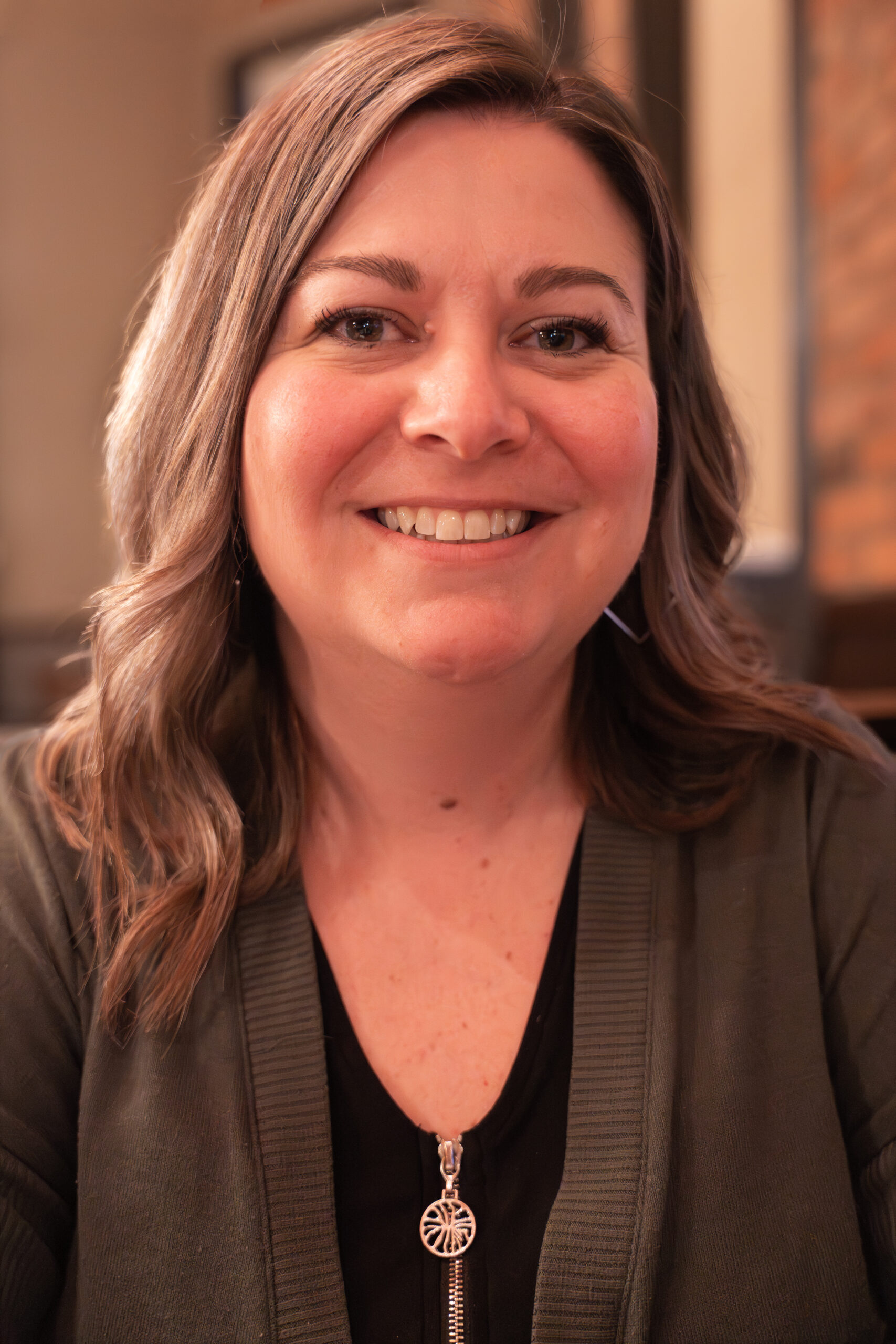
Kate Sherman was born and raised in Corunna, a town where familiarity is woven into daily life and where people often carry a quiet pride in having grown up somewhere small enough to remember them. She speaks of Corunna not with nostalgia alone, but with the grounded assurance of someone shaped by its rhythms—by neighbours who knew each other, by routines that offered both structure and belonging.
Although Kate was an only child, she never experienced childhood as a solitary thing. Her cousins were a constant presence, filling her life with the kind of closeness that blurred traditional definitions of family. “They were the brothers and sisters I grew up with,” she says. In a place like Corunna, family is often expansive, defined less by biology and more by shared time, shared history, and mutual care.
Kate attended Murray Street School for her early years, then Hill Street School for grades seven and eight. Like many young people from Lambton County, she followed a familiar educational path, one that balanced practicality with opportunity. After high school, she enrolled at Lambton College and later St. Clair College, studying Office Administration. At the time, her future appeared steady and sensible—anchored in skills that promised stability.
What Kate could not have anticipated was how profoundly her life would later be shaped not by career planning, but by loss.
Eleven years ago, Kate’s mother passed away from cancer. The illness unfolded over several years, beginning with uncertainty and slowly giving way to a definitive diagnosis. It was a period marked by grief, exhaustion, and anticipatory loss—but also by a depth of connection that Kate now recognizes as formative.
“When it came to having conversations with her about the finalities that were coming to light, I was so privileged to be able to get those answers from her of what she wanted,” Kate says. “Not everybody is able to ask those questions—to find out what your final wishes are.”
Those conversations were not easy. They required honesty, vulnerability, and a willingness to sit with discomfort. In many families, discussions about death are postponed or avoided altogether, framed as something morbid or pessimistic. But Kate and her mother chose a different path. They spoke openly about what was coming—about preferences, fears, and what comfort and dignity meant in the context of dying.
Looking back, Kate understands how rare those conversations are, and how valuable. They offered clarity at a time when so much felt uncertain. They also planted a seed—an awareness that the end of life, when approached with openness and support, does not have to be defined solely by fear.
Out of that experience emerged a calling.
Today, Kate is an end-of-life doula, a role that remains unfamiliar to many but is becoming increasingly important as conversations around death, dying, and compassionate care evolve. In Canada, most end-of-life doulas complete certificate-based training programs. Kate earned her End-of-Life Doula Certificate through Douglas College in British Columbia, one of the institutions at the forefront of this emerging field.
An end-of-life doula is a trained, non-medical support person who assists individuals and their families through the emotional, practical, and spiritual dimensions of dying. The role is often compared to that of a birth doula—someone who supports a person through one of life’s most significant transitions. Just as birth doulas help families navigate labour and delivery, end-of-life doulas help people navigate the final chapter of life.
The work does not replace medical or palliative care. Instead, it complements it, filling in the spaces where clinical systems often fall short.
“If someone needs help with funeral planning, I can do the funeral planning with them,” Kate explains. “We are not funeral directors or educators, and we are non-medical. We are there as a support.”
Kate is also a member of the Death Doula Ontario Network, an organization dedicated to increasing public knowledge around death literacy, enhancing end-of-life care skills, and providing up-to-date resources and information. At its core, the network seeks to normalize conversations about death—bringing them out of the shadows and into the realm of thoughtful, compassionate discourse.
For Kate, this work is deeply personal. She understands firsthand how overwhelming the end of life can be—not only for the person who is dying, but for those who love them. Families are often thrust into unfamiliar territory, navigating emotional strain, practical decisions, and anticipatory grief all at once.
Her role centers on listening and presence. Sometimes that means facilitating conversations that feel too difficult to initiate. Sometimes it means sitting quietly with someone who does not want to be alone. Other times, it involves helping families understand what to expect as death approaches, easing fear by offering clarity and calm.
In a culture that frequently treats death as something to be avoided, medicalized, or rushed through, Kate’s work invites a different approach—one grounded in dignity, honesty, and compassion. She believes that when people are supported emotionally and spiritually, fear can soften. Even in the midst of grief, moments of connection remain possible.
There is also an advocacy component to her work. Kate helps ensure that the wishes of the dying are understood and respected, particularly when individuals may feel unheard or overwhelmed. This might involve advance care planning, legacy work, or simply ensuring that someone’s voice remains central in decisions affecting their final days.
Kate’s story reflects a broader cultural shift—one that recognizes death not just as a medical event, but as a profoundly human experience. For much of modern history, dying has been removed from the home and placed behind institutional walls. While medical advancements have extended life, they have also distanced many people from the process of dying itself.
End-of-life doulas help bridge that gap. They reintroduce humanity into a process that can feel clinical and impersonal. They remind us that dying, like living, is relational.
In communities like Sarnia and across Lambton County, where people often know one another by name and history runs deep, this work carries particular significance. It reinforces the idea that care is not solely the responsibility of institutions, but of communities. That no one should have to face the end of life feeling unseen or unsupported.
Kate’s journey—from a small-town upbringing in Corunna to becoming an end-of-life doula—illustrates how personal loss can evolve into meaningful service. What began as a daughter walking alongside her mother through illness has become a commitment to walk alongside others through their own final chapters.
It is not work driven by answers or solutions. Instead, it is guided by presence. By the understanding that sometimes the most powerful thing one person can offer another is simply to stay.
In a society that often struggles to talk about death, Kate Sherman is part of a growing movement encouraging us to look at it more honestly—and more humanely. Her work asks us to consider what it means to die well, and how we might support one another through life’s most inevitable transition.
Through compassion, clarity, and connection, Kate is helping to create space for peace at the end of life. And in doing so, she reminds us that even in our final moments, we remain deeply, profoundly human.If you would like to learn more about Kate, and her end of life doula services please reach out to Lumina Life Transitions on FaceBook.
Humans of Sarnia founder Art Connolly is a man fuelled by curiosity and a passion for connecting with people in Sarnia. Inspired by the renowned “Humans of New York” series, with a camera in hand, he captures the very essence of the individuals he encounters, preserving their stories through his lens. Follow his series on Instagram and Facebook.


