Oct5
Scottish Country Dancing
Mon, Oct 5 · 7:00 pm
St Andrew’s Presbyterian Church 261 Christina St N Sarnia, ON

While the company cites economic factors and unfair portrayals for its departure, the historical record points to a public health crisis and a First Nation’s refusal to accept toxic exposure.
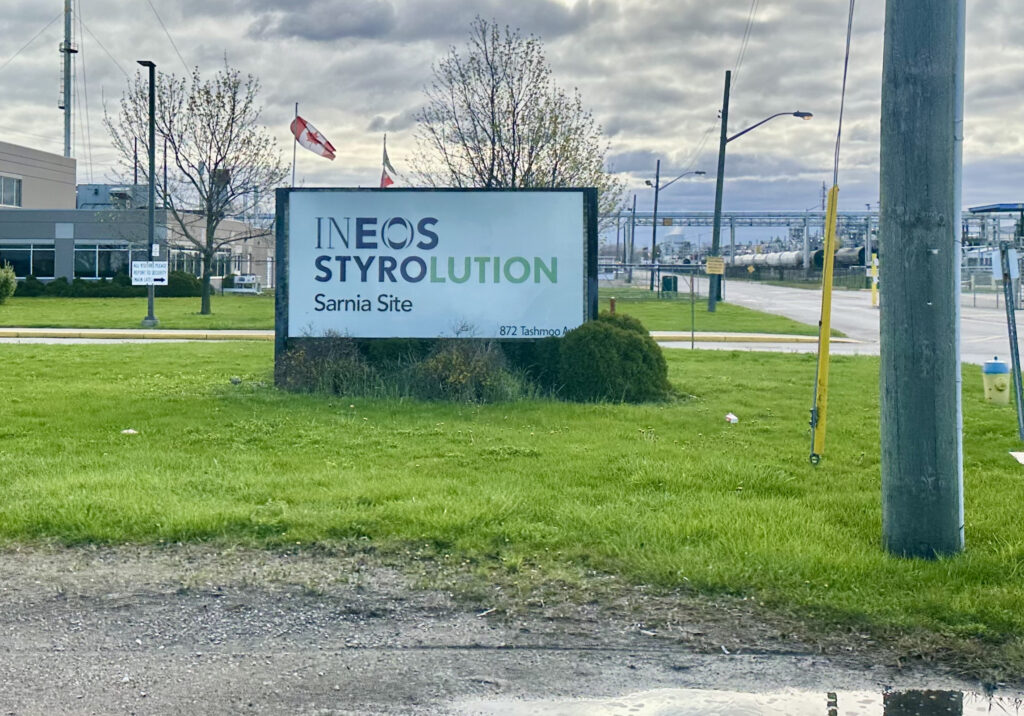
INEOS Styrolution officially announced the completion of its Sarnia site closure on Wednesday, ending over 80 years of operation at the Tashmoo Avenue facility. In a final statement, the company expressed pride in its safety record while noting they were "disappointed that this chapter ends among unfair and inaccurate portrayals of our site."
However, the events leading to this closure tell a different story—one defined by record-breaking benzene spikes, emergency room visits, and a neighbouring First Nation that declared a state of emergency to protect its people.
The following timeline documents the collapse of the facility’s social license to operate, tracing the path from the crisis of April 2024 to the final shutdown in December 2025.
The catalyst for the closure began in mid-April 2024, when residents of Aamjiwnaang First Nation reported feeling ill with headaches, nausea, and dizziness. On April 16, the band office, playground, and several buildings were closed after air monitors near the site detected "extremely high" benzene levels.
Data from the Clean Air Sarnia Area (CASA) showed benzene readings as high as 115 µg/m³ at the Ada Lockridge Rogers station—dwarfing the provincial limit. Despite the severity, no emergency alerts were issued by the City or local industry networks at the time.
By April 20, INEOS announced a temporary shutdown to "address a mechanical issue," though they maintained that the health and safety of the community was paramount.
Five days later, Aamjiwnaang Chief and Council declared a local State of Emergency, citing the "ongoing and excessive discharge" of benzene.
The crisis escalated in May when the provincial government took the rare step of suspending INEOS Styrolution’s Environmental Compliance Approval (ECA). The Ministry of the Environment, Conservation and Parks stated that despite previous orders, benzene readings "continue to be above acceptable levels."
INEOS disputed the findings, claiming their monitors recorded no emissions outside prescribed limits and calling the government's timeline for compliance "unrealistic."
By mid-May, the federal government intervened. Environment Minister Steven Guilbeault issued an interim order imposing strict vapour-control measures on Sarnia’s petrochemical facilities, specifically citing the "pursuit of environmental justice for Aamjiwnaang First Nation."
While this was happening in Sarnia, Aamjiwnaang councillors Janelle Nahmabin and CJ Smith-White traveled to Ottawa for global plastics treaty talks, describing the situation at home not just as environmental racism, but as "environmental genocide."
On June 11, 2024, INEOS announced it would permanently close the Sarnia site. While the company acknowledged the regulatory orders that forced the temporary shutdown, CEO Steve Harrington framed the decision around economics, stating the site was "no longer an economically viable operating asset."
The company initially projected a closure date of June 2026, but this timeline would later be accelerated as the facility failed to restart.
The decommissioning process proved to be nearly as volatile as the operation itself. In October 2024, as INEOS began removing benzene from the site, Aamjiwnaang leadership coordinated a precautionary evacuation for residents living near the fenceline.
Residents like Ravena Williams were moved to hotels, describing the relief of breathing clean air away from the facility, while others, like Ada Lockridge, remained in their homes but expressed a deep lack of trust in the company’s communications.
By late October 2024, INEOS confirmed it would not restart the plant at all and moved the closure target to early 2025.
Issues persisted into 2025. In May, a confusing series of alerts were issued regarding high benzene levels. INEOS later retracted them, citing a "messaging system error," a glitch that did little to restore community confidence.
As recently as June 2025, Aamjiwnaang had to issue another evacuation notice for residents between Churchill Road and Tashmoo Avenue due to elevated benzene emissions during decommissioning work.
The closure of the INEOS site marks a significant shift in Sarnia’s industrial history. For the workforce, it is the loss of a site that operated for 80 years. For Aamjiwnaang, it is the result of decades of documentation, advocacy, and a refusal to accept that their health was the price of doing business.
In an piece published during the height of the crisis, the Environmental Data Justice Lab summarized the community’s stance: "Until solutions to these glaring regulatory failures are created collaboratively with Aamjiwnaang leadership, reconciliation is just a word."
Mon, Oct 5 · 7:00 pm
St Andrew’s Presbyterian Church 261 Christina St N Sarnia, ON
Tue, Oct 6 · 5:30 pm
The Bridge Patisserie Café 12 Michigan Ave Point Edward Point Edward, ON
Tue, Oct 6 · 6:00 pm
Black Gold Brewery 395 Fletcher St Petrolia, ON
A division of Sarnia Media Group Inc.
Locally Owned and Operated
© 2026 The Sarnia Journal