Oct5
Scottish Country Dancing
Mon, Oct 5 · 7:00 pm
St Andrew’s Presbyterian Church 261 Christina St N Sarnia, ON

When Robert "Bob" Moore talks about Christmas, his memories return to family, routine, and a sense of calm that feels increasingly rare today. “It wasn’t a big deal like it […]
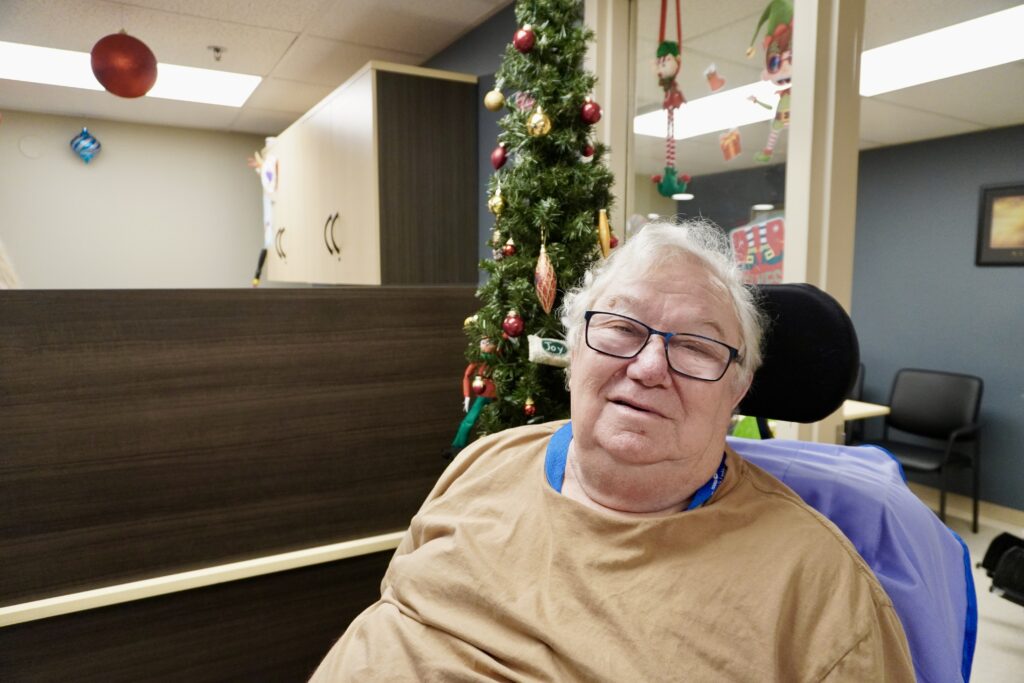
When Robert "Bob" Moore talks about Christmas, his memories return to family, routine, and a sense of calm that feels increasingly rare today.
“It wasn’t a big deal like it is now,” he says. “It was more about family.”
Bob, as most people know him, was born in 1950 and grew up in Sarnia. Unlike many stories shaped by immigration or wartime scarcity, Bob’s Christmas memories are rooted firmly in a local, working-class upbringing, where traditions were steady and uncomplicated.
“We always had turkey with the fixings,” he says. “Mashed potatoes, carrots, gravy.”
Christmas dinner looked familiar, year after year, and that was part of the comfort. While Santa Claus existed in his childhood, Bob says it was never the centre of the season.
“When I was really young, probably, yeah, I believed in Santa,” he says. “But it wasn’t a big thing. They did try to keep that tradition alive for us kids though.”
What mattered most was being together.
“I think Christmas now is too commercial,” Bob says. “It’s terrible.”
As the oldest of three boys, Bob grew up in a busy household. His parents were young, newly married when they had him, and life moved quickly.
“It was so-so,” he says of the chaos. “Just normal.”
He went to school locally, then straight into work, doing physically demanding labour at a young age.
“That’s hard work,” he says. “Hard on your back.”
Christmas did not interrupt that rhythm. It simply offered a pause, a meal, and time around the table.
As Bob grew older, Christmas grew with him. He married, raised children of his own, and the season expanded.
“We always had family over,” he says. “Or we went over there.”
His first wife came from a large family, and gatherings became bigger, louder, and more gift-focused than what he remembered as a child.
“It got bigger,” he says. “With the gifts and everything.”
Still, Bob admits he left much of the shopping to his wife.
“I always left that to the wife,” he says with a laugh. "She liked to browse. I'd be like, okay let's get this done. We would go to the mall downtown that's been knocked down now."
Looking back, he sees how Christmas changed alongside the city itself. He remembers local shopping, neighbourhood stores, and a downtown that felt alive.
“You went to the local stores,” he says. “Not like now. We all went to brick and mortar stores. All the younger people are shopping online now, so the stores are not the same.”
He talks about malls that once bustled, both in Sarnia and across the border, now largely empty.
“It used to be hustle and bustle,” he says. “Now it’s just nothing. It surprised me they knocked down that mall [Bayside]. I remember people in the thousands jammed in there at Christmas. You could hardly move.”
Despite the changes, Bob still believes the core of Christmas has remained, at least for those who choose to hold onto it.
“It was always about family,” he says. “That hasn’t changed.”
His memories are not marked by dramatic moments or singular traditions, but by consistency. The same meal. The same people. The same sense of being home.
For Bob Moore, Christmas was never about excess or spectacle. It was about sitting down together, year after year, and knowing that was enough.

Mon, Oct 5 · 7:00 pm
St Andrew’s Presbyterian Church 261 Christina St N Sarnia, ON
Tue, Oct 6 · 5:30 pm
The Bridge Patisserie Café 12 Michigan Ave Point Edward Point Edward, ON
Tue, Oct 6 · 6:00 pm
Black Gold Brewery 395 Fletcher St Petrolia, ON
A division of Sarnia Media Group Inc.
Locally Owned and Operated
© 2026 The Sarnia Journal