Oct5
Scottish Country Dancing
Mon, Oct 5 · 7:00 pm
St Andrew’s Presbyterian Church 261 Christina St N Sarnia, ON

When Barbara Savage talks about Christmas, her memories are shaped less by celebration and more by survival. By ration books. By careful planning. By learning, at a young age, how […]
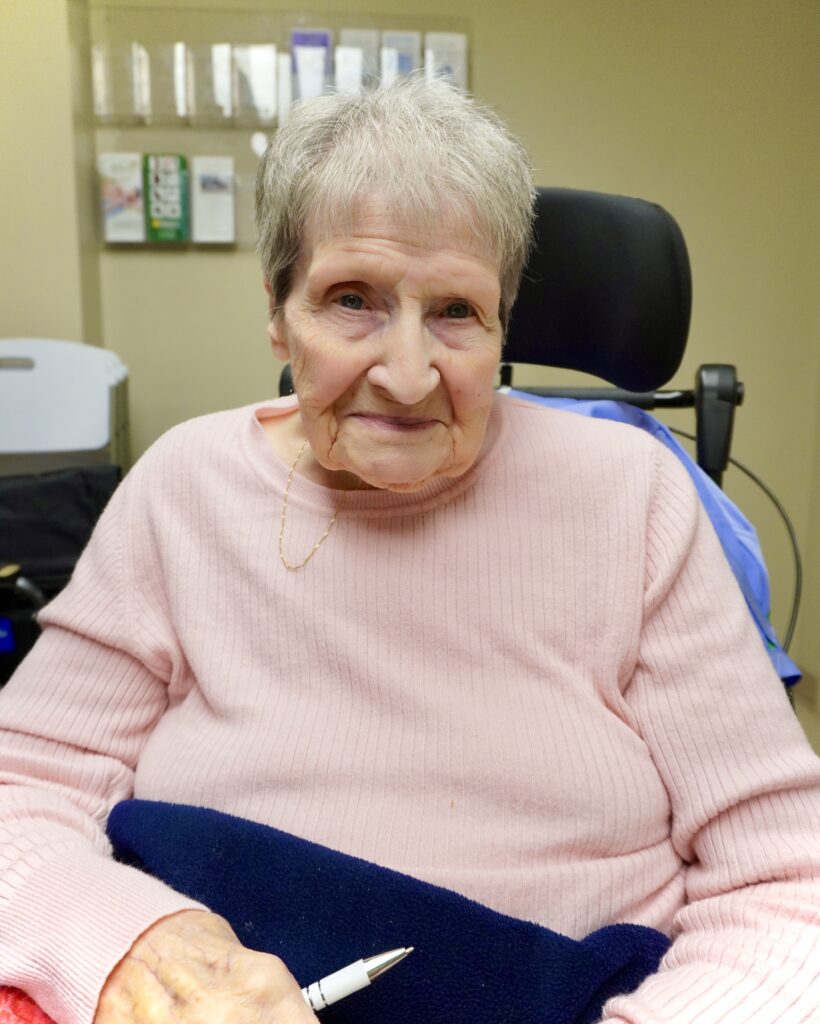
When Barbara Savage talks about Christmas, her memories are shaped less by celebration and more by survival. By ration books. By careful planning. By learning, at a young age, how to make something special out of very little.
Barbara was born on November 2, 1933, in the United Kingdom. She was just six years old when the Second World War broke out in 1939, an age when many children are just beginning to understand what Christmas means.
“It was the war,” she says plainly. “Everything was rationed.”
Barbara grew up in England during a time when scarcity was normal. Sweets were rare. Fruit was limited to whatever could be grown locally.
“No candies,” she recalls. “No fruit. Sometimes if it was local you could have fruit."
Christmas did not disappear, but it was quieter and far simpler than what many people associate with the holiday today.
“We only ever got one or two gifts,” Barbara says. “That was it.”
Food, like everything else, was shaped by necessity. Her family did not have turkey for Christmas dinner. Instead, they ate what they could provide themselves.
“Chicken,” she says. “My father kept chickens. Meat was not a nightly meal. We would have the biggest chicken on holidays. We didn't really have turkey until more recently. It's very interesting because you don't see that nowadays. Now chicken is so regular.”
Christmas pudding was one of the few indulgences, a traditional dessert made with dried fruit. It was saved for special occasions and treated with ceremony.
“It was a mince meat pudding. We used to put brandy on it,” Barbara says. “Then we would set it on fire. If you didn't have any brandy, you could do a bit of whiskey. It was cheaper.”
She smiles at the memory.
“That was really nice.”
The war ended in 1945, but its effects lingered. Barbara says Christmas did not begin to feel “normal” again until 1946 or 1947, when rationing slowly eased and families could finally sit down together without counting every portion.
Even then, celebrations remained modest.
“It wasn’t like today,” she says. “It’s much more for the consumer now. There wasn't all the gifts and all the wrapping.”
In 1956, she immigrated to Canada, a move that came with its own surprises.
“When I came to Canada, there were things like Thanksgiving,” she says. “We never had Thanksgiving. It was surprising.”
There was no Valentine’s Day celebration either. Barbara remembers feeling struck by how enthusiastically Canadians marked holidays.
“I thought, wow,” she says. “Canadians really celebrate the holidays a lot. There seems to be a holiday for everything.”
She and her husband both came from England. He had served in the Royal Air Force, and after his service ended, the couple made the decision to build a life in Canada.
The early years were not easy. Jobs were unstable, and layoffs came suddenly.
“My husband wasn’t used to that,” Barbara says. “That was hard. He was not used to unsteady work.”
Still, they stayed. Canada became home.
Barbara and her husband raised two sons, and Christmas changed again, this time becoming fuller and more generous than what she had known as a child.
“Oh yes,” she says. “Much different. We bought lots of gifts for our kids, which wasn't how we grew up.”
Her husband passed away in 1995 at the age of 65, a loss that marked another turning point in her life. Barbara never remarried. She lived independently for decades afterward, keeping busy with friends, social groups, and activities like line dancing.
“There’s a difference between being alone and being lonely,” she says. “I wasn’t lonely.”
Now 92 years old, Barbara remains sharp and reflective. When asked about the secret to a long life, she does not offer a formula.
“I don’t know,” she says with a laugh.
But when asked about the secret to a good marriage, her answer comes easily.
“You have to understand one another,” she says. “And you do things together. You don’t go one way and they go the other.”
Looking back, Barbara’s Christmas memories are not defined by excess or nostalgia for grand traditions. They are grounded in endurance, adaptation, and gratitude, shaped by a childhood where celebration meant making do, and joy came from presence rather than abundance.
For Barbara Savage, Christmas is remembered not for what was under the tree, but for what carried people through, even in the hardest of times.

Mon, Oct 5 · 7:00 pm
St Andrew’s Presbyterian Church 261 Christina St N Sarnia, ON
Tue, Oct 6 · 5:30 pm
The Bridge Patisserie Café 12 Michigan Ave Point Edward Point Edward, ON
Tue, Oct 6 · 6:00 pm
Black Gold Brewery 395 Fletcher St Petrolia, ON
A division of Sarnia Media Group Inc.
Locally Owned and Operated
© 2026 The Sarnia Journal