Oct7
Sarnia Artists’ Workshop Awards/ Peg Kivi Solo Exhibition
Wed, Oct 7 · 11:00 am
The Lawrence House Centre for the Arts 127 Christina St. South Sarnia, ON

Following the formal $10 million request by the Sarnia BACE (Bluewater Active Connected Community) project, advocates are now working to counter the "sticker shock" of the headline number. They argue […]
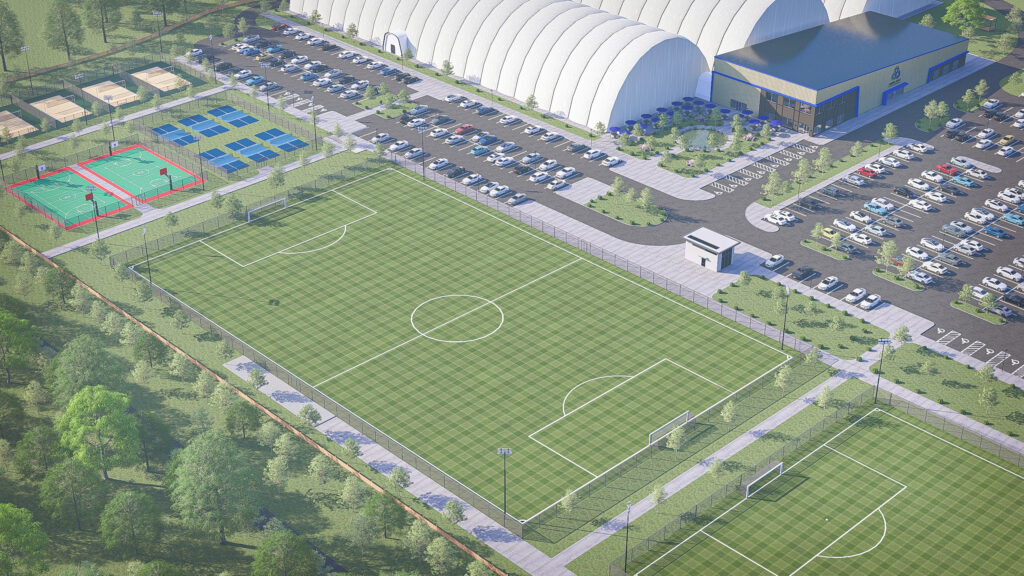
Following the formal $10 million request by the Sarnia BACE (Bluewater Active Connected Community) project, advocates are now working to counter the "sticker shock" of the headline number.
They argue that when the cost is broken down, it's not the massive taxpayer burden some may fear, but a modest and manageable monthly investment.
In discussions about major municipal projects, large figures—like the $10 million request, the $20 million total project cost, or the city's $190 million total budget—are often at the forefront. BACE proponents argue this focus on large totals can be misleading, making a strategic investment seem impossible. Their goal is to reframe the debate from the total price tag to the actual impact on a resident's wallet.
According to an analysis provided by project organizers, the core of the request is a $7 million municipal contribution for Phase 1, spread over two years.
They offer a simple financing scenario to illustrate the affordability: If the city financed that $7 million over five years at a 4% interest rate (a conservative estimate), the monthly repayment would be approximately $128,881.
When divided by Sarnia's approximately 42,600 households, that monthly payment equals $3.00 per household per month.
Looked at another way, it's about $1.80 per person per month.
Proponents argue this small sum is a modest price for a transformative, year-round, multi-sport facility. As a 2022 city-commissioned study confirmed, this is a facility that nearly two-thirds of residents can't currently access, with 64% of those surveyed travelling (and spending) outside of Sarnia for recreation.
The group notes the additional $3 million requested for land acquisition is also manageable. They suggest it could be spread over five years at $600,000 per year, a figure they believe can be easily incorporated into the city's long-term budget planning with minimal impact.
The message from BACE organizers is clear: the reality of the cost, relative to the benefits, is extremely modest. They are urging the public and council to look past the large headline numbers and focus on the per-household impact, arguing that a few dollars a month is a strategic investment in the city's health, quality of life, and future growth—not a budget-breaking expenditure.
Wed, Oct 7 · 11:00 am
The Lawrence House Centre for the Arts 127 Christina St. South Sarnia, ON
Wed, Oct 7 · 12:00 pm
Corunna Legion Br 447 350 Albert/Beckwith Streets Corunna, ON
Wed, Oct 7 · 7:00 pm
Refined Fool Brewing Co. Refined Fool Brewing Co Kids with Fur, 1308 London Rd, ON N7S Sarnia, ON
A division of Sarnia Media Group Inc.
Locally Owned and Operated
© 2026 The Sarnia Journal