Oct5
Scottish Country Dancing
Mon, Oct 5 · 7:00 pm
St Andrew’s Presbyterian Church 261 Christina St N Sarnia, ON

As The Sarnia Journal continues to cover the Project Right Response proposal, a five-year plan for a new, health-led community safety model, a critical conversation has begun. City Council, the […]
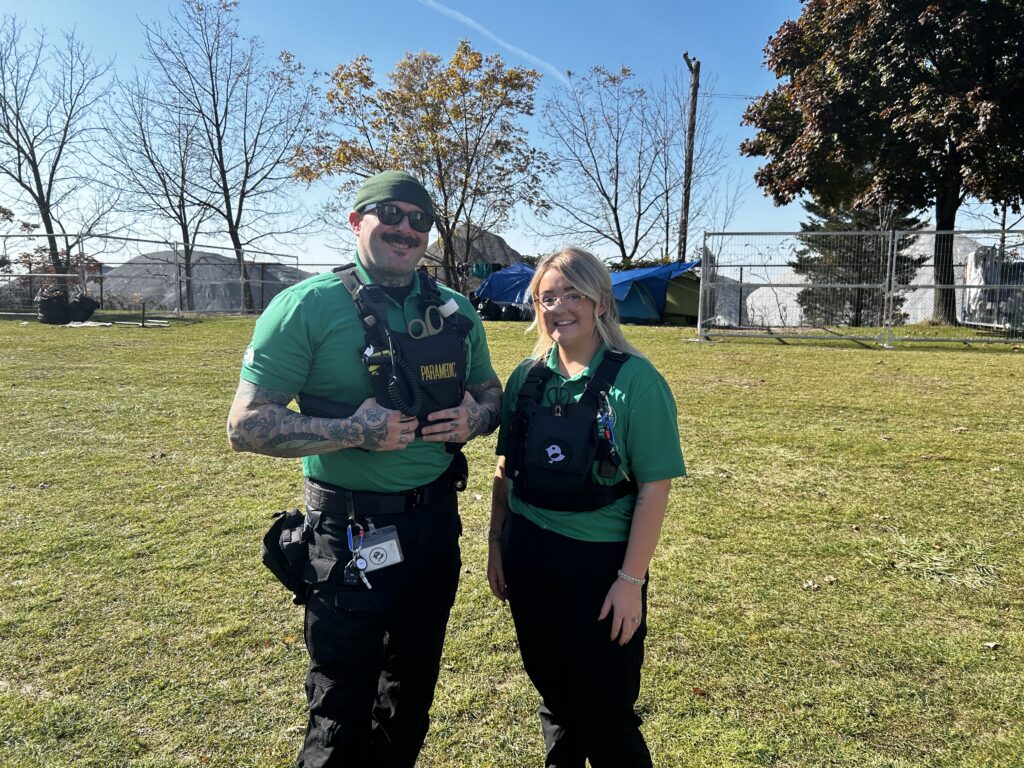
As The Sarnia Journal continues to cover the Project Right Response proposal, a five-year plan for a new, health-led community safety model, a critical conversation has begun.
City Council, the Police Services Board, and the public are all trying to make sense of the teams already operating in our community. The current system is a confusing patchwork of different agencies, funding models, and mandates.
Understanding what each team does, who funds it, and who it serves is essential to understanding the why behind Project Right Response. Here is an overview of the three main teams currently responding to crises related to mental health, addiction, and homelessness in Sarnia-Lambton.
Who Leads/Operates: IMPACT is a specialized unit within the Sarnia Police Service (SPS), operating under its Community Support Division. The team is composed of SPS officers.
Funding: As an internal SPS unit, IMPACT is funded directly from the Sarnia Police Service operating budget.
Model of Care: This is a police-led outreach model. It focuses primarily on individuals experiencing homelessness and addiction. Officers meet individuals "where they are," such as in encampments, to build relationships and connect them with existing community services. In 2024, the team reported 1,521 homeless encounters involving 367 unique individuals, a threefold increase from the year prior. Recent data reported by the Journal showed that while encounters remained high in 2025, the number of successful referrals to community agencies has declined.
Who Leads/Operates: MHEART is a partnership between the Sarnia Police Service and the Canadian Mental Health Association Lambton Kent (CMHA LK).
Funding: The funding is shared. The Sarnia Police budget covers the police officer, while the mental health worker is funded through CMHA LK (drawing on provincial health funding).
Model of Care: This is a co-response model for acute mental health crises. It pairs an SPS officer with a trained mental health professional. The goal is to provide on-scene crisis intervention, de-escalation, and mental health assessment to divert individuals from unnecessary emergency room visits or police apprehensions. In 2024, MHEART responded to 611 of the 751 mental health calls handled by SPS.
Who Leads/Operates: CHIC is a pilot program led by Lambton County Emergency Medical Services (EMS) in partnership with Bluewater Health.
Funding: This is the critical difference: CHIC is not part of the permanent local budget. It is funded by a temporary, $2.5 million provincial grant spread over three years (starting in June 2024).
Model of Care: This is a health-led model. As The Sarnia Journal detailed in previous coverage of CHIC last year, the mobile team consists of one Lambton EMS paramedic and one Bluewater Health substance use navigator. They operate 12 hours a day, seven days a week, focusing on building trust with approachable uniforms and non-ambulance vehicles. They provide on-scene medical care, wellness checks, harm reduction supplies, and navigation to connect individuals with treatment, primary care, and housing—all with the goal of diversion from emergency rooms and jail.
The current system leaves Sarnia with a police-led team (IMPACT), a police-partnered team (MHEART), and a purely health-led team (CHIC) that is small, temporary, and grant-funded.
Project Right Response argues this is a structural problem. It’s a plan to fix a system that defaults to "policification"—the trend of using law enforcement to manage complex social and health issues.
The "Right Responder" Principle
The philosophy of Project Right Response is simple: send the right responders to the right calls.
Proponents argue that when someone is in a mental health or addiction crisis, the right first responder is a health professional, not an armed officer. This approach is not theoretical; it's about making the CHIC model the new standard.
The core argument of Project Right Response is: Why should our most effective, health-led crisis model be a temporary pilot? Why not make it our permanent, primary 9-1-1 response for non-violent crises?
PRR is not about inventing something new. It's about scaling up and making permanent the very innovation Lambton EMS is already leading.
The proposal directly aligns with Lambton EMS's stated strategic vision to be "innovative leaders in delivering evidence-based paramedicine". It also builds on the province's own direction, which funded the CHIC pilot in the first place, encouraging health-led mobile crisis teams to "avoid unnecessary police involvement".
The case for Project Right Response rests on a "win-win" philosophy backed by local and external evidence:
A Better Outcome for People in Crisis: It provides a more compassionate and effective response, treating a health crisis as a health issue, not a crime. Evidence from Toronto's pilot shows this is effective: its new Community Crisis Service has diverted 78% of mental-health 9-1-1 calls to non-police teams.
A Better Outcome for Police: It frees up Sarnia Police officers from the non-criminal calls that currently overburden them (an estimated 70-80% of all calls). This allows police to focus on their core mandate: investigating and deterring serious crime, improving their capacity to solve violent and property crimes.
This model has a proven financial and public safety track record. In Eugene, Oregon, the 30-year-old CAHOOTS program now handles 17% of the police department's call volume and saves the city an estimated $8.5 million annually.
In short, Project Right Response is not a radical departure. It is a fiscally responsible plan to take a successful, health-led model that our own community paramedics are already running, and make it a permanent, reliable part of our emergency response system.
Mon, Oct 5 · 7:00 pm
St Andrew’s Presbyterian Church 261 Christina St N Sarnia, ON
Tue, Oct 6 · 5:30 pm
The Bridge Patisserie Café 12 Michigan Ave Point Edward Point Edward, ON
Tue, Oct 6 · 6:00 pm
Black Gold Brewery 395 Fletcher St Petrolia, ON
A division of Sarnia Media Group Inc.
Locally Owned and Operated
© 2026 The Sarnia Journal