Key Features to Consider Before Buying a Portable Generator
When the lights go out, a portable generator can feel like a lifesaver. It keeps your fridge cold, your phones charged, and your home comfortable during a blackout. For campers and RV travelers, it can power your essentials miles away from the grid.
When the lights go out, a portable generator can feel like a lifesaver. It keeps your fridge cold, your phones charged, and your home comfortable during a blackout. For campers and RV travelers, it can power your essentials miles away from the grid.
But choosing the right generator isn’t as simple as picking the one with the biggest engine or the lowest price tag. The market today is full of options — from traditional fuel-powered units to new-generation battery systems like the portable power station.
Before you make the investment, let’s walk through the key features you should consider to make sure your generator truly meets your needs — safely, efficiently, and sustainably.
1. Power Output: Match It to Your Needs
Every generator has a rated output (continuous running power) and a peak output (the short burst it can handle when appliances start up).
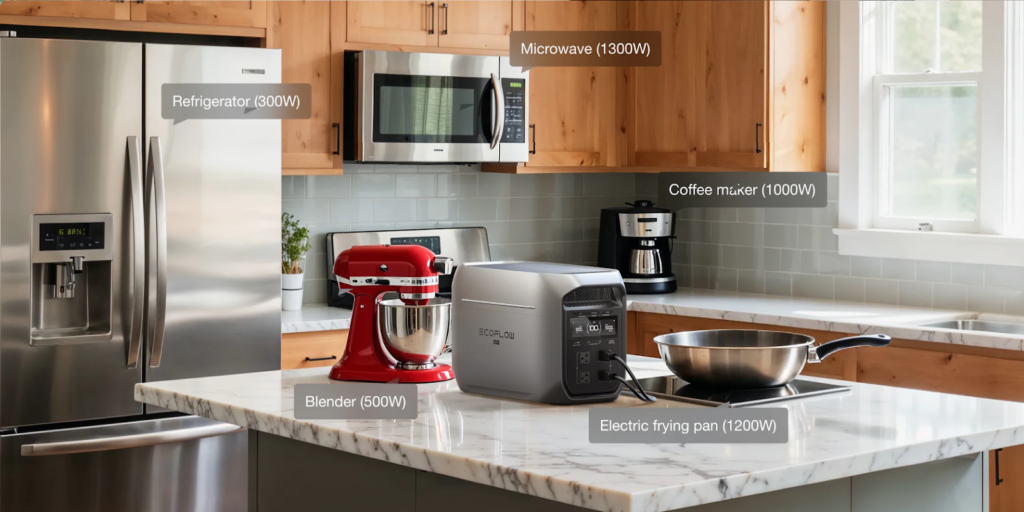
To find the right size, list all the devices you want to run simultaneously and add up their wattage:
|
Appliance |
Average Power Draw (W) |
Notes |
|
Refrigerator |
600–800 |
Surge up to 1,200 W |
|
Laptop |
60–100 |
Constant load |
|
Microwave |
1,000–1,200 |
High draw |
|
Space heater |
1,500 |
Continuous |
|
Lights |
10–100 each |
Low draw |
If your total is 2,000 W, choose a generator that can deliver at least 2,400–2,500 W continuously.
Buying too small means frequent overloads; buying too large wastes fuel and money.
A modern portable power station makes this process easier — it displays real-time power usage and warns you before you exceed limits.
2. Type of Generator: Fuel vs. Battery
Gasoline, Diesel, and Propane Models
Traditional portable generators use internal combustion engines that burn fuel to create electricity. They’re powerful and time-tested but come with some tradeoffs:
- Require constant fuel refills (and fuel storage).
Produce carbon monoxide — must stay outdoors. - Can be noisy and emit fumes.
- Require regular maintenance like oil changes and spark plug replacement.
Battery-Based Power Systems
In recent years, battery-powered generators — commonly called portable power stations — have transformed the backup power market. These use rechargeable lithium batteries instead of fuel, making them clean, quiet, and safe to use indoors.
They can charge from multiple sources (wall, solar, or car), and they don’t need constant maintenance.
If you value simplicity, portability, and eco-friendliness, a portable power station may be the smarter long-term investment.
3. Fuel Efficiency and Runtime
For gas or diesel units, runtime depends on both tank size and engine efficiency. A 5-litre tank might run a small generator for 6–8 hours at half load — but less if you’re running heavy appliances.
Look for models with eco-throttle or variable engine speed control. These features adjust the motor’s RPM to match demand, conserving fuel and reducing noise.
If you go battery-powered, runtime depends on capacity (Wh) and device load. A 1,000 Wh portable power station running a 100 W device will last roughly 9 hours (accounting for efficiency).
Whether fuel or battery, the goal is the same: long, reliable performance without constant refills or recharges.
4. Noise Level
Noise might not seem like a big deal — until you’re camping beside someone with a roaring generator.
Traditional gas generators can exceed 70–80 dB, roughly the sound of a vacuum cleaner or busy traffic. In contrast, inverter-style generators often operate at 50–60 dB, which is much more bearable.
Battery-based generators or portable power stations are almost silent, producing only a faint fan hum. This makes them ideal for neighbourhoods with strict noise bylaws or for overnight use during camping trips.
When shopping, check the decibel rating (measured at 7 metres distance). A quieter generator means a calmer environment — for you and your neighbours.

5. Portability and Design
If your generator stays in a garage for emergencies, weight may not matter. But if you plan to move it often — say between your house, cabin, or RV — portability is key.
Look for:
- Compact size (fits in your vehicle or storage space).
- Wheels and handles for easy transport.
- Balanced weight distribution, especially for heavier models.
Portable power stations lead in this category: no fuel tanks, no oil, no fumes, and typically lighter than equivalent gas units. Some even have modular batteries that you can expand or detach for easy carrying.
6. Safety Features
A reliable portable generator should protect both you and your devices. Important safety features include:
- Overload protection: Shuts off automatically if power demand is too high.
- Low-oil or low-fuel shutdown: Prevents engine damage.
- Ground Fault Circuit Interrupter (GFCI): Protects against electric shocks.
- CO (Carbon Monoxide) detector: Essential for gas units to prevent poisoning.
- Surge protection: Prevents damage to sensitive electronics.
Battery-based portable power stations include built-in Battery Management Systems (BMS) that handle overcurrent, temperature, and short-circuit protection automatically — no extra setup needed.
7. Number and Type of Outlets
Before buying, check what kind of outputs the generator provides. Think about what you’ll actually plug in:
- AC outlets: For home appliances (120 V in Canada).
- DC outlets: For vehicle or 12 V gear.
- USB-A/C ports: For phones, tablets, and laptops.
- Anderson or XT60 ports: For solar charging setups.
A well-designed portable power station usually includes all these options in one compact unit. That flexibility means you can power multiple devices at once without adaptors.
8. Recharging or Refueling Options
If you choose a fuel-powered generator, plan for fuel access — especially during emergencies when gas stations may be closed. Keep stabilizers and extra fuel safely stored.
If you choose a portable power station, look for versatile recharging methods:
- AC wall charging: Fast and easy when grid power is available.
- Solar charging: Great for off-grid independence and eco-friendly travel.
- Car charging: Keeps things topped up while driving between campsites.
Having multiple input options ensures you’re never stuck with a dead system. For Canadian users who love road trips or remote cabins, solar capability is particularly valuable during long summer days.
9. Maintenance and Longevity
Traditional generators need regular maintenance: oil changes, filter replacements, and fuel management. Neglect can cause serious reliability issues.
Battery-based systems, by contrast, are virtually maintenance-free. Just keep them clean, store them properly, and recharge them every few months if not in use.
Look for LiFePO₄ (lithium iron phosphate) batteries — they can last over 3,000 charge cycles, far outpacing standard lithium-ion cells. That’s nearly a decade of use with minimal upkeep.
10. Price, Warranty, and Support
Cost is always a factor, but the cheapest generator often ends up being the most expensive in the long run.
Consider total cost of ownership, not just the sticker price. Fuel, oil, replacement parts, and noise mitigation can all add up for gas models.
Check for:
- Warranty coverage (2–5 years is typical).
- Availability of replacement parts in Canada.
Responsive customer service (email, phone, or authorized repair centres).
A portable power station may cost more initially, but ith no fuel, no noise, and minimal maintenance, its lifetime cost can be lower — especially if you use solar charging for free energy.
11. Environmental and Indoor Safety Considerations
Fuel-powered generators emit carbon monoxide and greenhouse gases. They must operate outdoors, never in garages or enclosed spaces.
If you want a safer, cleaner option, consider an electric alternative. A portable power station produces zero emissions, making it safe to use indoors — even in apartments or during winter storms.
For Canadians conscious of air quality and sustainability, this makes battery systems an appealing alternative to traditional gas units.
12. Smart Monitoring and Connectivity
Many modern systems now include Bluetooth or Wi-Fi apps that allow you to:
- Track real-time power use.
- Monitor remaining runtime.
- Adjust charging modes remotely.
- Receive notifications or firmware updates.
This “smart” control isn’t just convenient — it helps you manage energy efficiently and prevent overloads.
Final Thoughts
Choosing a portable generator is no longer just about wattage or fuel type — it’s about how you plan to live, travel, and power your world.
If you’re primarily looking for heavy-duty, long-term output and don’t mind fuel or noise, a traditional gas generator still works well.
But if you want silent, eco-friendly, maintenance-free convenience — especially for home backup, condos, or off-grid travel — a portable power station offers a cleaner, modern alternative.
In the end, the right generator is the one that fits your lifestyle: powerful enough for emergencies, quiet enough for camping, and reliable enough to give you peace of mind.
Before you buy, take the time to compare specifications, calculate your needs, and imagine the scenarios where you’ll depend on it most. A thoughtful choice today means comfort, safety, and freedom tomorrow — wherever the power takes you.