Oct5
Scottish Country Dancing
Mon, Oct 5 · 7:00 pm
St Andrew’s Presbyterian Church 261 Christina St N Sarnia, ON

Successful non-police crisis response teams demonstrate there is a fiscally responsible, compassionate alternative to police-led teams for non-violent incidents, and that they can reduce public safety costs and improve outcomes for vulnerable populations.
Evidence shows that community crisis response teams led by specially trained civilians have significant advantages over police-led models.
A community responder team sends professional civilian staff to respond to non-violent crisis calls. Staff employed by these teams may be peer support workers, licensed clinical social workers, paramedics, nurses, or other staff with expertise in supporting people in crisis.
The Sarnia Police Service has introduced initiatives in recent years for responding to calls related to homelessness, addictions, and mental health. MHEART (Mental Health Engagement Response Team) launched in 2019, pairs police officers with mental health professionals to respond to mental health crises. IMPACT, launched in 2024, was explicitly created to focus on issues related to homelessness and addiction. They connect those experiencing homelessness with community partners to help transition them into safe, stable living situations. Both of these initiatives are police-led, however, meaning police are still among the first responders.
Community responder teams, on the other hand, will only involve the police if the situation becomes dangerous—something that happens very rarely. Unarmed, community-led crisis response teams demonstrate an exceptionally high safety record. This stands in sharp contrast to traditional police-led responses to mental health crises, which can carry a significant risk of injury or death for the person in crisis.
Specially trained community responders can de-escalate crisis situations more safely without the involvement of the police. People in crisis are then less likely to end up in a jail cell or an emergency room.
Police resources are then freed to focus on violent crime and other offenses for which only they are trained to handle. There is a reduced strain on the criminal justice and healthcare systems as community responders are able to minimize involuntary hospitalizations, emergency department visits, and police overtime.
The fiscal implications are significant. The Crisis Assistance Helping Out On The Streets (CAHOOTS) program in Eugene, Oregon, established in 1989, is the longest-running and one of the most widely cited models for a non-police crisis response. The program has been reported as saving the city an estimated $8.5 million annually in public safety costs, and an additional $14 million annually in emergency medical services.
Two examples of community-led crisis response teams have recently launched in Ontario’s two biggest cities, Toronto and Ottawa. In both jurisdictions, the crisis response team can be reached by dialing 2-1-1.
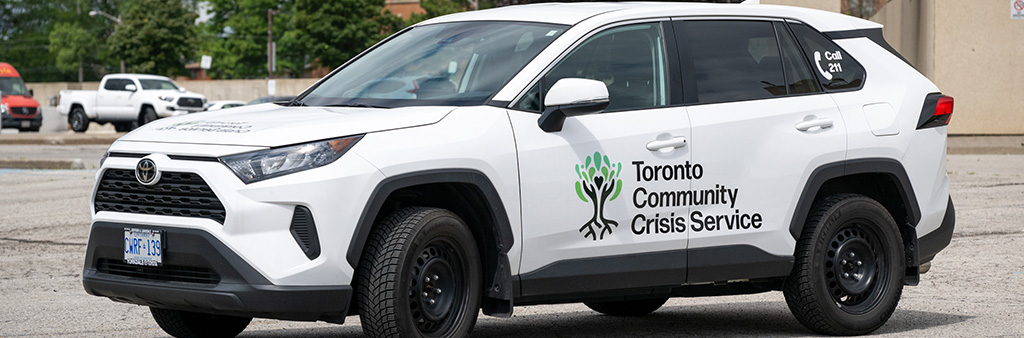
The Toronto Community Crisis Service (TCCS) was described by Mayor Olivia Chow as Toronto's fourth emergency service when she formally launched the service city-wide in September 2024, positioning it alongside Toronto Police, Fire Services, and Paramedic Services. In its pilot phase, the program successfully resolved 78% of mental health calls received from 911 without police involvement, a key finding that was a major factor in expanding the service city-wide. To date, the service has responded to approximately 29,000 calls.
Mayor Chow stated that the TCCS has "successfully established itself as a trusted crisis response option" and has "strengthened confidence in community safety efforts." A pilot project to embed TCCS crisis workers directly onto the Toronto Transit Commission (TTC) subway platforms is set to begin on November 15, 2025.
Ottawa’s Alternate Neighbourhood Crisis Response (ANCHOR) was launched in August 2024 for a three-year pilot period, serving the Centretown and Centretown West areas of the city. Initial data from its first 11 weeks of operation showed the team handled 92.05% of their crisis interactions without police involvement. Staff reported high demand for the service, and the ANCHOR Program Manager, Morissa-Dalia Ellis, described it as a “cornerstone of the community.”
The Sarnia Journal’s Project Right Response proposal for funding a paramedic-led crisis response team is an effort to follow these successful, real-world examples to improve community health and save taxpayer money.
Mon, Oct 5 · 7:00 pm
St Andrew’s Presbyterian Church 261 Christina St N Sarnia, ON
Tue, Oct 6 · 5:30 pm
The Bridge Patisserie Café 12 Michigan Ave Point Edward Point Edward, ON
Tue, Oct 6 · 6:00 pm
Black Gold Brewery 395 Fletcher St Petrolia, ON
A division of Sarnia Media Group Inc.
Locally Owned and Operated
© 2026 The Sarnia Journal