Oct5
Scottish Country Dancing
Mon, Oct 5 · 7:00 pm
St Andrew’s Presbyterian Church 261 Christina St N Sarnia, ON

Recently released data from Lambton County reveals a persistent and volatile homelessness crisis that continues to outpace the region’s progress on affordable housing, leaving critical strategic goals unmet.
Data presented to Lambton County Council on September 3, Homelessness Prevention and Affordable Housing update combined with monthly statistics, paints a volatile picture of the homelessness crisis in Sarnia-Lambton, highlighting a significant gap between the County’s housing strategy and the reality on the ground.
While construction on new affordable housing units is moving forward, the number of residents without a stable home fluctuates significantly, and key targets from the County’s strategic plan have been missed by a wide margin.
According to the County’s By-Name List (BNL) dashboard, the number of individuals experiencing homelessness has been unstable throughout 2025. After starting the year with 302 people on the list in January, the number dipped to a low of 274 in April before spiking to 305 in May and settling at 284 in July.
More critically, the number of people experiencing chronic homelessness—being without a home for at least six months in the past year—has remained stubbornly high, fluctuating between a high of 229 in December 2024 and a low of 197 in July 2025. This persistent crisis is straining local resources, with emergency shelters consistently operating at 80-90% capacity through the summer.
The data also provides a clearer picture of who is most affected. Indigenous residents are consistently and significantly overrepresented, making up between 21% and 25% of the homeless population each month. The vast majority of those on the list, typically around 88%, are adults in their core working years, aged 25-64.
Front-line outreach teams are actively engaging with dozens of individuals monthly, but the scale of the need continues to outpace the immediate solutions available.
On the housing development front, the County is advancing several projects aimed at chipping away at the affordable housing deficit. An update report highlights progress on multiple fronts:
Ontario Aboriginal Housing Services (OAHS): A 40-unit building at 940 Confederation Street is under construction and expected to be completed in December 2025.
Maxwell Park Place: This 24-unit project is nearing completion and expected to be ready this fall.
Kathleen Avenue: A 50-unit building is now under construction, with an expected occupancy date in the fall of 2026.
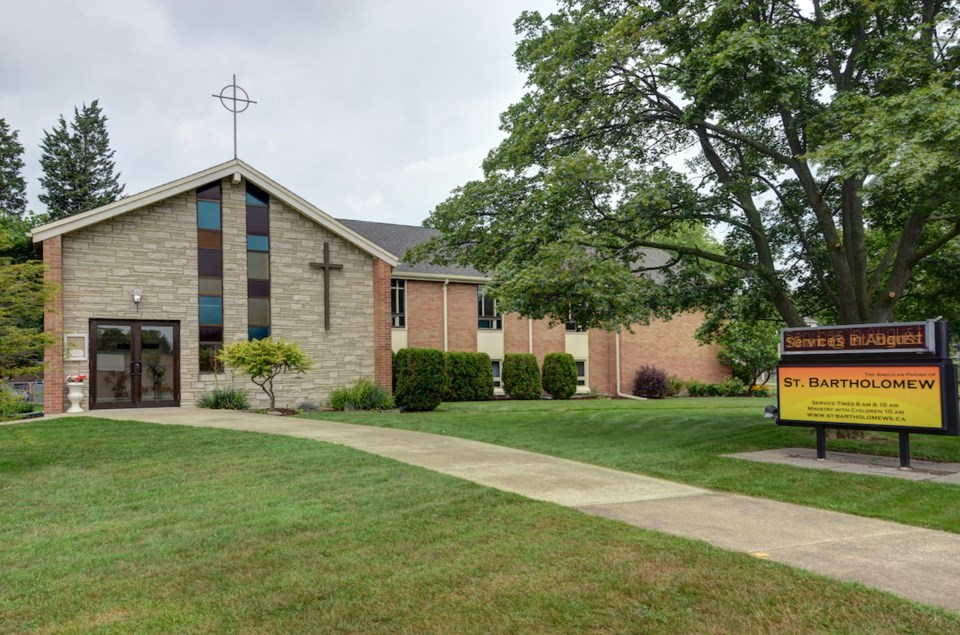
Cathcart Boulevard: The former St. Bartholomew's Church property has been cleared for a proposed 107-unit supportive housing building, which is now "shovel-ready" and awaiting funding from upper levels of government.
These developments are part of a larger strategy involving key partnerships, most notably with Indwell Community Homes, which aims to build between 150 and 300 supportive housing units in Lambton over the long term.
While these projects represent tangible progress, they also reveal a stark disconnect when measured against the County’s own "Re-Visioning Housing and Homelessness in Lambton County: 2020-2024 Plan."
The plan set an ambitious target to build 75 new affordable rental units by the end of 2024. The combined 64 units from the OAHS and Maxwell Park Place projects will not be completed until late 2025, a year after the deadline.
Most profoundly, the plan aimed to achieve "functional zero" chronic homelessness by 2025, which is defined as having three or fewer people in that situation. With numbers consistently hovering around 200 throughout 2025, that goal remains exceptionally distant.
The planned Lambton HART Hub is positioned as a major future step, integrating health, addictions, and housing services under one roof. However, the County’s reports reiterate that without significant and sustained funding from the provincial and federal governments, the local response will continue to be constrained.
As the county moves forward with its building plans, its own data shows that for hundreds of Sarnia-Lambton residents, the housing crisis is not a future problem to be solved, but a daily, volatile reality that remains deeply entrenched.
Mon, Oct 5 · 7:00 pm
St Andrew’s Presbyterian Church 261 Christina St N Sarnia, ON
Tue, Oct 6 · 5:30 pm
The Bridge Patisserie Café 12 Michigan Ave Point Edward Point Edward, ON
Tue, Oct 6 · 6:00 pm
Black Gold Brewery 395 Fletcher St Petrolia, ON
A division of Sarnia Media Group Inc.
Locally Owned and Operated
© 2026 The Sarnia Journal