Oct5
Scottish Country Dancing
Mon, Oct 5 · 7:00 pm
St Andrew’s Presbyterian Church 261 Christina St N Sarnia, ON

Columnist Tya Emberseed challenges Marilyn Gladu’s claims of censorship, arguing that refusing to amplify harmful, exclusionary rhetoric is not a violation of free expression; it’s a defence of public values.
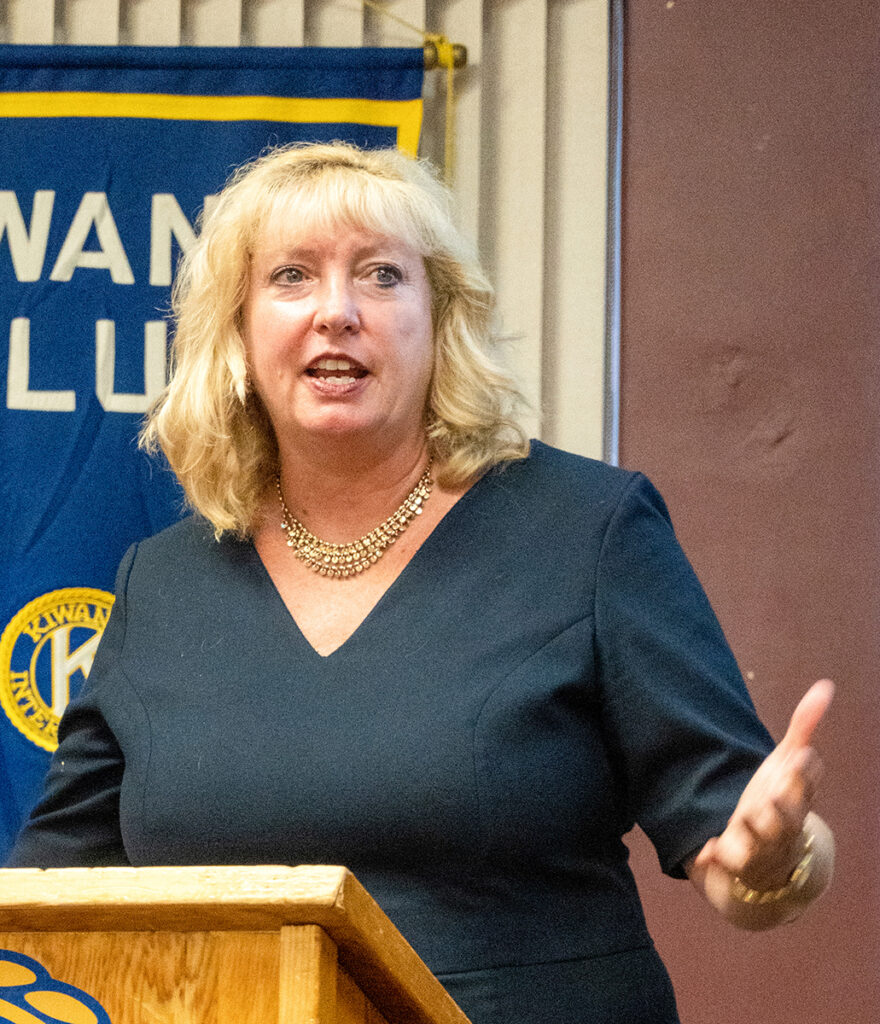
Marilyn Gladu recently released a letter condemning Parks Canada for revoking performance permits for American musician Sean Feucht, framing it as a violation of freedom of expression and religious liberty.
But there was no violation. No one was prosecuted. No one was silenced. This wasn’t censorship — it was basic everyday governance.
In Canada, freedom of expression is protected under the Charter — but it is not absolute. Section 1 explicitly allows for “reasonable limits,” particularly when speech causes harm, incites hatred, or undermines public safety. We've long had legal limits on libel, slander, hate speech, and incitement. There is a huge difference between actively silencing a person, and refusing to give them a platform.
Sean Feucht isn’t just a musician. He’s a provocateur. He has repeatedly used his influence to describe drag performers as “demonic, sick, twisted,” and has accused schools of “teaching transgenderism” to corrupt children. His “Let Us Worship” tour is less about faith and more about grievance politics wrapped in Christian nationalism. It’s a pattern: provoke outrage, claim persecution, and monetize the backlash.
Gladu defends this under the banner of “free speech.” But this kind of speech causes real, measurable harm. LGBTQ+ youth in Canada are three times more likely to suffer from depression, and nearly one in four has seriously considered suicide. They make up between 25% and 40% of the youth homeless population — a staggering overrepresentation caused largely by family rejection, often justified by religious rhetoric like Feucht’s.
And this is not an isolated defense on Gladu’s part. She previously voted against Canada’s ban on conversion therapy — a practice widely condemned as psychological abuse. Time and again, she has framed her position as one of defending faith — even when that faith is used to justify the rejection and harm of vulnerable people.
Let’s be clear: no one is persecuting Christianity. It remains the dominant religion in Canada and across the western world. Gladu's attempt to paint herself as the victim flips the script — portraying the powerful as oppressed, and the marginalized as aggressors. It's textbook DARVO: Deny, Attack, and Reverse Victim and Offender — a tactic that reframes abuse as righteousness.
Feucht is part of a broader ecosystem of bad-faith actors — not unlike provocateurs like Jordan Peterson — who trade in outrage for influence. These aren't thinkers being excluded for controversial ideas; they're performers trying to provoke, not persuade. When denied a platform, they don't reflect — they cry censorship and rake in donations.
These people do not actually want to debate ideas — they want to assert harmful absolute positions. And public institutions have every right — and responsibility — to say no.
More importantly, we need to ask: how does this rhetoric make our communities better? What good comes from telling queer and trans people that they are sick, sinful, or unsafe? It doesn’t make us freer or stronger. It isolates the vulnerable. It divides us. It turns public space into battlegrounds of shame and exclusion.
And none of this is theoretical. It’s deeply personal. When figures like Feucht are amplified, families hear those messages — and some act on them. That’s how queer kids end up homeless. Not because of who they are, but because someone told their parents that rigid judgement matters more than unconditional love.
Here's the part we too often ignore: none of us chose the beliefs we hold at our core. Not Gladu, not Feucht, not the LGBTQ youth being rejected at home. We are shaped by experience, culture, biology, and circumstance. We don’t choose our convictions — but we do choose how we use them.
You can have faith. You can have values. But when you use those beliefs to exclude, to shame, or to hurt others — the problem isn’t your convictions. The problem is how you’re wielding them.
Free expression isn’t even the issue here. Sean Feucht is still free to say whatever he wants — and he does, constantly — regardless of how harmful those words may be. But refusing to amplify hate on public property isn’t censorship. It’s a choice to uphold Canadian values: inclusion, dignity, and safety for everyone.
Because when someone demands a platform to demean others, the most responsible answer we can give — the most Canadian answer — is simply: no.
Mon, Oct 5 · 7:00 pm
St Andrew’s Presbyterian Church 261 Christina St N Sarnia, ON
Tue, Oct 6 · 5:30 pm
The Bridge Patisserie Café 12 Michigan Ave Point Edward Point Edward, ON
Tue, Oct 6 · 6:00 pm
Black Gold Brewery 395 Fletcher St Petrolia, ON
A division of Sarnia Media Group Inc.
Locally Owned and Operated
© 2026 The Sarnia Journal