Oct5
Scottish Country Dancing
Mon, Oct 5 · 7:00 pm
St Andrew’s Presbyterian Church 261 Christina St N Sarnia, ON

It’s been just over 100 days since Mark Carney became Prime Minister of Canada. He came in talking about fairness, responsibility, climate action, affordability—and immediately showed whose side he's on. […]
It’s been just over 100 days since Mark Carney became Prime Minister of Canada. He came in talking about fairness, responsibility, climate action, affordability—and immediately showed whose side he's on.
His budget boosts military and surveillance spending. Bill C-2 expands police powers without warrant thresholds. He champions tough-on-crime measures borrowed directly from Conservative playbooks, but rebrands them as responsible centrism. He continues fossil fuel subsidies and backs carbon capture pipelines while presenting it as climate action. Behind the scenes, his ties to Brookfield and other financial institutions run deep, and his policies reflect it. He governs like a CEO, not a public servant.
He says nothing about the bombing of civilians in Gaza. He says even less about Canada’s role in arming it. In 2024, Canadian companies exported nearly $19 million worth of military goods to Israel—including drones and explosive devices. That number doesn’t include Canadian-made F-35 parts exported through the U.S. or dual-use components embedded in weapons systems. Legal experts say these exports may violate Canadian and international law. Still, they continue.
Meanwhile, hundreds of Canadians have been confirmed to be serving in the Israeli military. Not volunteering in humanitarian roles—serving in the IDF, in an active war zone. That’s illegal under Canadian law without government approval. Global Affairs Canada has the authority to investigate and charge those who take up arms in a foreign army, especially in the context of potential war crimes. But instead of launching prosecutions or even speaking publicly, they’ve done nothing.
This is what Canadian foreign policy looks like under Mark Carney. Polished words. Zero accountability.
Meanwhile, the NDP continues to shrink into irrelevance. Jagmeet Singh has turned the party into a social media brand, full of style and absent of risk. There was a time when the NDP would have fought loudly for a ceasefire, for housing built by the public, for a wealth tax with teeth. Now we get vague statements, delayed positions, and personality politics. The pharmacare deal was watered down. Foreign policy is a black hole. The party has abandoned organizing in the places where working-class people actually live.
Here in Sarnia, Bob Bailey and Marilyn Gladu keep smiling for the cameras. They show up at BBQs and ribbon cuttings. They send out press releases. Then they go to Ottawa and vote for more military funding, less healthcare access, and policies that leave this community more unaffordable by the week. They don’t represent people—they represent their party. That’s been clear for a long time.
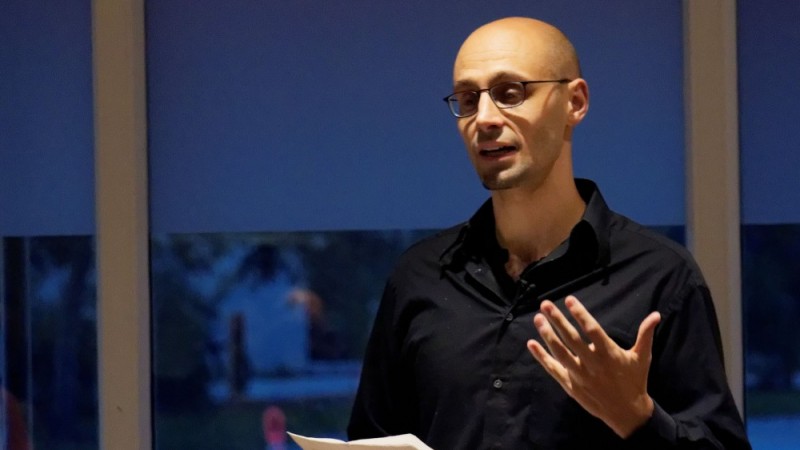
So it matters that someone like Yves Engler is running to lead the NDP. He’s spent decades calling out Canadian foreign policy, mining interests, military expansion, and the corporate capture of government. He’s written about Canada’s role in coups, occupation, and propaganda. I heard him speak fifteen years ago at the University of Guelph. There were five of us in the room. He laid out Canada’s role in the 2004 coup in Haiti, in Israel-Palestine, and in the global mining industry. There were no cameras. No posturing. Just truth.
Engler isn’t polished. He’s not trying to be viral. He’s not apologizing to Drake for going to a Kendrick show. He’s doing what political leaders are supposed to do—telling the truth, clearly, even when it’s unpopular.
I’m not an NDP member and never will be. I’m independent. But I pay attention to who’s running. Because there’s a difference between lesser evils and real alternatives.
Yves Engler won’t fix everything. But putting him in the leadership race would force the conversation to places the party has spent a decade avoiding. Foreign policy. Class struggle. Public ownership. Justice that doesn’t begin and end with branding.
It shouldn’t be radical to speak the truth about Canada. But right now, it still is.
Mon, Oct 5 · 7:00 pm
St Andrew’s Presbyterian Church 261 Christina St N Sarnia, ON
Tue, Oct 6 · 5:30 pm
The Bridge Patisserie Café 12 Michigan Ave Point Edward Point Edward, ON
Tue, Oct 6 · 6:00 pm
Black Gold Brewery 395 Fletcher St Petrolia, ON
A division of Sarnia Media Group Inc.
Locally Owned and Operated
© 2026 The Sarnia Journal