




Oct20
Worker at centre of Human Rights case awaiting answers
Cathy Dobson Two years ago a Sarnia man became fed up with the 46 cents an hour he’s paid at the Wawanosh Enterprises sheltered workshop and began fighting for change.
Cathy Dobson
Two years ago a Sarnia man became fed up with the 46 cents an hour he’s paid at the Wawanosh Enterprises sheltered workshop and began fighting for change.
Kris McCormick, 40, argued such a low wage is discriminatory and a violation of the Human Rights Code.
The case has gone to the Ontario’s Human Rights Tribunal and was supposed to be heard a year ago. But, apart from a single meeting last year, there’s been no progress and McCormick and his mom continue to wait.
It’s the unknown that bothers Erla McCormick the most.
“I’m not going to be around forever and I worry about what he’ll do when I’m gone,” she said.
McCormick’s dispute over compensation is part of a wider discussion taking place on the future of sheltered workshops. The provincial government said in 2016 they would be phased out, but gave no indication when that will happen.
Meanwhile, it’s business as usual at Wawanosh Enterprises, said John Hagens, executive director of Community Living Sarnia-Lambton, which supervises the program.
“The province has asked organizations like ours to provide different supports other than sheltered work activities,” Hagens said.
“We have not been given any deadlines and our sheltered workshop will continue to operate.”
The only difference, he said, is new applications to the workshop aren’t being accepted. Numbers in the program are shrinking naturally as participants retire or move away.
“We have to look at this as a positive thing,” said Hagens. “Maybe it’s time to get away from sheltered work activities. It’s a transition and it will take time.”
As far as McCormick’s hope of a bigger paycheque for the woodworking he does at the shelter, Hagens has said the position of his agency is that shelter workshop clients are not employees and do not earn a wage. Therefore, there is no violation of the Human Rights Code.
The 46 cents is an honorarium to encourage attendance, according to Hagens.
The next tribunal hearing is now scheduled for June 5-6.
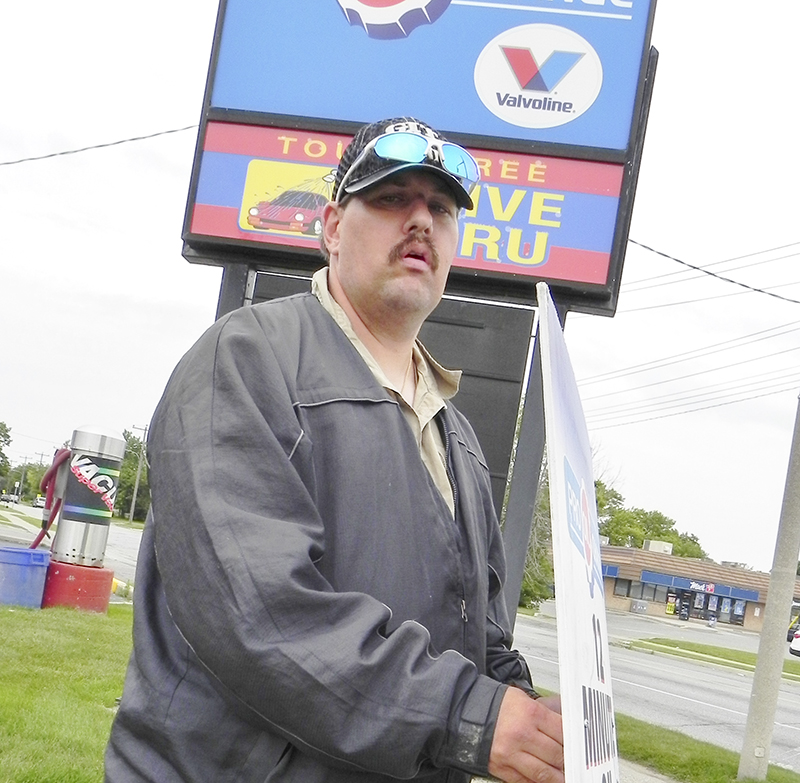
Meanwhile, Kris McCormick’s son works for minimum wage at Pro Oil Change from spring to fall, walking in front of the business holding a sandwich board to draw in customers.
“It’s work at a fair wage,” his mother said. “Kris likes the income. Wouldn’t anyone?”
She is concerned others with family members at the sheltered workshop blame her for the transition apparently under way in some areas.
“Some people may be upset,” she said. “But I know it’s not happening because of me. I don’t want the shelters to close.”
Hagens said Community Living Sarnia-Lambton is considering other support programs for shelter workers such as volunteer work in the community or finding more employers like Pro Oil Change willing to hire people with disabilities.
“Real jobs for real pay is something we’ve always promoted,” Hagens said.
More to read
Events
Oct20
Meat Raffles @ Black Gold Brewery
Tue, Oct 20 · 6:00 pm
Black Gold Brewery 395 Fletcher St Petrolia, ON
Oct20
Ladies/Men, Come Sing with Us!
Tue, Oct 20 · 7:00 pm
St Michael and the Angels (formerly All Saints) Anglican Church 248 Vidal Street North Sarnia, ON
Oct20
TV Bingo – Sarnia Seaway Kiwanis
Tue, Oct 20 · 7:00 pm
Cogeco Your TV Channel 6 – HD Channel 700 [OR] Stream with Epico App Sarnia, ON
Oct20