

Oct19
Sarnia leading the way in recording Italian experience
Troy Shantz In 1952, a man named Antonio Serratore brought together a handful of Italian immigrants and organized a place for them to learn English and socialize.
Troy Shantz
In 1952, a man named Antonio Serratore brought together a handful of Italian immigrants and organized a place for them to learn English and socialize.
Eventually, they formed what we know today as Sarnia’s Dante Club, a popular banquet centre and venue for weddings and other special events.

Serratore’s story was one of many captured and archived through a process mastered nearly 30 years ago by Sarnia’s Italian-Canadian community.
And that process is now being adopted on a national level as the Italian-Canadian Archive Project, or ICAP.
“Various communities have a story, they have an important story about their journey and their experiences,” said Sarnia’s Caroline Di Cocco, the president of ICAP.
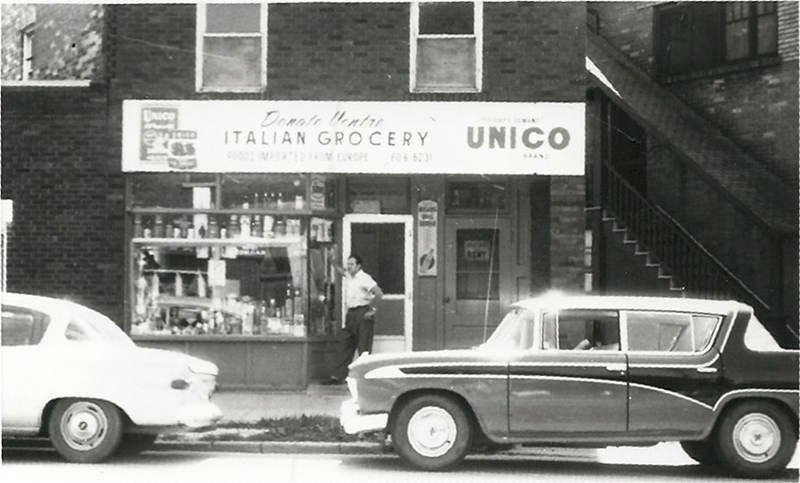
The job of preserving the Italian immigrant experience began in the 1980s when the Sarnia-based Italo-Canadian Cultural Club began collecting and sorting photos and documents. The goal was to build a narrative about Italian settlement in Sarnia-Lambton over the past 100 years.
Though the national ICAP archive is focused on Italian heritage the immigrant experience is relatable to many Canadians, Di Cocco said.
The Royal Society of Canada recently praised ICAP for the initiative, noting other chapters are applying the archiving process across the country.
Story preservation was a keynote topic at ICAP’s National Conference in London recently, where Sarnia linguist and Western University graduate student Michael Iannozzi shared his experience of working with the Lambton Archives to preserve Sarnia’s Italian heritage.
What Sarnia has already done is being adopted by ICAP chapters in London, Winnipeg and Calgary, Di Cocco said.
Locally, the collection was recently digitized to create a virtual exhibit that will be available online at www.italiansinlambton.com. It’s expected to be ready by next summer, she added.
“We not only share stories with one another. We put these pieces together and it creates a whole picture of who we are as a community.”


More to read
Events
Oct19
Oct19
Oct19
Scottish Country Dancing
Mon, Oct 19 · 7:00 pm
St Andrew’s Presbyterian Church 261 Christina St N Sarnia, ON
Oct19
cineSARNIA presents Tuner
Mon, Oct 19 · 7:00 pm
Sarnia Public Library Theatre 124 Christina St. S. Sarnia, ON