


Oct18
Guest Column: Why is Bob Bailey eager to kill native birds?
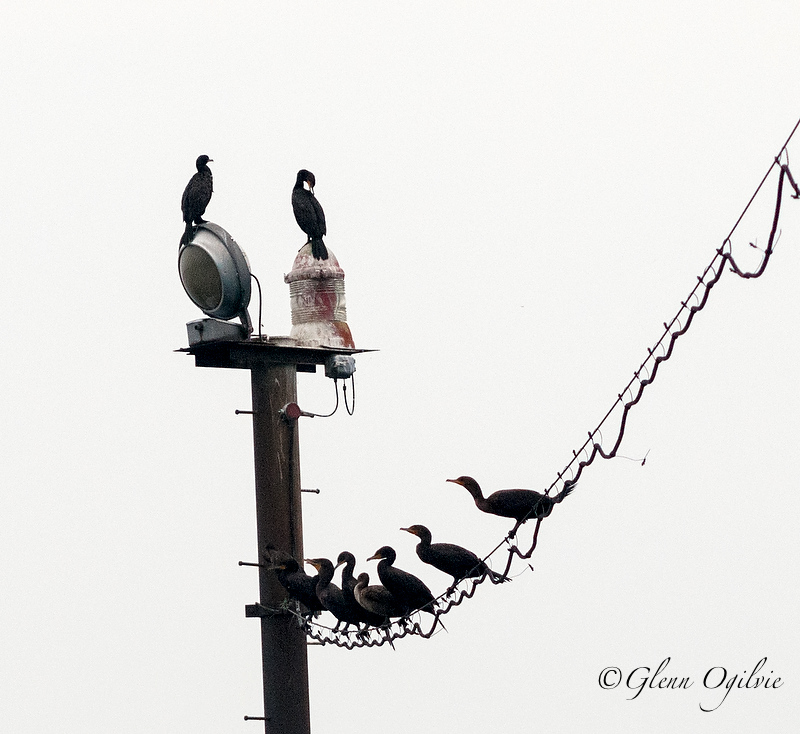
AnnaMaria Valastro Sarnia-Lambton MPP Bob Bailey has introduced a dangerous bill. Bill 205 removes all protection from the double-crested cormorant, a native species, making it legal for anyone to kill the birds even during nesting periods.
AnnaMaria Valastro
Sarnia-Lambton MPP Bob Bailey has introduced a dangerous bill.
Bill 205 removes all protection from the double-crested cormorant, a native species, making it legal for anyone to kill the birds even during nesting periods.
The bill does not make it legal to destroy their nest or eggs, but the shooting of one adult bird in flight during the breeding season effectively kills both the eggs and chicks, since both adults are needed to incubate eggs successfully. While devoted parents, one bird alone cannot produce young.
This is a clever marketing strategy by Bob Bailey, who is banking on the public’s lack of understanding of bird biology. Poorly informed hunters and anglers support Bill 205 because they wrongly believe that cormorants are eating too many game fish – a perception not supported in science.
In fact, invasive species that plague the Great Lakes such as round gobies and alewife form a significant portion of cormorants’ diet.
The public will not support arbitrarily killing a native species simply to appease an irate fisheries industry.
Therefore, proponents of Bill 205 must appeal to something that the public does care about – trees. They hope that the visuals of cormorants nesting in tree tops that have been stripped of their leaves and slowly killed by bird excrement are enough to turn public opinion against an innocent bird.
Yes, concentrated bird excrement does kill trees, but the ecological significance of such magnificent nesting colonies is rarely discussed. Wherever there is a cormorant colony, other colonial water birds like Great Egrets, Great Blue Herons, and Black-crowned Night Herons follow, because there is safety in numbers from predators who feast on their eggs and chicks. The presence of hundreds of birds and their guano replenishes island shorelines, which are susceptible to erosion, and the acidity of the guano creates soil conditions that support unique vegetation.
I enjoy watching these colonies of hundreds of birds peacefully nesting together waiting for their young to hatch. It is one large nursery and humbling to witness.
If passed, Bill 205 would allow any person to arbitrarily destroy cormorant colonies far from others who might appreciate and support their presence in a natural state. Since birds are clustered together, most often on remote islands away from the public eye, the Ontario population could be devastated in just one breeding season if enough hunters organized a shoot.
Shooting hundreds in a day is very possible– as occurred at Presqu’ile Provincial Park, where government sharpshooters easily killed the unsuspecting adult birds peacefully incubating their eggs.
And in doing so, Ontario Parks lost the only colony of Great Blue Herons on Lake Ontario, which had nested safely among cormorants at Presqu’ile.
Please reject Bob Bailey’s politically charged bill by calling or writing him today.
AnnaMaria Valastro is the lead campaigner for Peaceful Parks, a citizen-led organization dedicated to protecting Ontario’s wild spaces.
More to read
Events
Oct18
Oct18
cineSARNIA presents Tuner
Sun, Oct 18 · 2:00 pm
Sarnia Public Library Theatre 124 Christina St. S. Sarnia, ON
Oct18
Oct18