
Point Edward remains a separate municipality today because of a deliberate choice to resist provincial restructuring in the 1990s. This local defiance preserved the village’s independent governance while it remained physically and economically tied to Sarnia.
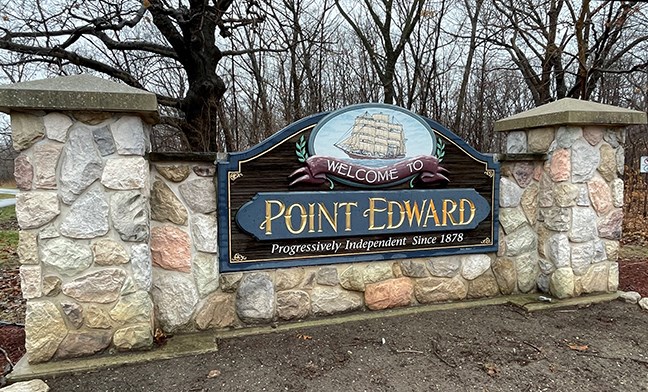
It’s easy to assume Point Edward is part of Sarnia. It shares the same shoreline, the same roads, and much of the same daily life. But politically, it isn’t, and that’s not because it was overlooked. It’s because, when amalgamation was on the table, Point Edward resisted it, and ultimately, it worked.
That pattern goes back further than most people realize. In 1893, Point Edward residents voted overwhelmingly in favour of joining Sarnia, but only if specific economic conditions were met, tied to railway development expected to benefit the village. When those conditions failed, the merger collapsed.
Even then, the message was clear: Point Edward was not opposed to amalgamation outright, but it would not accept it without a clear advantage. The decision stayed local. Nearly a century later, the stakes were much higher.
By the late 1980s, Ontario was restructuring municipalities across the province. In Sarnia-Lambton, that process led to the Sarnia-Lambton Act, 1989, which consolidated surrounding townships into the modern City of Sarnia. The direction of travel was clear: fewer municipalities, larger systems, and more centralized governance.
Point Edward was part of that conversation. At the time, there were active discussions about merging the village into Sarnia as part of the broader restructuring. Unlike earlier eras, this wasn’t just a local idea; it had provincial momentum behind it.
Across Ontario, similar communities were being folded into larger cities, sometimes with little ability to resist. Point Edward did resist. Residents opposed the merger, and local leadership pushed back against the idea that amalgamation was inevitable or necessary.
The argument wasn’t abstract. The village was small, tightly defined, and already functionally connected to Sarnia in day-to-day life. The practical benefits of amalgamation, shared systems, coordinated infrastructure, and regional integration, were already largely in place without giving up municipal control.
What amalgamation would have changed was governance. That distinction became the centre of the fight. The question wasn’t whether Point Edward was connected to Sarnia; it clearly was. The question was whether that connection required surrendering local decision-making.
On that point, the answer from the village was no. By 1991, the proposal to amalgamate Point Edward into Sarnia had been abandoned. That outcome stands out when placed in its provincial context.
Through the 1990s and early 2000s, Ontario forced widespread municipal amalgamations, combining cities and surrounding communities into single-tier governments. In many cases, local opposition did not stop the process. Decisions were made at the provincial level and imposed downward.
That didn’t happen here. Point Edward remained separate, even as the region around it was reorganized. The Sarnia-Lambton Act, 1989 created the modern structure of Sarnia, but it did so without absorbing the village.
Once that structure was set, any future merger would require a new decision from the province, one that has never come. More than three decades later, the result is still visible.
Point Edward operates within Sarnia’s physical and economic space, but outside its political structure. It shares infrastructure and daily connections with the city, but retains its own council, its own budget, and its own authority over local decisions.
That arrangement didn’t emerge by accident. It is the outcome of a moment when amalgamation was possible, pressure was real, and the village chose not to accept it. Point Edward isn’t part of Sarnia because, when the choice mattered most, it said no, and that decision held.


