
Sarnia has approved an industrial-heavy business park expansion, but the real story isn’t new lots, it’s the model behind them. The plan reflects a long-standing belief that growth comes from expanding land and infrastructure, even as the city faces rising costs, modest population growth, and ongoing affordability pressures.
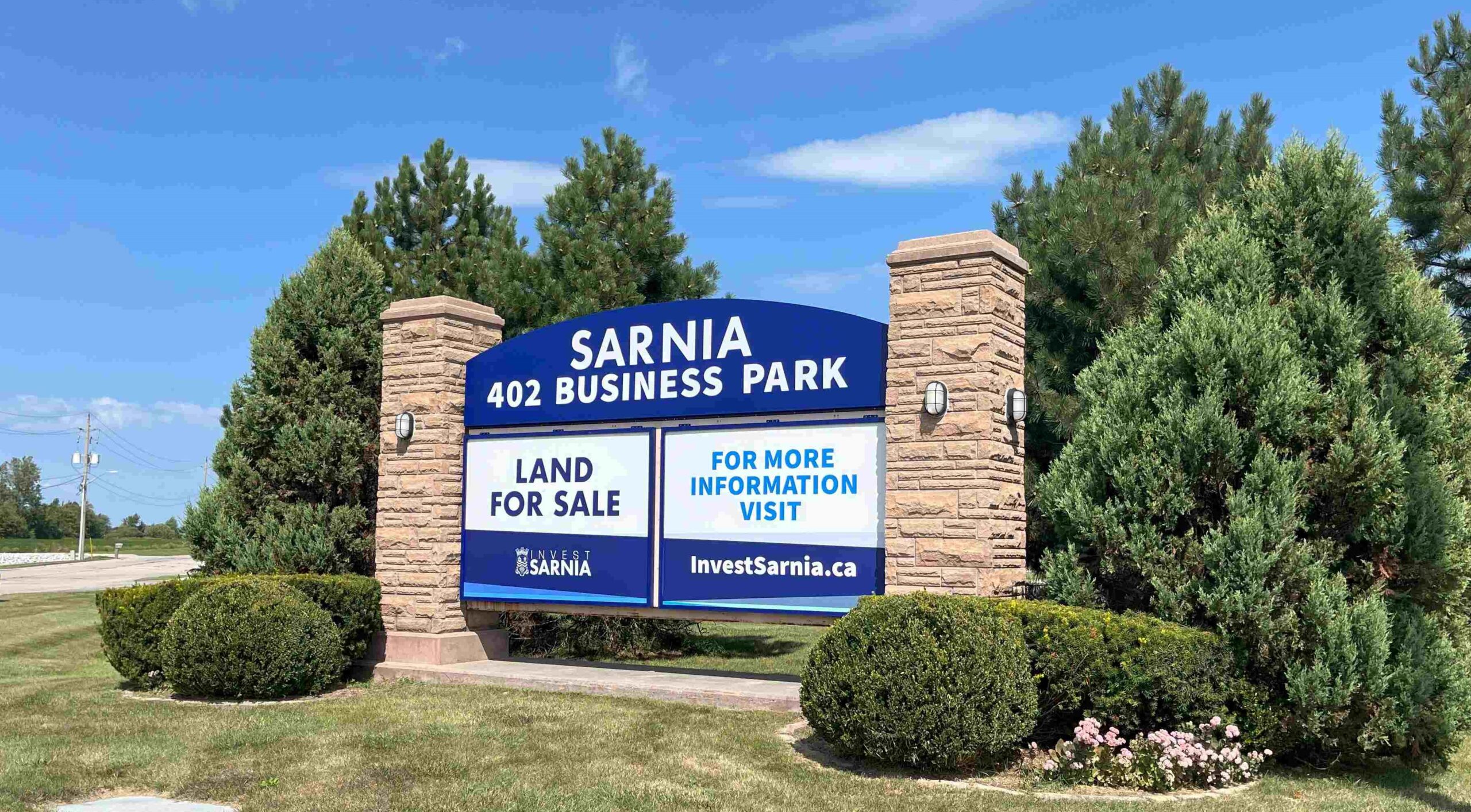
Sarnia has approved a concept for its Business and Research Park. The plan moves forward with an industrial-heavy layout, about 20 lots east of London Line, with future road connections, including Wellington, framed as part of a longer-term growth strategy.
On its surface, it is a straightforward development story. More land, more lots, more opportunity. But decisions like this are rarely just about land. They reflect how a city believes growth actually works. And in this case, the model is familiar.
The approach is simple: service land, extend infrastructure, and make parcels available for industrial use. Investment, the logic goes, will follow. Jobs will come with it. The tax base will grow. Over time, the city becomes more financially stable.
That model has been used for decades. It is built into planning frameworks across Ontario. It is also rarely questioned in real time, because each individual step, approving land, extending a road, preparing a site, feels incremental. What is harder to see is the accumulation.
Every new industrial lot requires servicing. Roads, water, wastewater, storm infrastructure. Those are not one-time costs. They become long-term obligations. Maintenance, replacement, lifecycle funding. Once built, they do not disappear.
That is where the tension starts to show.
City of Sarnia is already managing significant infrastructure pressure. Like many Ontario municipalities, it faces the ongoing cost of maintaining systems built under very different economic and demographic conditions. Expanding the footprint of those systems increases the total burden, even if it creates new opportunities at the same time.
The question is whether those opportunities materialize at a scale that offsets the cost. That is not guaranteed.
Sarnia is not a high-growth city. Population increases have been modest. The demographic trend is toward an aging population. Industrial demand exists, but it is not unlimited, and it is not always predictable.
Serviced land does not create demand on its own. It assumes it. If that assumption proves correct, the business park becomes an asset. If it does not, the city is left maintaining infrastructure tied to land that fills slowly, or unevenly, over time.
At the same moment this expansion is being planned, the city is also facing pressure in other areas.
Housing affordability remains a persistent issue. Questions around density, land use, and where people can actually live continue to surface in planning discussions. Infrastructure funding gaps are not abstract, they show up in roads, pipes, and facilities that need ongoing investment. Those pressures do not disappear when new industrial land is created. They exist alongside it.
That is what makes this decision more than a development file. It highlights a deeper assumption that growth will come from expanding outward, through land supply, road extensions, and new parcels, rather than from reworking what already exists.
There is an alternative way to think about growth. Instead of expanding the footprint, a city can focus on intensifying it. Using existing infrastructure more efficiently. Prioritizing infill. Aligning land use more tightly with current population and economic realities.
That model does not eliminate the need for industrial land. But it changes the balance. It asks whether adding more capacity is the right first step, or whether better use of existing capacity should come first.
Sarnia’s decision suggests that, at least for now, the expansion model remains dominant. That does not make the business park a mistake. It may succeed. Demand may follow. The lots may fill. The tax base may grow.
But those outcomes depend on conditions that are not entirely within the city’s control. What is within its control is the framework it uses to make decisions. Right now, that framework still assumes that preparing land for growth is the same thing as generating it.
That assumption is rarely stated outright. It does not need to be. It is embedded in how projects are proposed, evaluated, and approved. The business park simply makes it visible.
The real question is not whether Sarnia should develop industrial land. It is whether the city is still planning as if growth will solve its challenges, or whether those challenges require a different approach altogether.
Because expanding outward is not just a strategy, It is a bet. And like any bet it only pays off if the underlying assumptions hold.


