
For decades, Sarnia’s economy was built on petrochemical plants that employed thousands of workers. But as automation transformed Chemical Valley and major employers like Dow eliminated large workforces, the industry remained while the jobs largely disappeared, leaving the city navigating stagnant population, rising municipal costs, and a changing relationship with the industrial complex that once drove its growth.
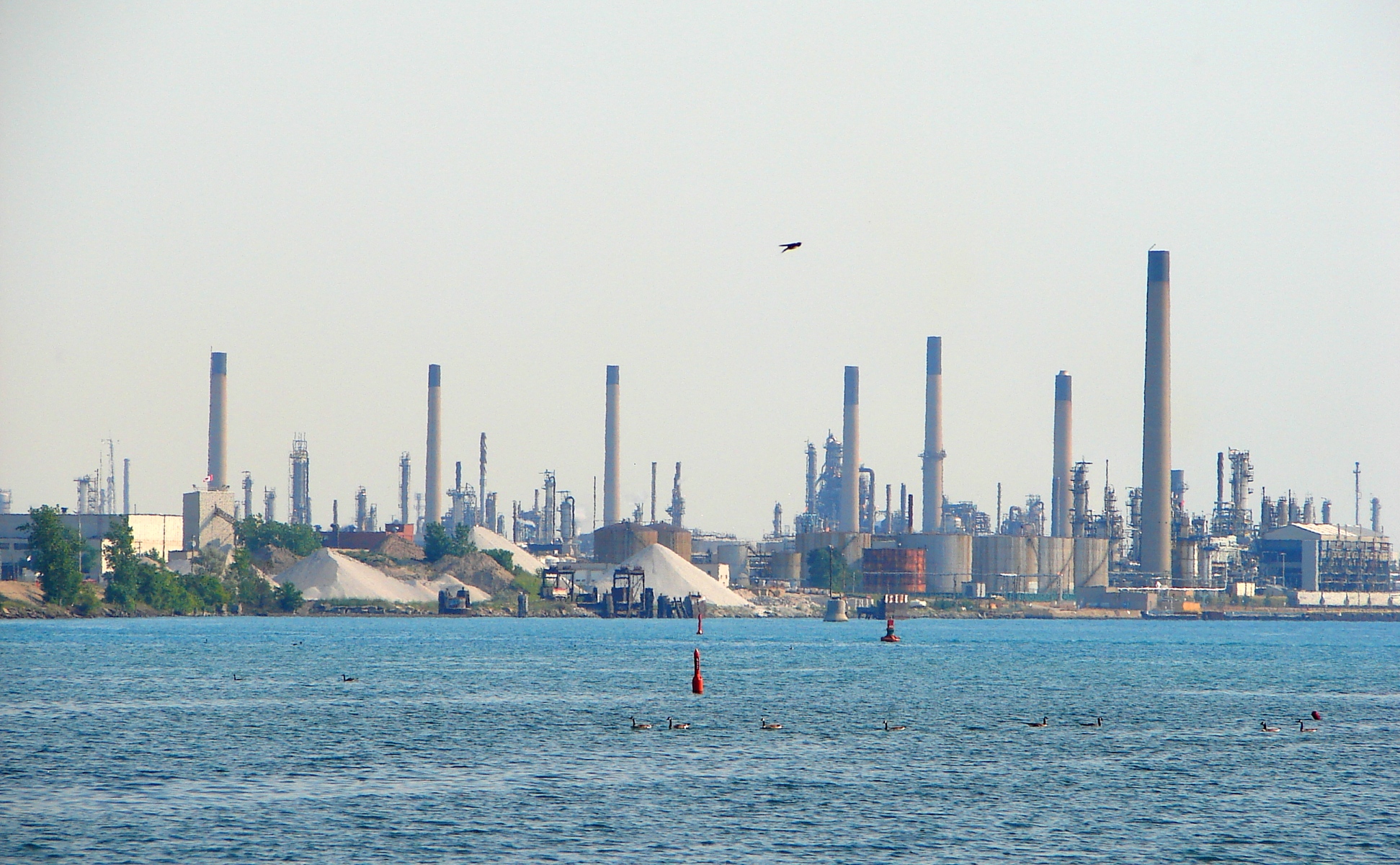
For most of the twentieth century, Sarnia’s economic story was straightforward. Petrochemical plants along the St. Clair River built the city’s prosperity. Refineries and chemical facilities provided stable, high-paying jobs that supported entire neighbourhoods. When industry expanded, workers arrived, homes were built, and the city grew.
The industrial corridor known as Chemical Valley became the defining feature of the region’s economy.
But over the past several decades, the relationship between industry and the city has quietly changed.
The plants are still there. Production remains enormous. Chemical Valley continues to be one of Canada’s largest petrochemical clusters. But the role those plants play in the everyday economic life of Sarnia is not the same one that built the city.
The difference can be seen most clearly in the history of one company.
Dow Chemical once operated one of the largest petrochemical complexes in the region. At its peak in the early 1990s, the company employed roughly 1,600 workers at its Sarnia site. Over the following decade that workforce shrank dramatically as the company restructured operations. By 2002 the workforce had fallen to around 400 employees, and in 2006 Dow announced the plant would close entirely by 2008, eliminating hundreds more jobs.
Dow’s story was not unique. Beginning in the late twentieth century, petrochemical companies across North America modernized their facilities through automation, digital process control, and large-scale operational consolidation. Plants became more efficient and more technologically sophisticated.
They also required far fewer workers to operate.
Chemical Valley did not disappear. The region still contains more than 60 chemical and refining facilities and remains one of Canada’s most important petrochemical hubs.
But the labour footprint of the industry changed dramatically.
Facilities that once required large workforces to operate became increasingly capital-intensive. Massive industrial investments could add billions of dollars in production capacity while creating relatively few permanent jobs.
Sarnia’s population data reflects that transformation.
Statistics Canada census records show the city’s population reaching 72,738 in 1996, then declining to 70,876 by 2001. Over the following decades the population remained relatively stable rather than continuing the rapid growth seen in earlier periods: 71,419 residents in 2006, 72,366 in 2011, 71,594 in 2016, and 72,047 in 2021.
In other words, after the industrial restructuring of the 1990s, Sarnia largely stopped growing.
The city did not collapse. But it entered a long period of demographic stability rather than expansion.
Municipal government, however, did not enter a similar pause.
Like cities across Ontario, Sarnia continued to face rising costs associated with infrastructure maintenance, public services, and institutional operations. According to Ontario’s Financial Information Return records, the city’s total revenue-fund expenditures were approximately $61.9 million in 1990, rising to $65.2 million by 1999.
By 2010, the city’s operating budget listed gross expenditures of about $111.8 million, and by 2024 the approved operating budget had reached approximately $179.6 million.
In short, over the same decades that saw major industrial layoffs and population stagnation, the cost of operating the city continued to rise.
Sarnia’s infrastructure alone illustrates the scale of the challenge. The city’s 2025 Corporate Asset Management Plan estimates that municipal infrastructure, including roads, water systems, buildings, and other public assets, has a replacement value of roughly $4.6 billion. Maintaining that infrastructure requires significantly higher reinvestment than current spending levels.
Meanwhile, the city’s tax structure continues to reflect a heavily residential base. Budget documents show that roughly 74.9% of current city property taxes come from residential property, compared with 17.8% from commercial property and 6.8% from industrial property.
That structure exists alongside municipal policies designed to maintain competitive tax rates for industry. Sarnia’s Economic Development Master Plan highlights that the city maintains relatively low industrial tax rates compared with peer municipalities as part of its strategy to attract and retain investment.
The policy logic behind those decisions is familiar to many industrial communities. Industry is viewed as an economic anchor that must remain competitive in a global market.
But the economic structure that once made that model straightforward has evolved.
For much of the twentieth century, industrial expansion and urban growth reinforced each other. When a refinery or chemical plant expanded, thousands of workers arrived. Housing construction accelerated. Population increased, and municipal revenues grew alongside it.
Today, industrial investment can involve billions of dollars in capital infrastructure while producing only modest increases in local employment.
The industry that helped build Sarnia remains a defining part of the region’s landscape.
What has changed is the relationship between that industry and the city around it.
The refineries and chemical plants still operate. Production remains enormous. Chemical Valley continues to generate economic activity across the region.
But the era when industrial growth automatically translated into mass employment and rapid urban expansion has largely passed.
Sarnia still lives beside one of Canada’s largest petrochemical complexes.
Yet the economic relationship between those plants and the city that grew around them is no longer the one that built it.


