
Much of Sarnia’s infrastructure was built during the industrial expansion of the 1950s through the 1970s, when population and industry were growing together. Today the city maintains that same physical footprint with slower growth, rising construction costs, and infrastructure valued at roughly $4.6 billion, raising a long-term question now reflected in the city’s own planning documents: how easily can a smaller city sustain the boom-era systems it inherited?
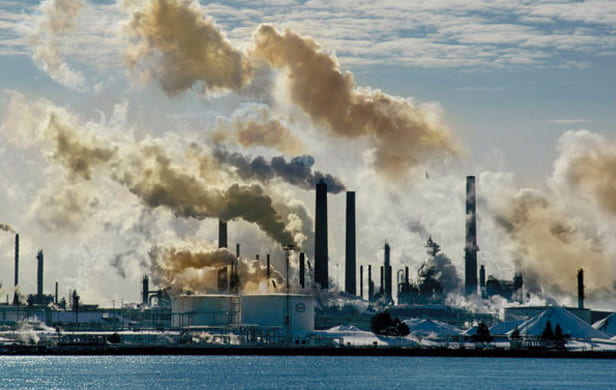
Much of the city Sarnia residents live in today was built during a very different economic moment.
In the decades following the Second World War, Sarnia expanded rapidly alongside the growth of the petrochemical industry along the St. Clair River. Refineries and chemical plants multiplied through what would become known as Chemical Valley. Jobs were plentiful, neighbourhoods expanded, and municipal infrastructure grew alongside the population.
Roads were extended into new subdivisions. Water and sewer systems were installed to support expanding neighbourhoods. Bridges, parks, and public facilities were built for a city that expected to continue growing.
Those decades left a lasting mark on the physical landscape.
They also left behind an infrastructure system whose long-term maintenance costs are only now becoming fully visible.
According to the City of Sarnia’s 2025 Corporate Asset Management Plan, the city estimates that the total replacement value of its municipal infrastructure is approximately $4.6 billion, including roads, water systems, bridges, facilities, and shoreline protection works.
Much of that infrastructure dates directly to the post-war expansion era. The same report notes that many of Sarnia’s assets were constructed during the 1950s through the 1970s, when the city was expanding alongside the petrochemical industry.
At the time, the economics of building infrastructure looked very different.
Rapid population growth meant new residents helped support new services. Industrial expansion brought jobs and economic activity that encouraged housing development and municipal investment. Infrastructure projects could be built relatively quickly and, compared with modern standards, at much lower cost.
Just as importantly, long-term replacement costs were rarely the central concern.
Infrastructure is designed to last decades. Roads, pipes, and buildings often have expected service lives of 50 to 80 years depending on materials and maintenance. During the boom years, many municipalities focused primarily on expansion rather than lifecycle replacement planning.
The assumption was simple: growth would continue, and the cost of maintaining infrastructure would be spread across an expanding population and tax base.
Decades later, those assumptions have become harder to maintain.
Many of the systems built during the mid-century expansion are now approaching the end of their expected lifespan. Sarnia’s asset-management reports show that most assets with known condition ratings fall within the “poor-fair-good” range, meaning they remain functional but are increasingly expensive to maintain.
Maintaining those systems requires steady reinvestment. The city’s current plan estimates that sustaining infrastructure at target service levels would require roughly $83.8 million in annual capital investment, while the 2025 capital budget allocates about $63 million toward infrastructure renewal.
The difference between those numbers is not the result of a single project or a sudden expense. It reflects the broader cost of maintaining the physical city that was built during earlier decades.
This dynamic is not unique to Sarnia.
Urban planners sometimes refer to the phenomenon as the post-war infrastructure wave. Cities across North America expanded rapidly in the decades after 1945. Much of the infrastructure built during that period is now reaching the end of its lifecycle at roughly the same time.
Ontario introduced Regulation 588/17 requiring municipalities to create detailed asset-management plans partly in response to this challenge. The regulation requires cities to inventory infrastructure, estimate replacement costs, and develop long-term strategies for maintaining service levels.
Sarnia’s infrastructure reports are part of that broader effort.
But the city’s economic context also matters.
Statistics Canada census data show that Sarnia’s population has remained relatively stable for several decades. The city counted 72,738 residents in 1996, 70,876 in 2001, 71,419 in 2006, 72,366 in 2011, 71,594 in 2016, and 72,047 in 2021.
In practical terms, the city has spent much of the past generation maintaining roughly the same population while continuing to manage infrastructure built during an earlier growth period.
This creates a financial dynamic that many mid-sized municipalities now face.
Infrastructure systems are largely fixed. Once roads, water networks, and public facilities are built, they must be maintained regardless of whether a city grows quickly or slowly. A city built for expansion must still maintain the same footprint even if population growth slows.
The costs of doing so, however, continue to evolve.
Construction expenses have increased significantly over time. Environmental regulations and engineering standards are more complex than those that existed during the mid-century expansion years. Modern infrastructure projects often involve more extensive planning, materials, and compliance requirements than earlier projects.
Sarnia’s own planning documents reflect these realities.
The city’s 2025 Economic Development Master Plan notes that the local economy is adapting to changing industrial conditions, including automation and shifts in global petrochemical markets, while emphasizing the importance of economic diversification and long-term planning.
None of this suggests that Sarnia’s industrial base has disappeared.
Chemical Valley remains one of Canada’s most significant petrochemical clusters, and the industry continues to play a central role in the regional economy.
What has changed is the broader economic environment surrounding the city.
The infrastructure built during the boom years remains. The expectations for municipal services remain. But the conditions that made large-scale expansion relatively easy in the mid-twentieth century. rapid population growth, expanding industrial employment, and comparatively inexpensive construction, no longer exist in the same form.
That leaves municipalities like Sarnia navigating a more complicated landscape.
The question is no longer simply how to build the city of the future.
It is how to maintain the one that was built when the future looked very different.


