
Online brands are shifting from reactive CCTV to AI warehouse security systems to prevent theft, improve operations, and secure high-value inventory.
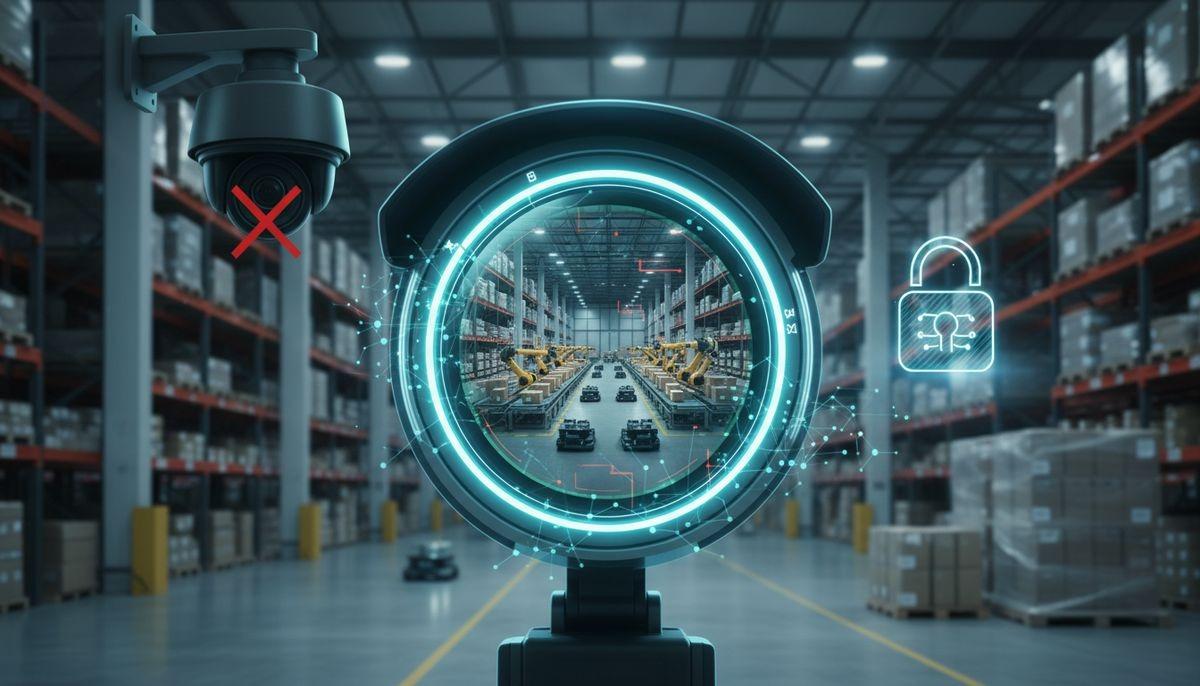
Most online brands don’t think about warehouse security until something breaks. A pallet of high-value electronics disappears during a shift change. Inventory numbers in the WMS don't match the physical count. A "slip and fall" claim shuts down a loading dock for investigation.
By the time leadership reacts, the damage is already done. The insurance deductible is paid, the stock is gone, and customer trust is dented.
For years, the standard solution was to add more cameras. But in the current logistics landscape, simply recording a crime isn't enough. The footage only serves as a post-mortem; a way to watch your losses happen after the fact.
The shift happening now is fundamental. Fast-growing eCommerce companies and logistics operators are moving from reactive surveillance to AI-powered, real-time protection. They aren't just buying cameras; they are investing in intelligence that scales with their order volume.
According to data cited by Forbes, the integration of AI and robotics is reshaping warehouse defense, moving the industry toward "smarter security" that actively prevents incidents rather than just documenting them. With global eCommerce growing rapidly, the pressure to secure the supply chain has never been higher.
The core difference between a traditional CCTV setup and an AI-enabled system is the difference between a passive observer and an active guard.
Legacy systems are forensic. They record thousands of hours of video that no one watches until an incident is reported. If a theft occurs on Friday night but isn't noticed until Monday morning, the thieves are long gone, and the footage is often overwritten or difficult to retrieve.
AI changes the physics of monitoring. As noted in insights on smart retail and physical security from Ahead, modern systems integrate AI to detect anomalies the moment they happen. These systems don't sleep, and they don't get bored.
If a person loiters near a high-value cage after hours, the system doesn't just record it; it flags the event and alerts security teams immediately. If a vehicle approaches a loading bay at 3:00 AM, the system recognizes the anomaly. This allows operators to intervene while the incident is in progress, transforming security from a cost center into a preventative asset.
The threat landscape has evolved. We aren't just dealing with opportunistic pilferage anymore; we are dealing with organized retail crime (ORC) and sophisticated cargo theft rings.
Warehouses are dense targets. A single fulfillment center can hold millions of dollars in consumer goods, making them attractive to criminal groups who study shift patterns and security blind spots.
To fight this, brands are turning to computer vision. AI systems can now track distinct patterns that humans might miss. For instance, Scylla. ai highlights how artificial intelligence benefits retail security by identifying suspicious behaviors that precede theft. In a warehouse context, this might look like a worker repeatedly returning to a secluded area of the racking or a delivery driver venturing into unauthorized zones.
Also, these systems provide "eyes in the aisles," a concept detailed by Bailiwick. By covering blind spots with intelligent monitoring, logistics companies can ensure that high-traffic areas and secluded corners alike are scrutinized for unauthorized access or inventory tampering.
Here is where the investment case becomes undeniable for operational leaders: AI security systems improve efficiency, not just safety.
For an online brand, a blocked dock door means delayed shipments. A bottleneck at the packing station means missed SLAs (Service Level Agreements). Traditional security cameras can't help with this, but AI can.
Oracle reports that AI in warehouse management is driving significant impacts by using data to optimize flows. The same camera that watches for thieves can also be trained to watch for operational inefficiencies.
Dock Utilization: AI can track how long a truck sits at a bay, alerting managers if loading times exceed benchmarks.
Safety Compliance: Systems can automatically detect if workers are wearing required high-visibility vests or hard hats, reducing liability risk.
Inventory Placement: Cameras can identify pallets left in aisles that block forklift paths, preventing accidents before they happen.
When a security system helps you ship packages faster and avoid safety fines, it stops being an expense and starts contributing to the bottom line.
One of the biggest hurdles for brands is the perceived cost of upgrading. The assumption is that you need to rip out every wire and camera to get AI capabilities.
Fortunately, the market has shifted toward hybrid cloud solutions. You don't always need new hardware on the walls; you need a smarter brain in the server room (or the cloud).
Logistics companies are increasingly adopting platforms that overlay intelligence onto existing IP camera infrastructure. This allows for a phased rollout. You might deploy advanced analytics on the cameras covering the loading docks and high-value cages first, while leaving standard recording on the breakroom or parking lot.
Implementing a modern warehouse security camera system, such as Coram, allows operators to search video feeds as easily as they search the web, filtering for specific events rather than scrubbing through hours of static. Instead of watching eight hours of video to find when a pallet went missing, a manager can simply search for "motion in aisle 4 between 2 PM and 4 PM" or "red truck at dock 1."
This searchability is critical for rapid dispute resolution. If a customer claims a shipment arrived damaged, or a supplier claims they delivered 10 pallets when you only counted 9, AI-driven video retrieval can provide the visual proof in minutes, not days.
The trajectory of warehouse security is heading toward full autonomy. We are already seeing the convergence of AI and IoT (Internet of Things) revolutionizing commercial security, as noted by Smart Digital.
In this integrated future, the security system talks to the access control system, which talks to the warehouse management system.
Access Integration: If a badge is used to open a secure door, the camera immediately tags that video clip with the user's ID. If the face on the camera doesn't match the ID on the badge, the system flags a "tailgating" or stolen credential alert.
Robotics: As highlighted by Forbes, the next frontier includes autonomous security robots and drones. These devices can perform perimeter patrols or inventory cycle counts during off-hours, ensuring 24/7 coverage without putting human guards in harm's way.
Hanwha Vision suggests that logistics companies investing in the right AI video surveillance systems are positioning themselves to handle the scale of tomorrow's supply chain. As order volumes increase, the ability to automate security protocols will be the difference between a secure facility and a porous one.
Online brands operate on thin margins and high expectations. There is no room for inventory shrinkage or operational downtime.
The investment in AI warehouse security is not driven by paranoia; it is driven by math. The cost of a single major theft or a week of disrupted operations often dwarfs the cost of the technology preventing it.
By moving to systems that detect, alert, and analyze in real time, brands are securing their inventory, protecting their workforce, and ensuring that the promise they make to the customer, fast, accurate delivery, is kept every single time.
1. cgsmc.com, How AI Is Transforming Warehouse Security Systems
2. hanwhavision.eu, Why logistics companies should invest in the right AI video …
3. ahead.com, Smart Retail: Integrating AI into Physical Security & Safety …
4. forbes.com, Smarter Security: AI And Robotics Are Reshaping …
5. scylla.ai, How Artificial Intelligence Can Benefit Retail Security
6. een.com, AI insights into retail security and customer behavior
7. smartdigital.net, How AI and IoT Are Revolutionizing Commercial Security
8. oracle.com, AI in Warehouse Management: Impacts and Use Cases
9. benchmarkmagazine.com, Why Logistics Companies Should invest in the Right AI Video …
10. bailiwick.com, Eyes in the Aisles: How Cameras and AI are Revolutionizing …


