Oct5
Scottish Country Dancing
Mon, Oct 5 · 7:00 pm
St Andrew’s Presbyterian Church 261 Christina St N Sarnia, ON

Sarnia’s own asset-management documents show the city now carries roughly $4.6 billion in infrastructure, from roads and bridges to pipes and public buildings. The same reports say the city should be reinvesting about $83.8 million each year to maintain those assets but is currently spending closer to $63 million, leaving hundreds of millions in projects unfunded over the next decade and raising a long-term question: how will the city close the gap?
Sarnia’s infrastructure problem is easy to overlook because it does not arrive as a single crisis.
It is spread across the entire city.
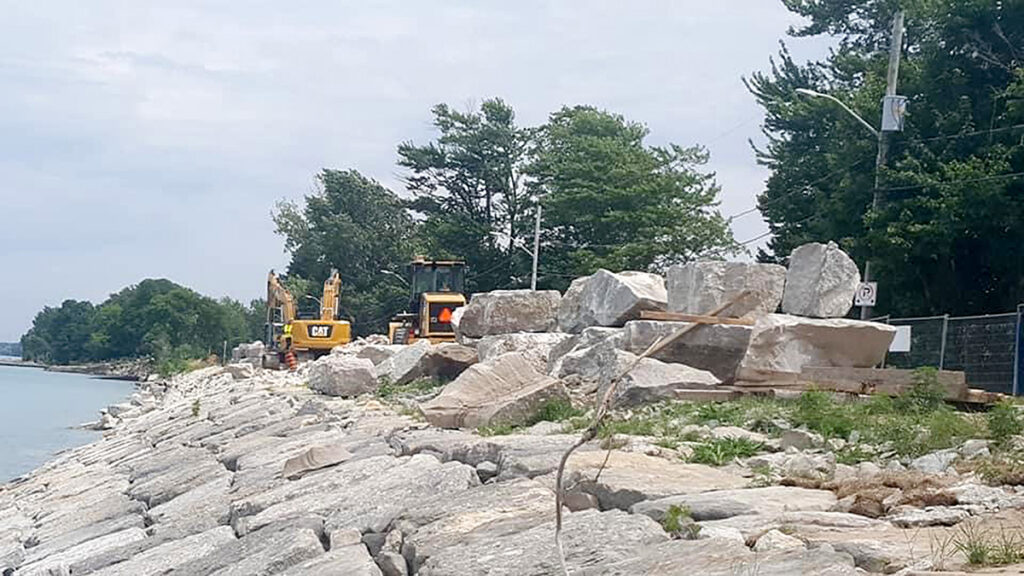
It appears in roads that need resurfacing, water pipes buried beneath neighbourhoods, municipal buildings that grow more expensive to maintain each year, shoreline structures that protect public land, bridges and culverts that age quietly, and fleets of vehicles that eventually need replacement.
None of these pressures appears all at once. They accumulate slowly.
The scale of that accumulation is documented in the city’s most recent infrastructure planning report.
According to the City of Sarnia’s 2025 Corporate Asset Management Plan, the city now estimates the total replacement value of its municipal infrastructure at approximately $4.6 billion. The previous year’s plan placed the figure at about $4.3 billion, reflecting updated data and inflation in construction costs.
The same report estimates that maintaining those assets at target service levels would require about $83.8 million in annual reinvestment, while the city’s 2025 capital budget provides roughly $63.0 million for infrastructure renewal.
The difference, roughly $20 million per year, is not a one-time shortfall. It represents the gap between what the city estimates it should be investing annually to maintain infrastructure and what current budgets provide.
Municipalities across Ontario are now required to produce these types of reports. Under Ontario Regulation 588/17, cities must maintain asset-management plans that catalogue infrastructure, estimate replacement costs, and outline long-term financial strategies for maintaining service levels.
Sarnia’s own asset-management planning page explains that the city’s plans are prepared in response to those provincial requirements.
The documents exist because many municipalities are confronting a similar challenge.
Large portions of their infrastructure were built during the post-war growth decades. Those assets are now aging into the years when maintenance and replacement become more expensive.
Sarnia’s plan describes that history directly. It notes that much of the city’s infrastructure was constructed during the post-war boom of the 1950s through the 1970s, meaning many systems are now approaching or exceeding their expected service life.
The condition ratings in the report reflect that reality. According to the plan, most assets with known condition ratings fall within the “poor-fair-good” range, with relatively few categorized as either excellent or very poor.
In other words, Sarnia is managing a large inventory of infrastructure that remains functional but is increasingly expensive to maintain.
The financial implications appear clearly in the city’s capital planning tables.
The 2024 asset-management plan identified about $251.8 million in unfunded projects within the city’s 10-year capital plan, compared with $682.5 million in total project costs.
The 2025 plan shows those numbers growing. It lists approximately $291,047,848 in unfunded projects against $764,597,647 in total funded and unfunded project costs, with a broader 10-year cost estimate approaching $936 million when inflation is considered.
Those figures describe the broader fiscal environment in which individual infrastructure debates now occur.
The proposed police headquarters, road reconstruction projects, shoreline works, and sewer upgrades are often discussed as separate decisions. But within the city’s infrastructure planning framework they represent competing priorities inside the same capital system.
Roads illustrate the scale of the challenge. The 2025 asset-management plan estimates that road infrastructure alone will require about $155.1 million in spending over the next decade, while identifying more than $11.4 million in currently unfunded road rehabilitation work.
Bridges and culverts represent another example. The plan lists a total replacement value of about $87.4 million for those structures and identifies an $8.7 million infrastructure backlog, alongside an estimated $300,000 annual funding gap carried over from earlier plans.
Other asset categories face their own challenges.
The report notes that some airport assets in poor or very poor condition require immediate attention, while also encouraging the city to consider the long-term affordability of maintaining those facilities.
It also states that many shoreline assets are in poor visual condition but remain functional, and that municipal facilities currently lack dedicated reserve funds for future replacement, meaning long-term planning will be required beyond the current 10-year horizon.
These findings appear alongside the city’s broader financial planning.
The 2025 Approved Budget states that Sarnia aims to balance “affordability for taxpayers with critical infrastructure investment needs.”
The city’s 2026 supplementary budget information provides additional context. It reiterates that Sarnia’s infrastructure portfolio is valued at approximately $4.6 billion, with a target reinvestment rate of about $83.3 million per year, while noting that the draft 2026 budget includes roughly $21.5 million in transfers to capital reserves.
The document also notes that even increasing operating budgets by amortization amounts would not fully meet the annual infrastructure replacement requirements identified in the asset-management plan.
Taken together, the city’s documents describe a structural financial challenge rather than a single infrastructure crisis.
Infrastructure renewal rarely produces dramatic headlines. Cities can delay certain projects, stage them over longer timelines, rely on provincial grants, or finance work through debt and reserves.
But deferring work has consequences.
The 2025 plan itself notes that aging infrastructure can require additional operating and emergency maintenance spending, meaning delays may reduce short-term capital costs while increasing long-term expenses.
The reports also acknowledge that infrastructure data continues to improve. Both the 2024 and 2025 plans emphasize ongoing work to refine asset inventories, integrate geographic information systems, and improve coordination between engineering, finance, and capital planning.
That process may produce more accurate numbers in future plans. But the existing documents already present a clear picture.
Sarnia is responsible for billions of dollars in infrastructure built across several generations.
Maintaining that infrastructure requires investment levels higher than current budgets provide.
The gap between those two realities does not appear in one dramatic decision.
It appears gradually, in the accumulation of projects waiting to be funded, systems approaching replacement age, and financial plans trying to balance long-term maintenance with present-day affordability.
The city’s infrastructure challenge, in other words, is not a single project or a single budget year.
It is the long-term cost of maintaining the physical city itself.
Mon, Oct 5 · 7:00 pm
St Andrew’s Presbyterian Church 261 Christina St N Sarnia, ON
Tue, Oct 6 · 5:30 pm
The Bridge Patisserie Café 12 Michigan Ave Point Edward Point Edward, ON
Tue, Oct 6 · 6:00 pm
Black Gold Brewery 395 Fletcher St Petrolia, ON
A division of Sarnia Media Group Inc.
Locally Owned and Operated
© 2026 The Sarnia Journal