
A look back at newspaper coverage from March 1955 when Sarnia unveiled its new police headquarters, including photographs, articles, and advertisements that captured the moment.

In March of 1955, the opening of Sarnia’s new police headquarters made headlines in The Sarnia Observer.
The building, which cost approximately $215,000, was presented at the time as a major civic project for the city. Newspaper coverage from March 9, 1955 described the facility as a modern headquarters intended to replace older and increasingly crowded police quarters. The 1955 building was eventually replaced again in 1987.
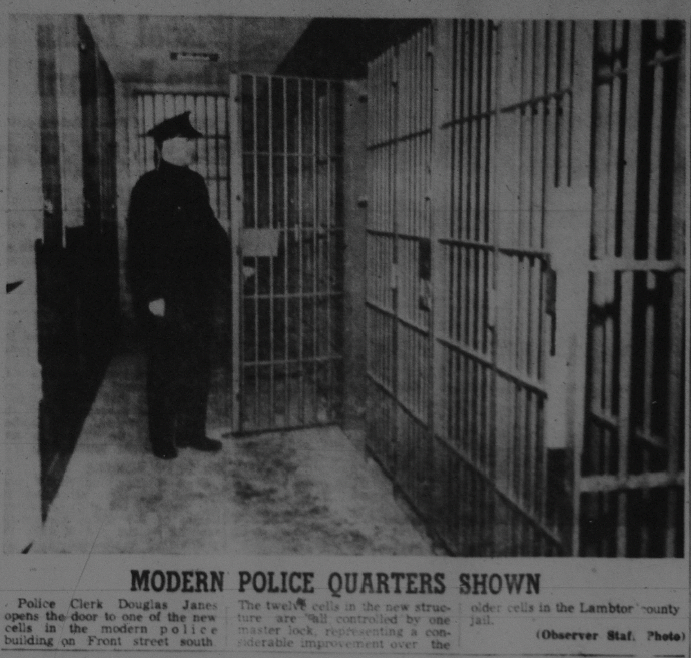
The newspaper devoted significant space to the opening. Articles described the building’s layout and features, while photographs showed the interior of the jail corridor — rows of steel-barred cells stretching down a narrow hallway, with a uniformed officer standing watch.
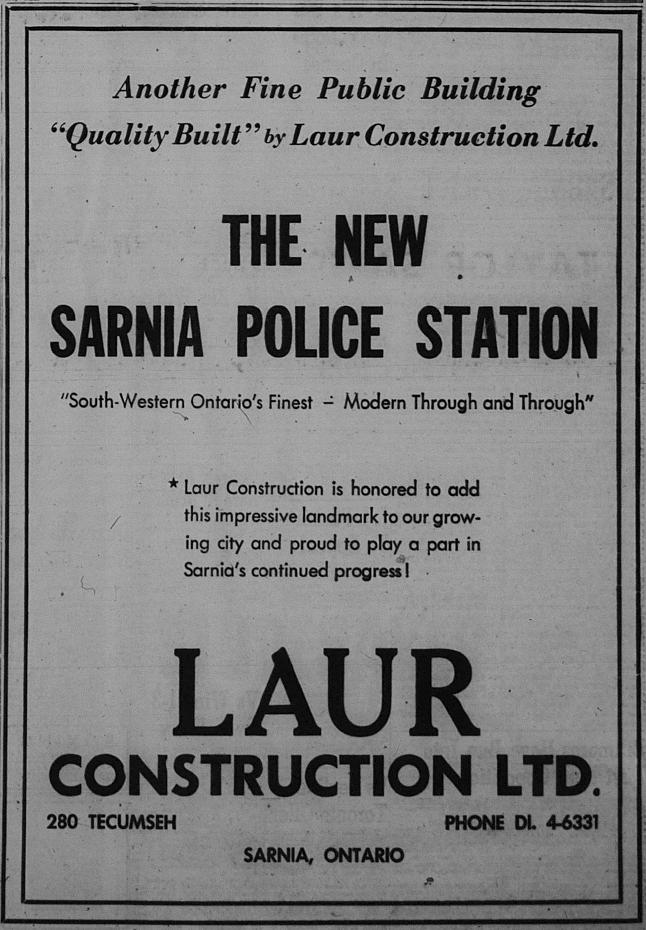
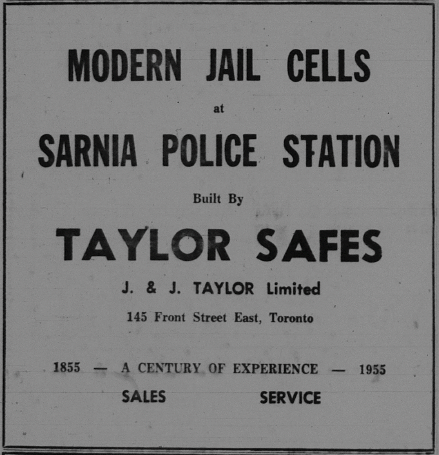
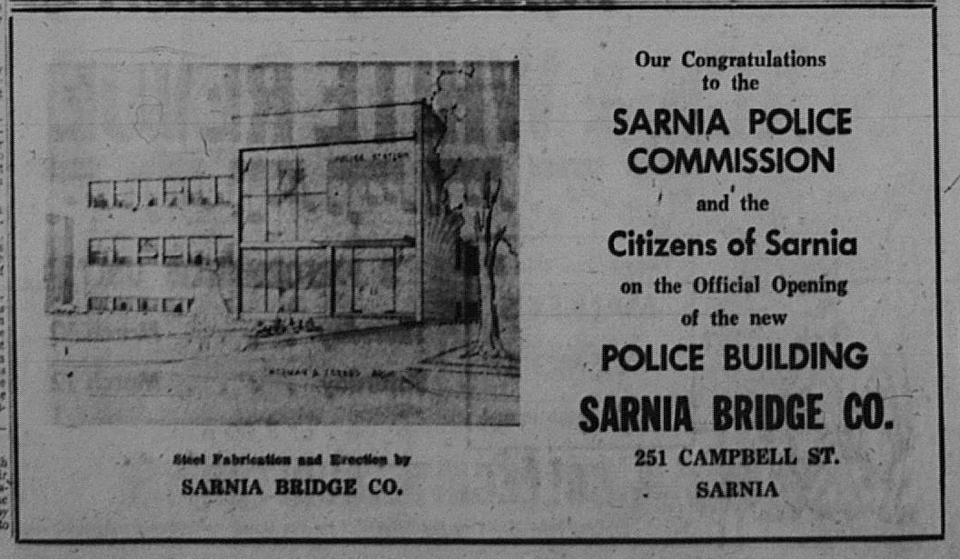
Alongside the reporting were large congratulatory advertisements from companies involved in constructing the facility. Entire sections of the newspaper were filled with messages marking the opening of what was described as one of Ontario's finest police stations.
Construction firm Laur Construction Ltd., who built the project, placed a prominent advertisement calling the structure a "fine public building.”
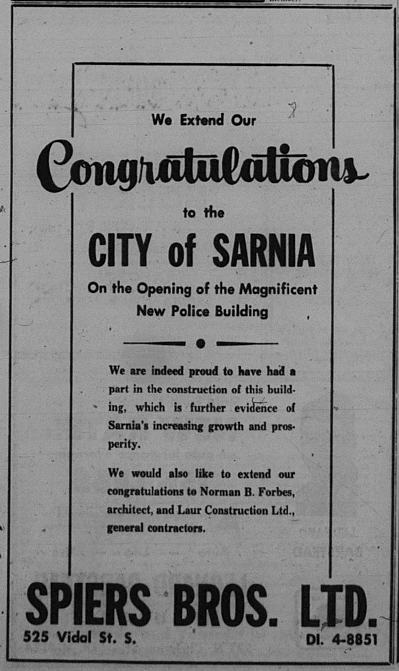
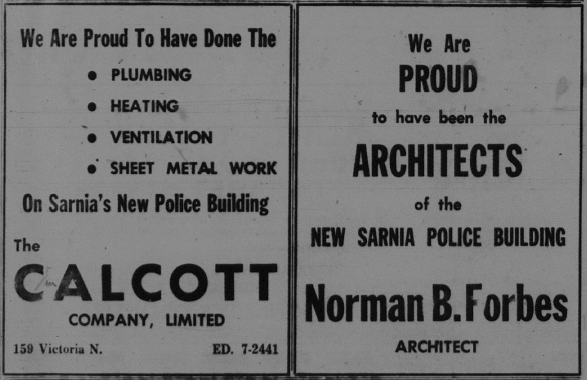
Other businesses highlighted their roles in the project as well. The architect for the building was Norman B. Forbes, while local contractors and suppliers promoted their contributions to various parts of the construction, from flooring and interior finishing to plumbing and heating systems.
Companies such as Spiers Bros. Ltd., the Canadian Tile & Terrazzo Co., and Calcott Company Ltd. used the occasion to advertise their work and publicly congratulate the city on the completion of the building.

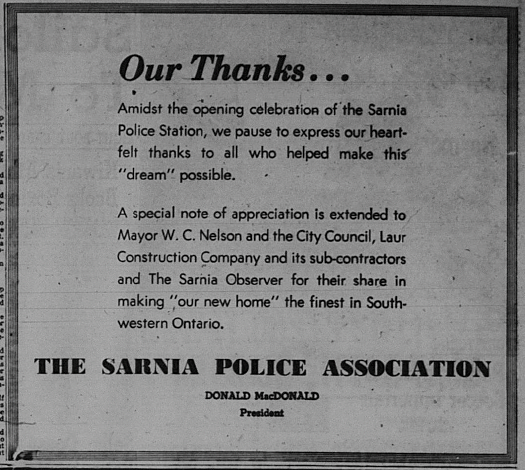
The Sarnia Police Association also placed a message in the paper thanking city officials, the mayor, the construction company, and others who had helped bring the project to completion.
The advertisements themselves offer a glimpse into the local economy of the time. Many of the companies listed were small regional firms operating out of Sarnia, Windsor, or nearby communities. Several included their street addresses and telephone numbers, using the short exchange-style phone numbers typical of the era.
Beyond the story of the building itself, the pages reflect a moment in Sarnia’s history when the city was expanding rapidly.
The mid-1950s were a period of growth for the community, driven in part by the expansion of the petrochemical industry and increasing industrial development in the region. Population growth and economic activity were reshaping the city, and new civic infrastructure followed.
At the time, the $215,000 headquarters represented a significant municipal investment, bringing together administrative offices, jail facilities, and operational space in a single purpose-built station. The building would go on to serve the city through generations of change, becoming a familiar part of Sarnia’s civic landscape.
Wednesday, March 9, 1955, PAGE 9
Sarnia’s 53-man police force found itself in strange but welcome surroundings today as operations began in the spanking new Front street headquarters.
The spotless $215,000 headquarters is a far cry from the creaking floors and mice-infested corners of the temporary police offices on George street.
Police were housed for over a year in the George street premises and eyes, which have grown accustomed to the drab, dark old offices, blinked from the light today in the well-windowed new quarters.
Commanding an authoritative lookout over the St. Clair river, the two-and-a-half-storey headquarters offers scenic views which rank among the best in the Blue Water area.
WIDE VIEW
The front lobby is sheathed partly in glass and every step of the main stairway gives the climber a different perspective of the Port Huron waterfront.
Magistrate J. C. Dunlap gives judgment from a permanent grey-panelled judge’s bench and spectators sit in church-like pews.
The rectangular new magistrate’s courtroom appears smaller than the county courtroom, which city police have been using on Christina street, but officials say the court is designed compactly and has more space than would at first appear.
It’s a one-storey march for prisoners to go into court from the cells below.
MOST ADVANCED
Chief Constable James Torrance says the Sarnia police cells rank with the most advanced of their kind in Ontario. The chief made a tour of numerous other police facilities in the province before plans were finalized for the new headquarters here.
Improved over the old padlock cells, the new jail will contain a centrally-controlled lock system by which cell doors will be controlled from a master switch.
With padlocks, mischievous prisoners could keep cell-keepers busy extricating matchsticks from the locks.
Plumbers also will welcome the new-style cells in the main cell block, which has 12 cells in two rows, the cells back up to each other in pairs with space in between which makes the water pipes readily accessible.
Soft color schemes and sound-muffling corridors may make old time law men rub their eyes in astonishment.
Linoleum tile, which makes up most of the floors, is a vast improvement over the sagging, moisture-laden wooden floors in the George street quarters.
The tile, one of the station’s big features, was nearly a drawback during construction.
Laur Construction Ltd. waited weeks for the tile to arrive from a strike-bound plant.
The station, originally scheduled for completion in January, dropped behind schedule due to the delay.
Police will be able to step into sparkling new showers that mark the end of a gruelling eight-hour shift. The showers are among the extra features designed to make life easier in the building.
There is a cafeteria and modern new kitchen.
OFFICES UPSTAIRS
Besides the courtroom, the top floor houses offices for the police chief, inspector, magistrate and probation officer.
General offices and the detective department are on the main floor with the traffic division and the city meter department in the basement.
The new building means the end of the overcrowded quarters for Magistrate Dunlap and his staff, as for many other officials. A boon for both new and old Sarnians alike is the list of offices, and their location, in the main lobby.
The public will accustom itself gradually to having police offices and magistrate’s court in the same building as they were in the old city hall.
For now, however, the public and police alike are taking time to learn their way around the bright new premises and are liking what they find.
The March 1955 issues of The Sarnia Observer are available on microfiche at the Sarnia Library, 124 Christina St. S., Sarnia.


