Oct5
Scottish Country Dancing
Mon, Oct 5 · 7:00 pm
St Andrew’s Presbyterian Church 261 Christina St N Sarnia, ON

In the summer of 2023, my wife and I spent a week vacationing with our son and his family at Shuswap Lake in the BC interior. It was mid-July and many wildfires were burning out of control across Canada.
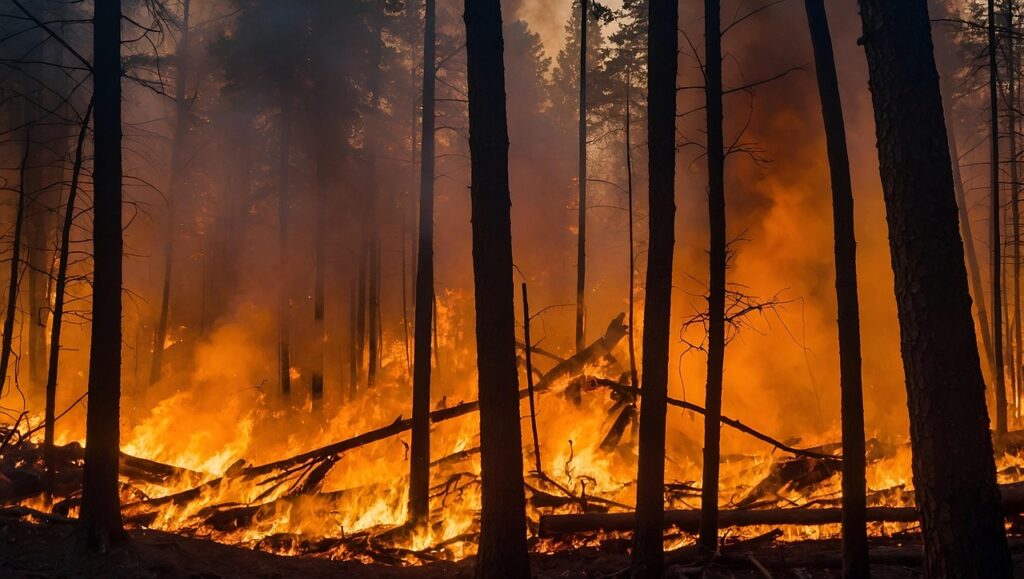
In the summer of 2023, my wife and I spent a week vacationing with our son and his family at Shuswap Lake in the BC interior. It was mid-July and many wildfires were burning out of control across Canada. In fact, 2023 became a record breaking “year of fire” in which nearly a quarter of a million people were forced to flee their homes.
While we were there, the Shuswap area was spared and we were able to enjoy the area’s spectacular beauty. While hiking through the forest I noticed that the forest floor was covered with a lot of fallen timber and decaying plant material. It crossed my mind that should there be a fire, it would likely be impossible to contain due to the mass of “fuel”- all of it exceptionally “dry”. (Western North America was in the grips of prolonged drought and heat, propelled by climate change.)
Climate change is driven by our addiction to fossil fuels as an energy source. The result is ever-increasing carbon dioxide (CO2) emissions to the atmosphere and wildfires increase those emissions.
Unfortunately, not long after we returned to Ontario, a massive wildfire swept through the Shuswap area causing widespread destruction.
Wildfires and other climate related disasters are increasingly threatening communities leading to rising levels of anxiety, depression and PTSD (Post Traumatic Stress Disorder). Some people become so traumatized that they are unwilling to return to their community.
The fear and uncertainty brought on by climate change is fueling a pandemic of declining mental health in youth as they struggle with how their futures may look. Even those who live far from the wildfires but who experience smoke-laden skies and reduced air quality report an increase in emotional distress, anxiety or depression.
As well as mental health decline, health experts warn of a number of impacts to our physical health. Wildfire smoke contains a large number of toxic chemical pollutants and “fine” (2.5 microns or less) particulate matter that can penetrate deep into the lungs, enter the blood stream and lodge in blood vessels and organs. Researchers have found that smokers, people with hypertension, those with chronic diseases such as heart disease or diabetes, the elderly and the very young are at greatest risk from breathing fine particulate matter. Children’s lungs are still developing in the first 5 years of life and research has shown that wildfire smoke is 10 times more harmful to these children.
Additionally, fine particulate pollutants can cross the placenta during pregnancy impacting the developing brain, lungs and liver of the foetus. Health experts also warn that exposure to extreme heat and air pollution during pregnancy increases the risk of miscarriage, preterm delivery and stillbirth.
Fine particulates can cross the blood-brain barrier to affect brain function and may lower IQ scores. Research also suggests that they probably increase the risk of developing autism and other neurobehavioural conditions.
The bottom line is that air pollution is a leading cause of illness and death globally, killing millions of people every year. Wildfire smoke is one of the most hazardous forms of air pollution due to its “cocktail” of toxic chemicals and fine particulates. Reducing air pollution will protect the public’s health and save many lives.
There are ways to minimize the negative health impacts from wildfire smoke. Keep windows and doors shut tight and install a high efficiency furnace filter (minimum MERV 11) to improve indoor air quality. A good quality air cleaner with charcoal and HEPA filters in your living spaces will add additional protection. A HEPA filter will trap even the smallest particulates and the charcoal will help to absorb toxic chemical gasses which are plentiful in wildfire smoke.
Monitor the air quality index where you live and, if possible, avoid going outdoors when air pollution levels are moderate to high. Keep your pets indoors too. If you venture outdoors, avoid strenuous exercise and wear an N95 mask which fits tightly to your face. While not offering much, if any protection against toxic chemicals an N95 (or equivalent) mask will reduce your exposure to fine particulate matter.
Outdoor workers have the challenge of being exposed to polluted air for prolonged periods. Wearing a respirator, or at a minimum an N95 mask while working outdoors may not always be feasible but they should be available if needed. If workers also experience a summer heat wave their health is also threatened. Extreme heat is climate change’s greatest killer.
In North America, wildfire season has become an all-year risk. What we call “fire season” now arrives sooner and lasts longer. Driven by record setting global temperatures and prolonged periods of drought in many areas, numerous wildfires occurred during last year’s fall and winter months in New Jersey, Connecticut, Oklahoma, and most dramatically California where Los Angeles lost thousands of homes in the massive January wildfires.
In Canada, the majority of out-of-control wildfires have occurred in our northern boreal forests but as climate change continues to accelerate, there is growing concern that lower latitude communities will also be at increased risk. A wildfire as devastating as the one that destroyed parts of Los Angeles in January could also happen to other communities including some major Canadian cities.
Meanwhile, Premier Doug Ford has cut $42 million from wildfire response resources and there is a critical shortage of wildland firefighters. There is also a shortage of waterbombers. Ford pledged during the last election to purchase more planes but no funding has been included in the most recent Provincial budget.
As Conservative politicians like Ford, Danielle Smith, Scott Moe, Pierre Poilievre and Andrew Scheer continue to downplay the risks of climate change, we are left to suffer the consequences. They are enabled by the fossil fuel industry that pretends it is supporting a clean energy transition while demanding ever more government subsidies (our tax dollars) to build carbon capture projects that will do little to reduce total emissions.
As the many negative impacts of disasters, super-charged by record heat increase, we may be tempted to believe that our future is bleak. However, we have the ability to change course if we demand that our political leaders and industry titans show courage and actual leadership to take immediate steps to transition to a low carbon future. This transition will take time, but it will have enormous economic potential to grow a clean energy future, one which will create good jobs and bring cleaner air, better health and many fewer deaths from air pollution.
Surely no sane person could object to breathing clean air, being healthier and living better and longer.
Until that day comes, the planet will continue to heat up and brutally remind us that our health, prosperity and happiness are directly related to the health and well-being of planet Earth, our only home.
Allan McKeown is a member of Climate Action Sarnia-Lambton.
For current information on wildfires in Canada: Canadian Wildland Fire Information System: https://cwfis.cfs.nrcan.gc.c
Wildfire smoke, air quality and your health: resources. www.canada.ca/en/services/health/healthy-living/environment/air-quality/wildfire-smoke/resources.html
“Fire Weather – The Making of a Beast” by John Vaillant. Published by Alfred A. Knoft Canada. A New York Times bestseller.
Mon, Oct 5 · 7:00 pm
St Andrew’s Presbyterian Church 261 Christina St N Sarnia, ON
Tue, Oct 6 · 5:30 pm
The Bridge Patisserie Café 12 Michigan Ave Point Edward Point Edward, ON
Tue, Oct 6 · 6:00 pm
Black Gold Brewery 395 Fletcher St Petrolia, ON
A division of Sarnia Media Group Inc.
Locally Owned and Operated
© 2026 The Sarnia Journal