Oct5
Scottish Country Dancing
Mon, Oct 5 · 7:00 pm
St Andrew’s Presbyterian Church 261 Christina St N Sarnia, ON

When I was a boy, the Wicked Witch of the West from “The Wizard of Oz” scared the stuffing out of me. I always believed that was what a witch […]
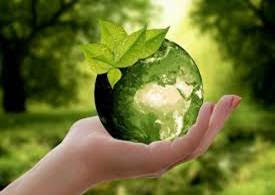
When I was a boy, the Wicked Witch of the West from “The Wizard of Oz” scared the stuffing out of me. I always believed that was what a witch looked like.
The image of a witch is often a green, gnarled-faced crone with a hooked nose and warts the size of a walnut. This is the result of years of fictional depiction, stories created to explain what was not understood. Halloween is coming up. Be prepared for the onslaught of this witchy image.
If you look up the definition of a witch, you see words like evil, hexes, spells, occult, and curses. The stereotypes and persecution of witches stem from a fear of someone who believes in the power of nature and not a deity in a monotheistic religion. They were called pagans. The modern-day term is Neo-Pagan, someone who believes nature itself is divinity.
I discovered there are many different types of witches. For example, Alexandrian, Celtic, Gardnerian, Green/Eco, Hedge, Traditional, Wicca. Every single one of these has a connection with nature.
Nature is the common thread in any discussion about witches and witchcraft.
Neo-pagan holidays are all about celebrating agricultural and solar events. Like, Samhain – beginning of winter, Ostara – spring, Beltane – summer, and Mabon – autumn.
Pagan holidays have a rich history in celebrating natural cycles and the veneration of deities. These beliefs have been with cultures around the world since ancient times.
Most of our major holidays have pagan origins: Christmas, New Years Day, Easter, Halloween, May 1st (labour day).
Christmas traditions also have a pagan connection. Gift giving, caroling, decorating with holly and evergreen trees, even the image of a Santa Claus.
There is a modern “trend” of witches and witchcraft, now a multi-billion-dollar industry. More and more people are self-identifying themselves as witches. They connect with each other on social media platforms like “Witch-Tok”, and “WitchesofInstagram.” There is a rise in sales of specialized niche products such as crystals, tarot cards, astrology products, herbal guides, moon and star products.
Witchcraft is very well entrenched in our pop culture, and has overlapped into our wellness culture. People are looking for a deeper meaning in their lives, and choosing witchcraft as a spiritual path. In Toronto, there is WitchFestNorth, a gathering of over a thousand witches, hosting various speakers and markets.
In the 1960s and early 1970s, witchcraft became a part of the feminist movement. Women saw being a witch as self-empowering. According to writer Lisa Lister, every woman is a witch because she’s cyclic, powerful, and can embrace nature to heal herself and her community. There are opinions that the term Witch is derogatory to women, a social category imposed on them. And, on the other side of the coin, it offers an alternative role model.
The definition of a Witch is broadened, and harder to pin down to any one thing. Originally, the word ‘Witch’ comes from the Old English word wicce, and described a woman who practiced malevolent magic. Now, witches are considered the seekers of truth, and are attuned to the laws of nature. The stereotypical image, like those women gathered for Sarnia’s Witches In The Bay, though still common, is being challenged, seen by witches as a joke.
It seems at the heart of witches and witchcraft is a spiritual search, a reconnection with the earth and its cycles. Nothing evil there. Just a different viewpoint.
Mon, Oct 5 · 7:00 pm
St Andrew’s Presbyterian Church 261 Christina St N Sarnia, ON
Tue, Oct 6 · 5:30 pm
The Bridge Patisserie Café 12 Michigan Ave Point Edward Point Edward, ON
Tue, Oct 6 · 6:00 pm
Black Gold Brewery 395 Fletcher St Petrolia, ON
A division of Sarnia Media Group Inc.
Locally Owned and Operated
© 2026 The Sarnia Journal