Oct5
Scottish Country Dancing
Mon, Oct 5 · 7:00 pm
St Andrew’s Presbyterian Church 261 Christina St N Sarnia, ON

Here in Sarnia-Lambton, the numbers tell a story of unrelenting tragedy. In 2023, 35 of our neighbours died from opioid-related overdoses. That’s more than two families left grieving every single month.
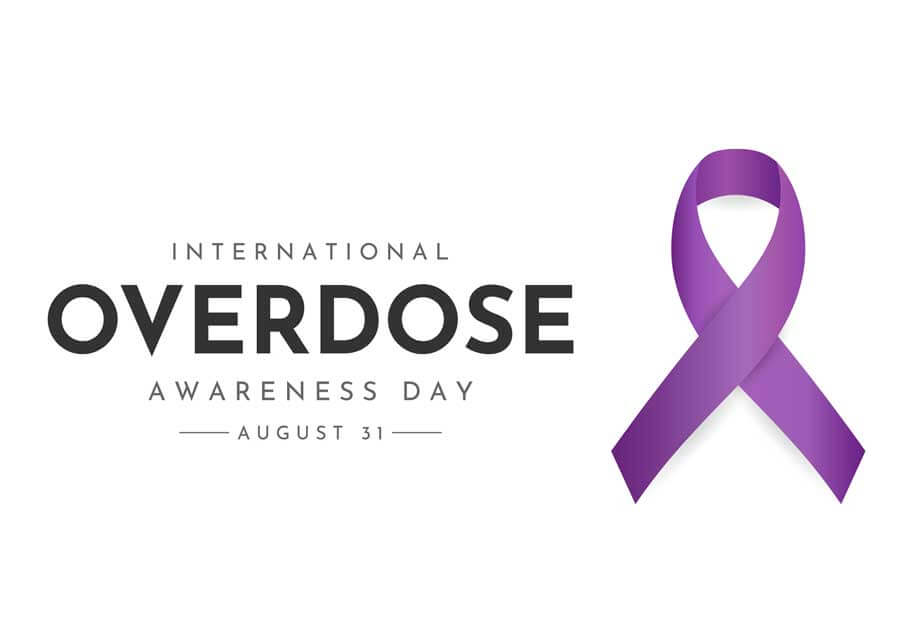
Here in Sarnia-Lambton, the numbers tell a story of unrelenting tragedy. In 2023, 35 of our neighbours died from opioid-related overdoses. That’s more than two families left grieving every single month. Paramedics are still responding to hundreds of emergency calls, and our local shelters have been fundamentally transformed by the crisis, with the majority of clients now struggling with substance use and mental health issues. As Myles Vanni, director of a local shelter, has noted, “The homeless demographic has really changed”.
Yesterday was International Overdose Awareness Day, a global day of action to remember those we've lost and to highlight the catastrophic failures of drug prohibition. It's also a moment to recognize the tireless, often traumatic, work of our local frontline staff—from paramedics and shelter workers to harm reduction advocates—who face this crisis head-on every single day.
This is the reality on our streets. It is a reality of human suffering that demands a clear-eyed, effective, and compassionate response.
Instead, as the 2025 federal and provincial budgets have come into focus, we are being sold a familiar, failed strategy dressed up in new language. Both governments claim a “comprehensive” or “dual” approach, but a look at where the money is flowing tells a different story. The message is clear: our leaders are still pouring billions into policing and surveillance to solve what is, fundamentally, a public health emergency.
At the federal level, the government has allocated approximately $1.3 billion over six years for a “Border Enforcement Strategy” to disrupt the opioid trade. This includes a new "Fentanyl Czar," new intelligence units, and a proposed Strong Borders Act to enhance law enforcement powers.
Provincially, it’s the same story. Ontario has launched “Operation Deterrence,” a $113 million initiative to secure borders, and is spending another $57 million on two new police helicopters. This is coupled with a legislative agenda focused on a "tough on crime" stance, including new police powers to remove individuals for using illegal drugs in public spaces.
This is the enforcement-first model that has failed for 50 years. It has not stopped the flow of drugs; it has only made the unregulated supply more toxic and driven substance use further underground, away from life-saving care.
And what about the other side of the ledger? The budgets do include funding for health and social supports, but the scale and scope are telling. Ontario’s plan includes converting some supervised consumption sites into “HART hubs” and a 4% base funding increase for community mental health agencies. The federal government points to broad, multi-year health care funds negotiated with the provinces and money for its homelessness strategy.
But these investments are dwarfed by the spending on policing and are often presented in sprawling, multi-year terms that dilute their immediate impact. A one-time provincial top-up of $75.5 million for shelters and housing pales in comparison to the hundreds of millions being spent on helicopters and border patrols.
At The Sarnia Journal, part of our mission is to name the system, not just its symptoms. The symptom is a shelter worker at the Good Shepherd's Lodge using Narcan two to three times a week to save a life. The system is a government that chooses to spend more on surveillance than on the core drivers of the crisis: a lack of affordable housing, accessible treatment, and a safe supply.
The budgets reflect a political calculation. They are designed to manage the visibility of the crisis by cracking down on its most public symptoms, rather than committing the necessary resources to solve the underlying health issue. It is easier to fund a police helicopter than it is to build the supportive housing that would prevent someone from needing an emergency shelter in the first place.
We are told this is a “comprehensive, collaborative, and compassionate” approach. But compassion is not a line item in a budget summary. It is measured by outcomes. And the outcome in our community is still two deaths every month.
The Sarnia Journal wants to cut through the political rhetoric and report on what is actually happening in Sarnia-Lambton. We will continue to follow the money and question the priorities of our elected leaders. We believe our community deserves a response that is guided by evidence and public health, not by fear and a commitment to failed policies.
Mon, Oct 5 · 7:00 pm
St Andrew’s Presbyterian Church 261 Christina St N Sarnia, ON
Tue, Oct 6 · 5:30 pm
The Bridge Patisserie Café 12 Michigan Ave Point Edward Point Edward, ON
Tue, Oct 6 · 6:00 pm
Black Gold Brewery 395 Fletcher St Petrolia, ON
A division of Sarnia Media Group Inc.
Locally Owned and Operated
© 2026 The Sarnia Journal