
In Nathan’s latest column he examines how the recent denial of the George Street housing project reveals a systemic problem where neighbor bias is prioritized over professional planning and community health.
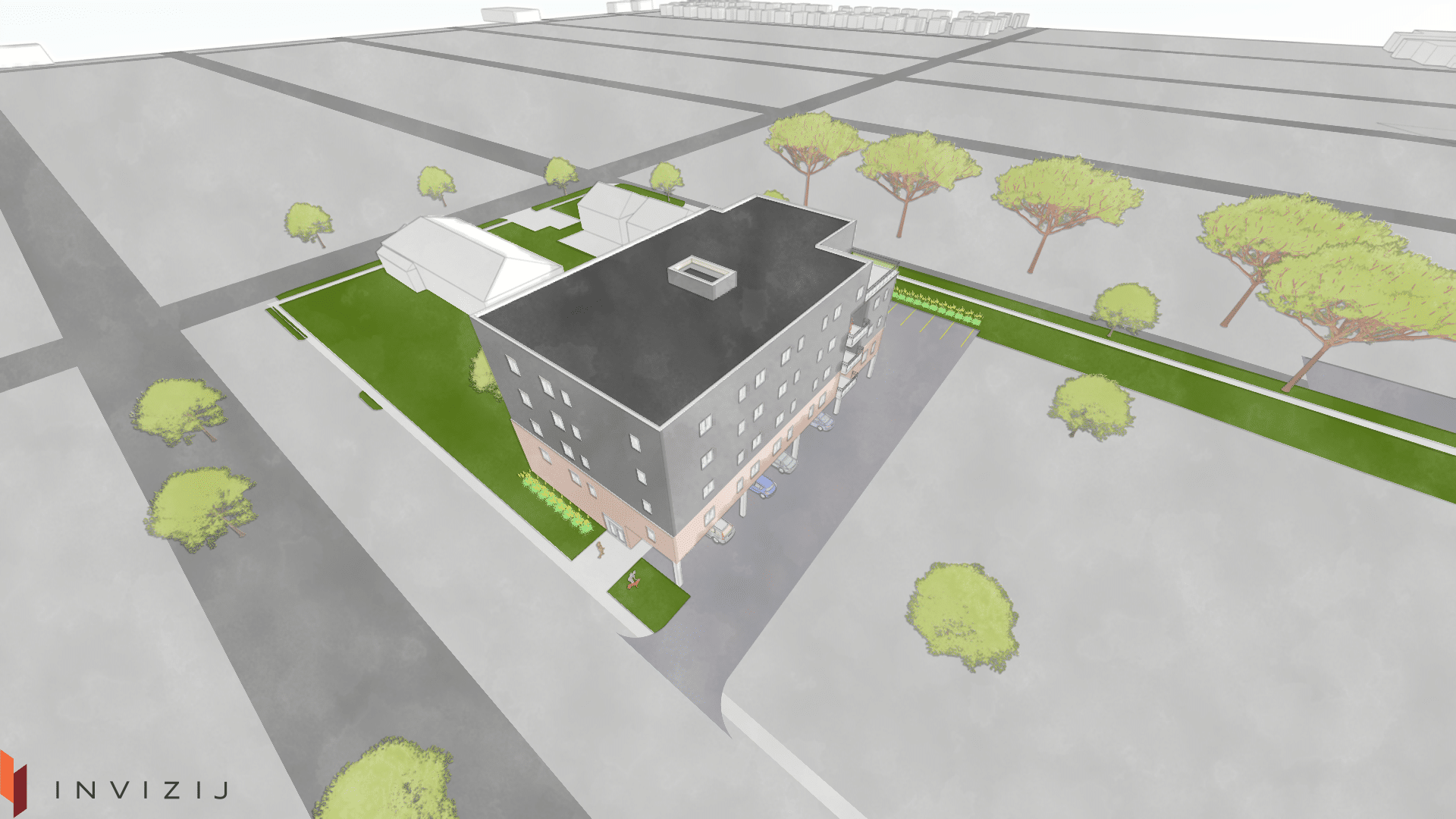
On February 10, 2026, Sarnia’s committee of adjustment officially chose the status quo over the survival of its most vulnerable residents. In a move that prioritizes the realm of opinion over the hard technical facts of urban planning, the committee rejected a minor variance application for a 35 unit affordable housing project at 353 George Street. What was intended to be a deeply affordable solution to our housing crisis has instead become the latest victim of bureaucratic capture by NIMBY sentiments.
This denial is not just about a few extra metres of building height or a slightly smaller landscape strip. It is a systemic failure that exposes a troubling truth. Sarnia is currently refusing the tools required to become a flourishing city. When appointed boards allow discriminatory fears about prospective tenants to outweigh the professional recommendations of city planning staff, the result is a city paralyzed by its own red tape.
The project, spearheaded by the charity Indwell and its development arm Flourish, has been under fire for months. Originally proposed as a 50 unit complex, the plans were scaled back specifically to address neighbour concerns and mesh with parking requirements. City staff reviewed these revisions and approved the technical merits of the application, noting that the increased height would not significantly impact adjacent uses.
Yet, during the hearing, the committee diverged from these planning facts. Committee member Lawrence Lachapelle labelled the project an overdevelopment, while Terry McCallum argued for further delays through a full zoning bylaw amendment process. This is the very definition of a bureaucratic response that perpetuates stereotypes, as noted by Indwell regional manager Natasha Thuemler.
The arguments raised by neighbours, including claims that supportive housing will sink property values or spike crime, are not supported by the evidence from other communities where Indwell operates. Sarnia Police Chief Derek Davis has even noted that talks with Indwell have been quite encouraging, citing positive experiences from other police chiefs. By centring unfounded fears, the committee has effectively granted a veto to a vocal minority, setting a precedent that progress can be stalled if enough people are perturbed.
Establishing this for the record is essential, as it moves the argument from a matter of local opinion to a matter of provincial law. Under the Ontario Human Rights Code, municipal committees are legally prohibited from practicing what is known as people zoning. This refers to the act of making planning decisions based on the personal characteristics of the people who will live in a building rather than the physical use of the land.
The Ontario Human Rights Commission (OHRC) is explicit on this point. Planning decisions are discriminatory if they have a disproportionate effect on groups protected by the Code, which includes those with disabilities, mental health challenges, or addictions. When Sarnia’s committee of adjustment explicitly cited neighbour's concerns about mental health and addiction as a reason to reject the technical merits of the George Street project, they moved beyond land use planning and into illegal territory.
The legal framework is clear. Committees may regulate building height, setbacks, and parking, but they cannot zone the people by evaluating the perceived suitability of future tenants. The Human Rights Code is quasi-constitutional, meaning it has primacy over municipal bylaws. A committee cannot use a minor variance application as a tool to exclude a protected group just because of neighbourhood opposition.
Sarnia has set clear targets: 45 percent intensification and a goal that 30 percent of new units be affordable. The George Street project was a direct path toward those goals, utilizing land donated by Lambton County for this exact purpose. By rejecting it, the committee has not only hindered Indwell but has also signalled to other non-profits that Sarnia is not a predictable or welcome environment for social investment.
Even if the committee did not intend to discriminate, the impact of their decision, denying housing to those in crisis based on community bias, is a violation of the Code. By allowing NIMBY sentiments to override professional planning facts, the committee has stalled a vital housing project and exposed the city to significant human rights liabilities.
A flourishing city must be a lawful city. That starts with ensuring its bureaucratic red tape is not used as a weapon for people zoning. A flourishing city is defined by how it treats its neighbours, all of them, including those currently living in cars or on the edge of crisis. It is a city where institutions have the courage to uphold the Official Plan even when it is unpopular. Right now, Sarnia’s committee of adjustment is choosing to build a wall of red tape instead of the housing we desperately need.


