Oct6
Chamber’s Young Professionals – The Bridge Patisserie
Tue, Oct 6 · 5:30 pm
The Bridge Patisserie Café 12 Michigan Ave Point Edward Point Edward, ON

An analysis of Sarnia’s AI-generated public profile reveals a city reduced to an industrial case study, with data that makes its Indigenous population invisible.
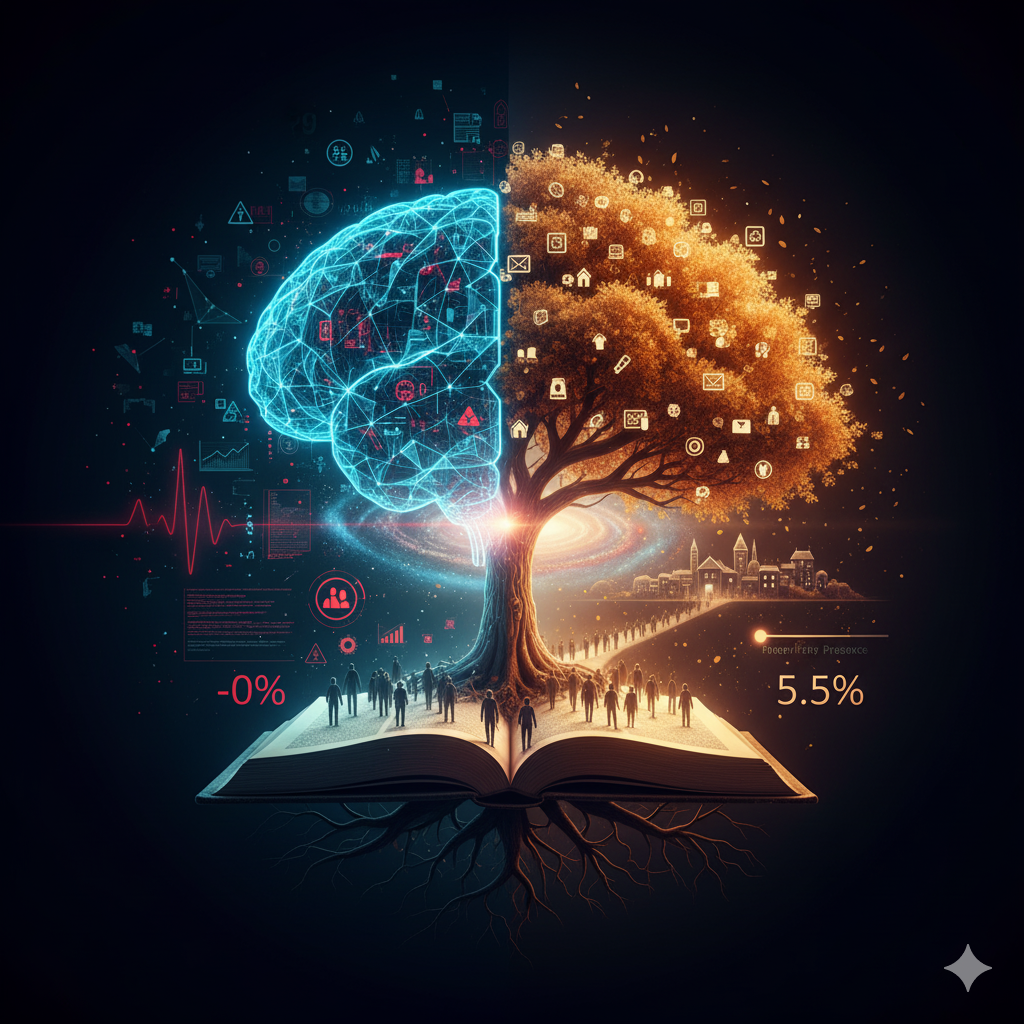
Reading a computer-generated encyclopedia entry about Sarnia was both strange and familiar. It triggered that same old existential twinge I’ve felt my whole life here: the feeling of being reduced to someone else’s summary. We all know the stereotype: when people outside hear “Sarnia,” they think “Chemical Valley,” “blue-collar,” “nothing to do.”
But we’ve built something deeper here. We’ve grown to love this place, to build real relationships with it and to see its beauty, creativity, and contradictions that outsiders rarely notice.
So I ran a little experiment: I compared a Grokipedia (AI-generated) entry on Sarnia to the human-written one on Wikipedia.
Grok’s version was exactly what you’d expect from a machine trained on headlines. Its portrait of Sarnia revolved around the petrochemical sector, organized neatly under “Environmental Impact,” “Controversies,” and “Chemical Valley Pollution Disputes.” It even cited the 2024 benzene state of emergency.
The Wikipedia version felt different. It’s a patchwork built by neighbours and strangers who care enough to fill in the gaps. Someone thought it mattered to include the Sarnia Imperials’ Grey Cup wins, the Celebration of Lights (which, by the way, still needs volunteers this year), and that sacred row of chip trucks under the Blue Water Bridge.
But even in the human version, there’s not much of us in it. It’s still mostly landmarks and data points. My years as a city councillor aren’t there. Neither are yours. Neither are the names of the people who made this place home.
There’s something spiritual about this city that can’t be reduced to data or geography. Living here is a relationship, not a statistic.
And yet, the AI’s version goes beyond cold: it crosses into something more troubling when it starts defining who lives here by race. Both Grok and Wikipedia cite the 2021 census, but look at the difference:
In one algorithmic sweep, Sarnia’s Indigenous population disappeared—absorbed into the bland category of “non-visible minority.” A human entry made them visible. A machine erased them.
That’s the blind spot. AI optimizes for pattern and probability, not for meaning. It can scrape and summarize, but it can’t see us. It flattens “Sarnia” into “Chemical Valley,” because it doesn’t understand what it means to live here.
And if an AI gets it wrong, who do you tell? There’s no “edit” button. No talk page. No neighbour to message. Just a black box that presents its answers as objective truth.
This is why local, human-driven journalism still matters. It’s how we keep our stories visible, our neighbours accounted for, our truths contested and cared for. An AI can compile data. But it takes a community to tell its own story.
Tue, Oct 6 · 5:30 pm
The Bridge Patisserie Café 12 Michigan Ave Point Edward Point Edward, ON
Tue, Oct 6 · 6:00 pm
Black Gold Brewery 395 Fletcher St Petrolia, ON
Tue, Oct 6 · 7:00 pm
St Michael and the Angels (formerly All Saints) Anglican Church 248 Vidal Street North Sarnia, ON
Tue, Oct 6 · 7:00 pm
Cogeco Your TV Channel 6 – HD Channel 700 [OR] Stream with Epico App Sarnia, ON
A division of Sarnia Media Group Inc.
Locally Owned and Operated
© 2026 The Sarnia Journal