Oct5
Scottish Country Dancing
Mon, Oct 5 · 7:00 pm
St Andrew’s Presbyterian Church 261 Christina St N Sarnia, ON

In his latest column, Rodney Beatty argues that Canada’s overreliance on the United States leaves it economically vulnerable and calls for a bolder path toward independence through trade diversification and domestic investment.
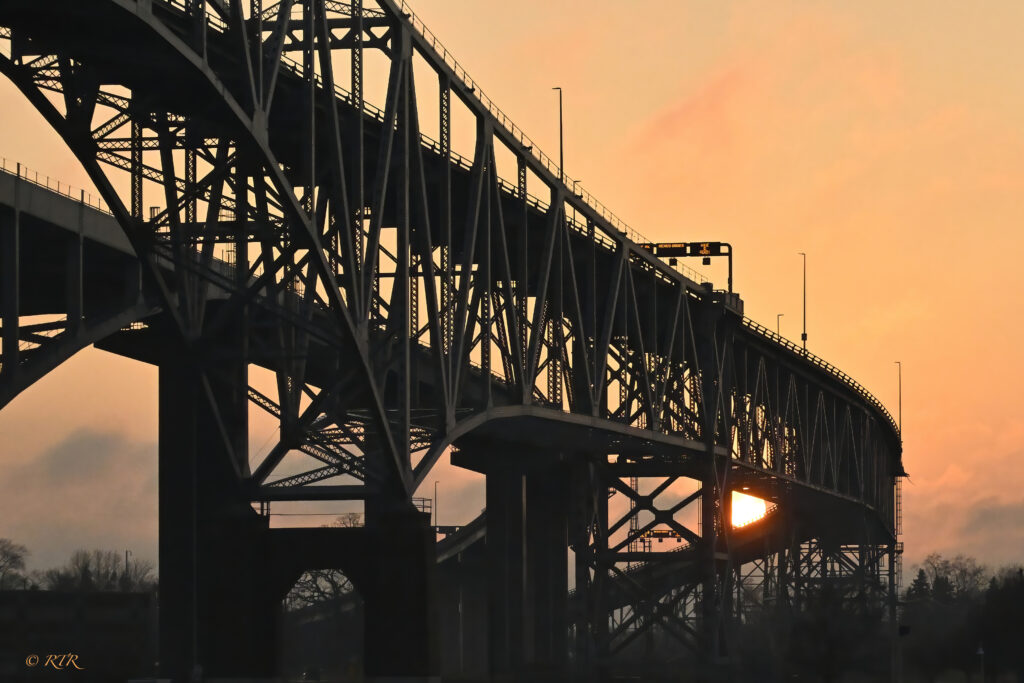
It’s a hard lesson to learn—but one we can’t afford to ignore. The United States, for all its chaos and contradictions, doesn’t need Canada as much as we need them. It’s true, and that imbalance is painful to admit, but denial won’t shield us from its consequences.
Donald Trump, with his signature cruelty, has a knack for saying the quiet parts out loud. When he speaks of Canada as an afterthought, a trade nuisance, or the “51st state,” it stings not because he’s wrong—but because he might be uncomfortably close to the truth. His bluntness might offend, but in this case, it reveals something Canadians have resisted reckoning with: we are still far too dependent on the United States.
Numbers Don’t Lie
Around 75 to 80% of Canadian goods and services exports go to the U.S. That’s not just a number—it’s our lifeline. In 2023, these exports accounted for nearly 19% of our entire GDP. Think about that: one-fifth of our national economy relies on the purchasing decisions of a country whose leadership shifts dramatically every four years—if not every hour with the current administration.
This is a real threat. Not just the tariffs themselves, but the policies behind them and the chaos of it all. Economists have warned that a broad U.S. tariff regime—even within the current Canada-United States-Mexico Agreement (CUSMA) framework—could shrink Canada’s GDP by over 2.6%, increase unemployment, and drag us into inflation we’re already battling tooth and nail. These aren’t what-ifs. We’ve lived this story before—and Trump’s more than content to hit resume.
Canada’s most vulnerable sectors—steel, aluminium, forestry, and automotive—are especially exposed. Over 90% of our steel and aluminium exports head south. These industries don’t just support companies; they sustain communities and put food on the table in many homes. When the U.S. closes a door, it’s not Ottawa that gets hit first—it’s Sarnia, Hamilton, Windsor, Prince George, and small towns like Bridgewater, Nova Scotia.
America’s Needs Are More Strategic Than Existential
I’m not saying America doesn’t rely on Canada. Of course, it does. We’re their single largest export market. Last year alone, Canadians bought nearly half a trillion dollars in U.S. goods—more than China, Japan, France, and the U.K. combined. That matters. It supports millions of American jobs, especially in border states.
But proportionally? They can survive without us in ways we can’t without them.
And yet, even the U.S. would feel the pain of a rupture. We are their largest foreign supplier of crude oil, contributing over 60% of their imports. Our natural gas keeps eight U.S. states heated and running. Our uranium powers their nuclear plants. Our critical minerals support everything from electric vehicles to defence contracts. In the automotive sector, cross-border supply chains are so integrated that a single part may pass back and forth several times before the final product rolls off the line.
But again, they would feel it. We would absorb it.
An Unequal Partnership in the Age of Transactional Politics
For decades, Canadians have consoled themselves with the idea that we’re more than just a trade partner to the U.S.—that we’re allies, friends, “cousins across the border.” But friendships don’t pay the bills anymore, not with Trump. And with the new nation he’s building, maybe not even without him.
This isn’t about nostalgia or nationalism. It’s about leverage. And right now, we don’t have enough.
We keep waiting for America to come around, to remember how valuable we are. But America doesn’t owe us anything. And they’re not waiting for us. The question is, what are we going to do about it?
Charting a New Path: Rebuilding or Reinventing?
So where do we go from here? Do we focus on rebuilding this lopsided relationship—or do we finally look inward and chart a new path?
Dawn is breaking on a new day for Canada, and we’re going to suffer through it. Wouldn’t it make more sense to suffer while building our independence rather than grovelling at America’s feet?
Can we walk away from America? Of course not. Our economies are married, and divorce isn’t an option. But maybe we should stop playing the role of the dependent spouse. Perhaps we should implement boundaries—and a backup plan.
Trade diversification isn’t just a talking point anymore; it’s become critical for our survival. We need real investment in Asian and European markets, deeper engagement with Africa and Latin America, and a long-overdue reinvention of our domestic capacity. Supply chain security, energy independence, and homegrown innovation must become more than three-word slogans. They need to become a national strategy.
It means taking hard, unglamorous steps: investing in infrastructure, overhauling trade agreements, supporting Canadian manufacturing, and building economic strength at home. It means protecting our workers, not by clinging to old relationships, but by creating new ones that are built on shared interests—not a legacy of dependence.
What Now?
Mark Carney’s government has made early gestures in this direction—diversification promises, strategic mineral policies, trade missions abroad—but gestures aren’t enough. Not anymore. We need substance. We need courage. And we need to understand that doing nothing is also a choice—a choice to remain vulnerable, to stay small, to keep waiting for someone else to notice we’re hurting. Eliminating interprovincial trade barriers is a giant leap in the right direction, but it might not be enough.
Trump isn’t the leader—either unwilling or unable to lead—we want to shape our future.
Is his indifference toward Canada the mirror we need? For Americans, the hard lesson might come in realizing the true cost of taking a vital trade partner for granted.
It’s time Canada stopped waiting to be noticed and started acting like a country worth noticing.
Mon, Oct 5 · 7:00 pm
St Andrew’s Presbyterian Church 261 Christina St N Sarnia, ON
Tue, Oct 6 · 5:30 pm
The Bridge Patisserie Café 12 Michigan Ave Point Edward Point Edward, ON
Tue, Oct 6 · 6:00 pm
Black Gold Brewery 395 Fletcher St Petrolia, ON
A division of Sarnia Media Group Inc.
Locally Owned and Operated
© 2026 The Sarnia Journal