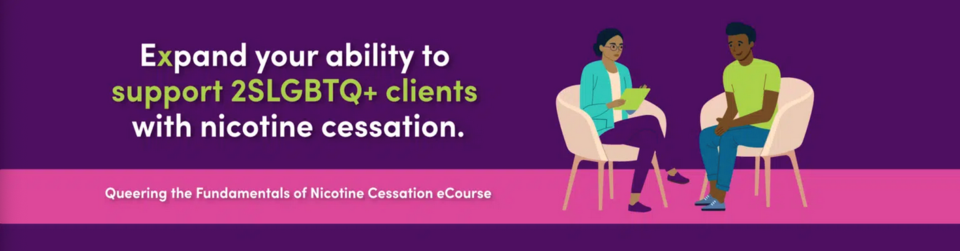
Free Canadian eCourse helps mental health professionals support 2SLGBTQ+ young adults with nicotine cessation using culturally informed, evidence-based approaches.
A new national training initiative is working to close a critical gap in addiction care by equipping professionals with culturally informed tools to support 2SLGBTQ+ young adults navigating nicotine use.
“Queering the Fundamentals of Nicotine Cessation” is a free, fully online course designed for mental health professionals, counsellors and addictions specialists. Developed through a collaboration between Centre for Addiction and Mental Health, Egale Canada, and a network of community experts, the course responds to growing evidence that traditional cessation programs often fail to reflect the lived realities of queer and trans communities.
At the core of the training is a recognition that nicotine use among 2SLGBTQ+ populations is shaped by more than individual behaviour. Systemic stress, discrimination, and historical targeting by tobacco marketing all contribute to disproportionately higher rates of use, particularly among young adults.
The approximately three-hour course is fully asynchronous, allowing participants to complete it at their own pace. It builds on established clinical frameworks while adapting them to better reflect diverse identities and experiences. Content includes current research on nicotine use in 2SLGBTQ+ communities, as well as practical strategies such as motivational interviewing, readiness assessments, peer-based supports and harm reduction approaches.
Participants are also introduced to both clinical and creative interventions, including arts-based methods alongside pharmacological options. The goal is to broaden how care is delivered, moving beyond one-size-fits-all models toward approaches that are affirming and culturally responsive.
The course was refined following a pilot in late 2024 and incorporates feedback from community collaborators, including Métis Elder Marjorie Beaucage. While it includes guidance on Indigenous-informed perspectives and links to national Indigenous health resources, organizers note it is not a substitute for specialized programming or consultation with local Indigenous communities.
The training is part of the broader Expand Project, a multi-year national initiative focused on increasing awareness and sparking dialogue around commercial tobacco and nicotine use among queer and trans young adults aged 18 to 29. The project emphasizes community-driven knowledge, encouraging individuals to reflect on nicotine use within both personal and collective contexts.
Led by partners including the Ontario Tobacco Research Unit, the Dalla Lana School of Public Health, the Canadian Cancer Society and Egale Canada, the initiative has received federal support through the Public Health Agency of Canada.
Organizers say the eCourse reflects current public health knowledge while centring affirming, community-informed approaches. Participation is voluntary, with an emphasis on helping professionals thoughtfully integrate what they learn into practice.
As nicotine use continues to evolve, particularly with the rise of vaping among younger populations, initiatives like this aim to ensure care providers are better prepared to meet people where they are, with approaches that acknowledge identity, history and lived experience.
The course is now available online at no cost to professionals across Canada.