Oct5
Scottish Country Dancing
Mon, Oct 5 · 7:00 pm
St Andrew’s Presbyterian Church 261 Christina St N Sarnia, ON

Exploring the science, history, and growing impact of the polar vortex.
Climate change has and always will be a general cautionary tale to the public. But what happens when life fights back with consequences?
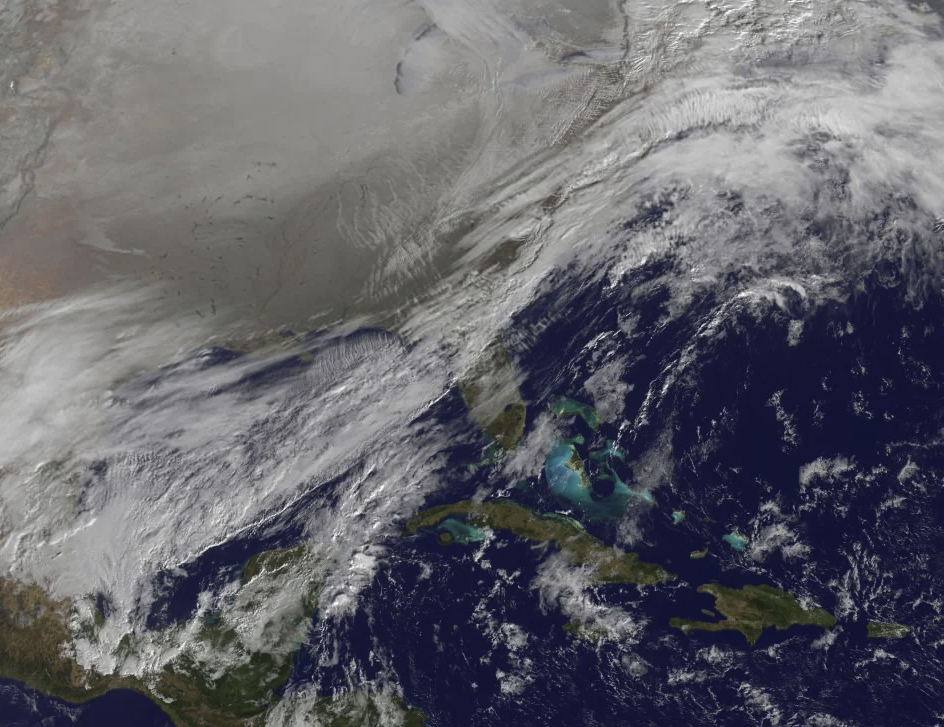
Those who have seen The Day After Tomorrow know its portrayal of natural disasters may not be too far off. The closest we have to that would be the polar vortex Canada experienced this past winter. Sources say that a lot of people treated polar vortexes like they were some brand new natural disaster, however they've been around as long as the earth has been around. It's typically when these polar vortexes spike that gives room for discussion.
Scientifically, polar vortexes are the planetary phenomenon of the hemispheres of the north and south pole expanding into currents closer to the equator. As a result of global warming, these polar vortexes tend to spike up in temperature due to the sun's stratospheric warming (SSW). The term was first mentioned in 1853 in an issue of Littell’s Living Age magazine.
In fact, the polar vortex is a yearly tradition. The first time we had a spike was in 1992 with temperatures dropping as low as -6°C in Canada but having a global impact of 0.5℃. This went on for a stretch of 3 months, making it dubbed “the year without summer” or alternatively the “fathers day freeze”.
More recently, there was a spike in February of 2021, due to the SSW back in January, when the south pole current slid off into central America leaving the polar vortex weekend blown out of proportion and lasting longer than anticipated. Some areas were experiencing temperatures as low as -43.6℃. The way people have prepared for these polar vortexes are something akin to blizzards or natural disasters, via fortifying their home with insulation, camping out in basements, and building up walls outside of the home to avoid being snowed in.
Unless action is taken, polar vortex events are likely to increase, with the most extreme spikes becoming the new normal. What once felt like fiction may begin to resemble reality. Soon, The Day After Tomorrow won't be just a movie.
Sources and further reading:
NextVoice is a youth-led newsroom created through the Mastermind Youth Foundation, where teenagers across Sarnia-Lambton share stories that matter to them and their community. Every piece is written entirely by local youth, reflecting their own ideas, perspectives, and voices, with a clear commitment to original, human-created work. Learn more here.
Mon, Oct 5 · 7:00 pm
St Andrew’s Presbyterian Church 261 Christina St N Sarnia, ON
Tue, Oct 6 · 5:30 pm
The Bridge Patisserie Café 12 Michigan Ave Point Edward Point Edward, ON
Tue, Oct 6 · 6:00 pm
Black Gold Brewery 395 Fletcher St Petrolia, ON
A division of Sarnia Media Group Inc.
Locally Owned and Operated
© 2026 The Sarnia Journal