
Councillor Bill Dennis’ withdrawn motion revealed how difficult it has become in Sarnia to openly debate policing costs and priorities.
The most revealing moments in politics are sometimes the debates that never happen.
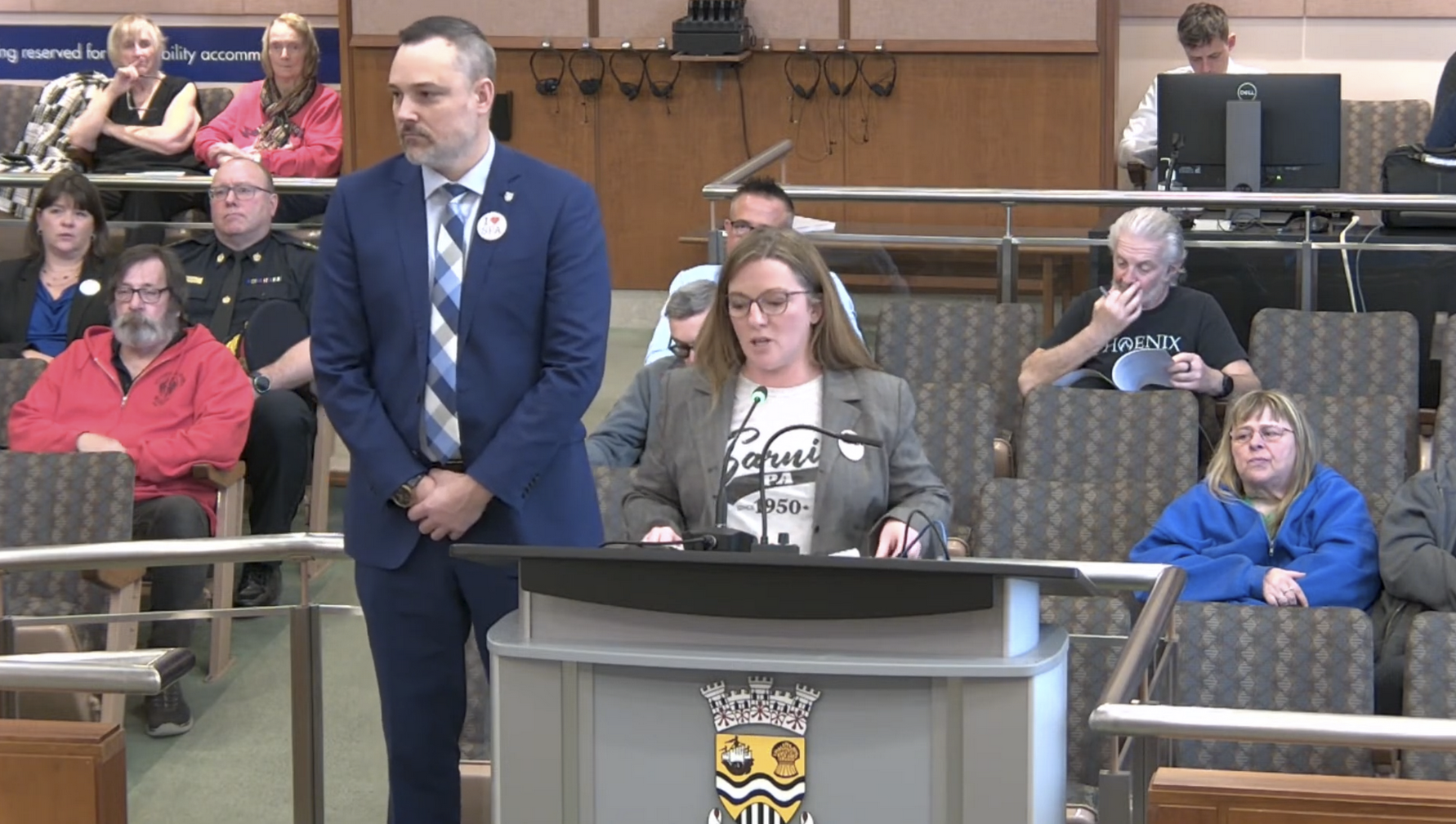
That was the case at Sarnia city council this week when Councillor Bill Dennis withdrew his motion calling for the city to examine policing costs through the Ontario Provincial Police. Without a seconder, the proposal never reached the council floor.
Yet the reaction it sparked inside council chambers said a great deal about the politics surrounding policing in Sarnia.
Representatives of the Sarnia Police Association spoke emotionally about the uncertainty the proposal created for officers and civilian staff, warning it could threaten jobs and destabilize the service. Their concern was understandable. Behind every institution are people whose livelihoods, careers, and families depend on stability.
But the emotional tone that filled the council chamber also revealed something else: how difficult it has become in Sarnia to even raise questions about policing.
Dennis himself acknowledged that the motion was not intended to advance. Instead, he described it as a “wake-up call” directed at the Sarnia Police Services Board, which is currently pursuing plans for a new police headquarters that could exceed $120 million.
Whether one agrees with Dennis or not, the underlying issue he raised is unavoidable.
Major public expenditures demand scrutiny.
They demand questions.
They demand debate.
Policing represents one of the largest and fastest-growing areas of municipal spending across Ontario. Communities everywhere are grappling with how to balance public safety, fiscal responsibility, and infrastructure needs.
Sarnia is no exception.
The city has faced this conversation before. In 2004 and again in 2010, council examined the possibility of contracting policing services through the OPP. Both times, the city ultimately chose to retain its municipal force.
But the fact that the question has been asked before highlights an important reality: exploring alternatives is not unprecedented, and it is not inherently an attack on police officers.
It is a policy discussion.
What made this week’s council exchange striking was how quickly that policy discussion became framed as something harmful simply for being raised.
Municipal governments routinely evaluate service delivery models for transit, waste management, infrastructure, and fire protection. Policing should not be the one area where questions themselves become controversial.
None of this diminishes the dedication of the men and women who serve in Sarnia’s police service. Their work in protecting the community is real and often difficult.
But support for those individuals should not mean avoiding conversations about budgets, governance, or infrastructure.
If anything, those conversations are precisely what responsible municipal leadership requires.
Dennis ultimately withdrew his motion before any debate could occur.
The chamber applauded. A victory, perhaps.
But the applause marked the end of a discussion on Monday that never truly began.
The issue that sparked it — the cost, structure, and future of policing in Sarnia — has not disappeared.
It will surface again.
And when it does, the city would benefit from something that was notably absent this week: a transparent and open debate about one of the most significant public expenditures facing the community.
The motion may be gone.
The issues behind it are still sitting heavily on the council table.
About the author: Robynne Hay is a Sarnia-based writer and registered nurse with a background in political science whose writing focuses on local governance, public policy, and community issues.
The views expressed in this column are those of the author.


