“Pollution porn” is the uncomfortable term increasingly being used to describe a style of environmental imagery that turns industrial devastation into something dramatic, aesthetic, and endlessly shareable, often while the actual people living in those communities become secondary to the image itself.
The phrase is closely related to concepts like “ruin porn” and “poverty porn,” where photographers, filmmakers, and media outlets are criticized for repeatedly showcasing destruction, decay, or suffering in ways that generate emotional reactions without fully capturing the complexity of the communities involved.
In places like Aamjiwnaang First Nation, the debate is becoming increasingly relevant.
A recent academic paper published in RACAR: Canadian Art Review argues that Canadian media coverage of industrial pollution surrounding Chemical Valley has often relied on repetitive visual tropes: smokestacks behind homes, flare stacks towering over playgrounds, fences, smoke plumes, and industrial skylines overshadowing community life.
The author, environmental media scholar Laurence Butet-Roch, warns that while these images can raise awareness, they can also unintentionally reduce entire communities into symbols of damage and toxicity.
The paper describes this as a form of “secondary exposure.” Residents are first exposed to pollution itself, then exposed again through the way media repeatedly frames them to the public.
One of the strongest criticisms raised in the research is that constant imagery focused only on contamination and industrial blight can create an impression that communities are hopeless, ruined, or permanently broken. The paper cites broader scholarship warning that these kinds of visual narratives risk portraying affected communities as “depleted, ruined and hopeless” rather than living, evolving places filled with culture, relationships, and resilience.
Critics of “ruin porn” photography have argued for years that dramatic images of urban collapse often aestheticize poverty while failing to show the people who still live, work, and build community there.
In the case of Aamjiwnaang First Nation, the paper found that many residents wanted media coverage to continue documenting pollution and holding industry accountable, while also wanting coverage to include nature, culture, daily life, children, community gatherings, and the beauty of the land itself.
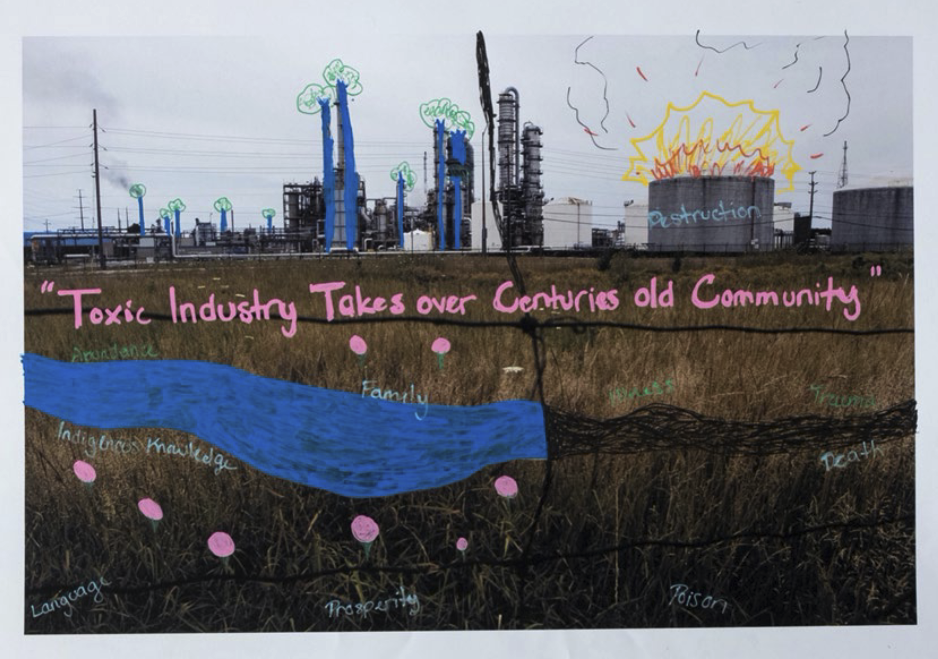
During a participatory photography exercise discussed in the paper, residents drew trees over smokestacks, added flowers and rivers into industrial photographs, and wrote messages emphasizing that the community existed long before Chemical Valley itself.
One resident involved in the project explained that many published images portray Aamjiwnaang only from the moment industry arrived, while ignoring the much longer history of the community and the land.
The debate ultimately raises a larger question for journalism itself: how do reporters and photographers expose environmental harm without unintentionally turning affected communities into symbols of suffering?
For many residents, the issue is not whether pollution should be photographed. It absolutely should be. The concern is what happens when smokestacks or destruction become the only story people ever see. In other words, the danger is not just pollution itself. It is the possibility that repeated imagery can slowly convince the outside world that these communities are already wastelands.