
Aamjiwnaang voices highlight impact, accountability, and unity following controversial remarks by Sarnia councillor.
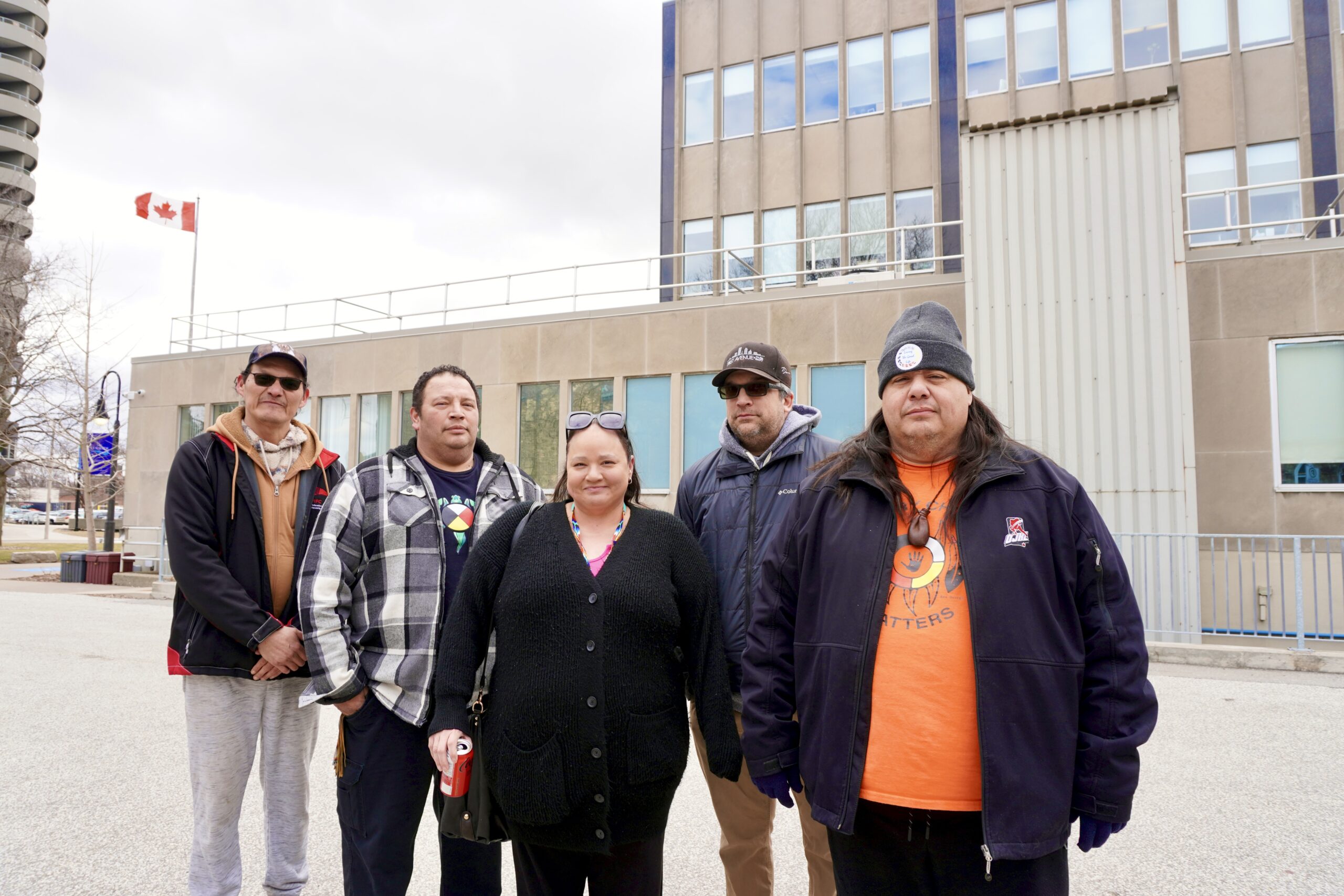
Members of the Aamjiwnaang community gathered at Sarnia City Hall Tuesday morning, March 24, to support one another and stand behind their leadership.
The gathering coincided with a 10 a.m. emergency council meeting focused on Councillor Bill Dennis and widespread outrage over racist and disparaging online comments targeting Indigenous leaders and other members of local First Nations communities.
What emerged outside council chambers was not anger or chaos, but something far more grounded: grief, dignity, disappointment, and a clear call for respect.
For Amy Vandersteen, the meeting amounted to an acknowledgement that what had happened was wrong, but little more.
“They basically just acknowledged it, that it was not right,” Vandersteen said. “They would like him to have a written apology, which he had already said he’s not going to do. And I don’t think it would make any bit of a difference if he did. Because what he said, he said it. And everybody sees it.”
That sentiment was echoed by Alphonse Aquash, who described the comments as deeply harmful, particularly because they targeted Indigenous leadership and relationships which have been forming for decades.
“It’s hurtful and disrespectful, aimed at our leaders,” Aquash said. “What has said has said, and what has done is done.”
While Aquash said he appreciated the efforts of the mayor and other councillors to “try and correct this wrong” and “try to mend” the relationship, he was blunt about the limits of any apology from Dennis.
“For him, that apology will not be sincere,” he said. “You could have somebody else type it up real nice and fancy and hand it in. But it won’t come from him. It won’t come from his heart.”
Still, the tone from community members was not one of division. It was one of collective responsibility, shared humanity and a belief that the damage stretches beyond one council seat or one community.
“We come to support one another, and support our territory and our leaders, and the cause,” Aquash said. “It affects everyone. It does not affect just our Anishinaabe people, our native people. It impacts everyone. We all drink the same water, breathe the same air. We may not live on the same land, but, you know, it’s still part of Mother Earth.”
Dallas Wells also pointed to the broader significance of the moment, saying community members had been watching closely and responding in a peaceful, spiritual way.
“I believe everyone is watching,” Wells said. “We left at the end, and we went out to get our wagon, our drum. We said let’s go sing a few songs… with our prayers, you know, and that’s what we had done. Uplifted people’s prayers. That's what we need to do in times like this.”
That image, community members gathering with a drum, offering songs and prayers outside City Hall, stood in sharp contrast to the conduct that brought them there.
Wells said the fallout from Dennis’ remarks reaches far beyond politics. It touches relationships, public trust, and the example being set for younger generations.
“Ultimately, I think in the end, all the neighbouring communities and Sarnia itself have been trying to connect with each other, trying to merge together, as one. Even though we have different names, we are one,” Wells said. “It's hard when one man out of a whole group can ruin it for everybody. And now everybody has to take on the flak from what he has said.”
Wells spoke about the need for accountability, healing and real consequences when public conduct crosses a line.
“There’s a relationship there,” he said. “And they have to figure out how to rectify that. We have been fighting hard for unity and acceptance for over 100 years."
He also raised concern about what such behaviour teaches children when it plays out so publicly.
“I don’t think it’s good, because not only are adults are going to see that, our children will too. We have media everywhere. You’re going to see children carry this behaviour if it continues” Wells said. “Children will ask themselves, is that how our mothers, fathers, uncles, and aunties act? It all goes down the line.”
Together, the voices from Aamjiwnaang showed what council procedure alone could not: a community that showed up with unity and care for one another, while carrying the hurt of being publicly disparaged by an elected official.
Speakers said the situation extends beyond a single meeting or comment, pointing to broader concerns about leadership, respect, and relationships between neighbouring communities that still have to share space, air, water and a future.