Oct5
Scottish Country Dancing
Mon, Oct 5 · 7:00 pm
St Andrew’s Presbyterian Church 261 Christina St N Sarnia, ON

Sarnia’s debate over cutting development charges highlights the city’s struggle with low-density growth and rising infrastructure costs, echoing Detroit’s experience where short-term expansion masked long-term financial liabilities and ultimately led to collapse.
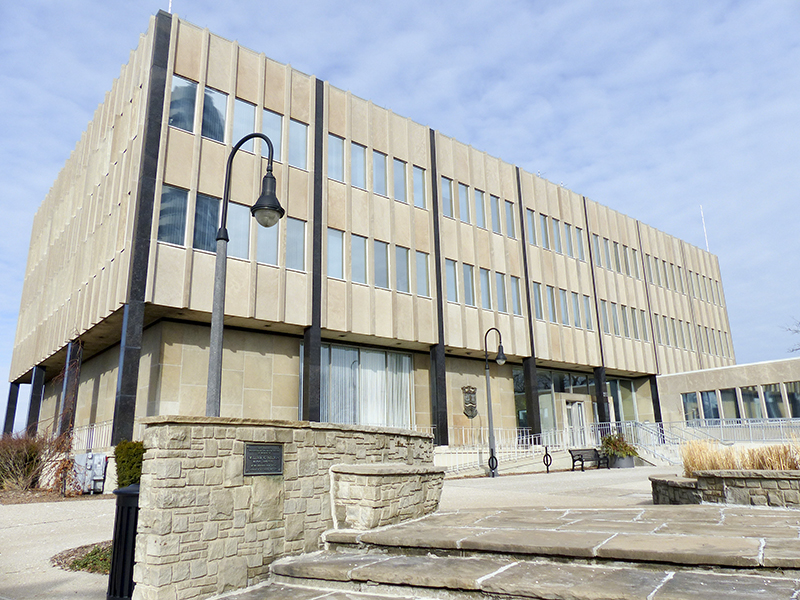
A debate at Sarnia’s November 17, 2025, city council meeting exposed a sharp divide over how the city should grow and who should pay for it. The discussion focused on a proposal to cut development charges in Area 2, a move supporters say would attract new construction now flourishing in nearby communities. Critics warned it would weaken Sarnia’s long-term finances.
Councilor Vandenberg argued that reducing the charges by 50% would help build the city’s tax base. “It’s important for us to build our tax base,” he said. “We don’t have those tax dollars and the same people are paying for the same taxes.” He pointed to growth in Strathroy and Komoka, noting that “every single house in those areas is going to generate between 6 to 8 thousand dollars worth of taxes.”
David Jackson, the General Manager of Engineering and Operations, cautioned that lowering charges would shift costs to current residents. “The development charges are there to fund capital projects that are required to support growth,” he said. “If we reduce them, the rest of the funding would have to be paid for through property taxes and water/sewer rates paid by existing users.”
Across North America, cities have long viewed growth as a sign of success. New subdivisions and expanded infrastructure look prosperous, but Strong Towns, a national planning group, argues this model contains a hidden flaw known as the Growth Ponzi Scheme. Short-term revenue masks long-term liabilities.
When cities expand, they take in quick funds from fees and taxes. Decades later, the cost of replacing roads, pipes, and utilities far exceeds what the development generated. Strong Towns notes that many communities collect only a fraction of the money needed to maintain the infrastructure they build. To cope, cities rely on continued outward growth to pay for older neighbourhoods. The system holds only as long as growth continues.


Sarnia has seen little population change for decades, yet low-density subdivisions keep spreading. At the same time, public amenities like Jackson Pool and Germain Arena have closed. Jackson said the city is maintaining more infrastructure than its tax base can support.
The group describes the cycle in three stages:
In practice, cities often respond to fiscal stress by doubling down on new growth. Vandenberg’s push for lower charges reflects this pattern. But more outward development creates larger long-term obligations. Borrowing from today’s reserves adds future costs while deferred maintenance accelerates decay. A downturn can expose the fragility of the model.
Jackson noted that Area 2 is especially costly because it requires new pumping stations, stormwater ponds, and arterial roads. “Even now with our current taxes, we do not raise enough money to fund the infrastructure that we have,” he said. “Low density development means a lot of infrastructure per property, and in the long term we are not generating enough money to maintain it.”
Councilor Burrell echoed that concern. “We have all kinds of properties already on the books that people can develop,” he said. “If people develop this, it means we have to come up with more money from somewhere else to fund this expansion in Area 2. We should be directing development to areas that already have services in the ground."
Detroit’s rapid suburban expansion from the 1950s to 1970s added miles of roads, sewers, and utilities, but population decline left too few taxpayers to cover maintenance. The result was abandoned infrastructure and bankruptcy in 2013. The city’s experience shows the danger of growth for growth’s sake, where short-term gains mask long-term financial obligations that eventually overwhelm a city’s budget.
Strong Towns warns that this model is ultimately unstable. If growth slows or infrastructure deteriorates, cities face service cuts to things like police and firefighting, declining roads and utilities, and long-term financial strain. The organization calls for more walkable and productive development, clear accounting of long-term costs, and a shift toward incremental rather than large-scale expansion.
For Sarnia, the debate over development charges in Area 2 is more than a financial question. It is a decision about whether to continue to actively subsidize a development pattern that has pushed many North American cities toward crisis or to pursue a more resilient and sustainable path.
Mon, Oct 5 · 7:00 pm
St Andrew’s Presbyterian Church 261 Christina St N Sarnia, ON
Tue, Oct 6 · 5:30 pm
The Bridge Patisserie Café 12 Michigan Ave Point Edward Point Edward, ON
Tue, Oct 6 · 6:00 pm
Black Gold Brewery 395 Fletcher St Petrolia, ON
A division of Sarnia Media Group Inc.
Locally Owned and Operated
© 2026 The Sarnia Journal