Oct5
Scottish Country Dancing
Mon, Oct 5 · 7:00 pm
St Andrew’s Presbyterian Church 261 Christina St N Sarnia, ON

Project Right Response advocates diverting funds to a health-led crisis response unit and building on Lambton County’s pilot project, Community Health Integrated Care (CHIC). We took a closer look at […]
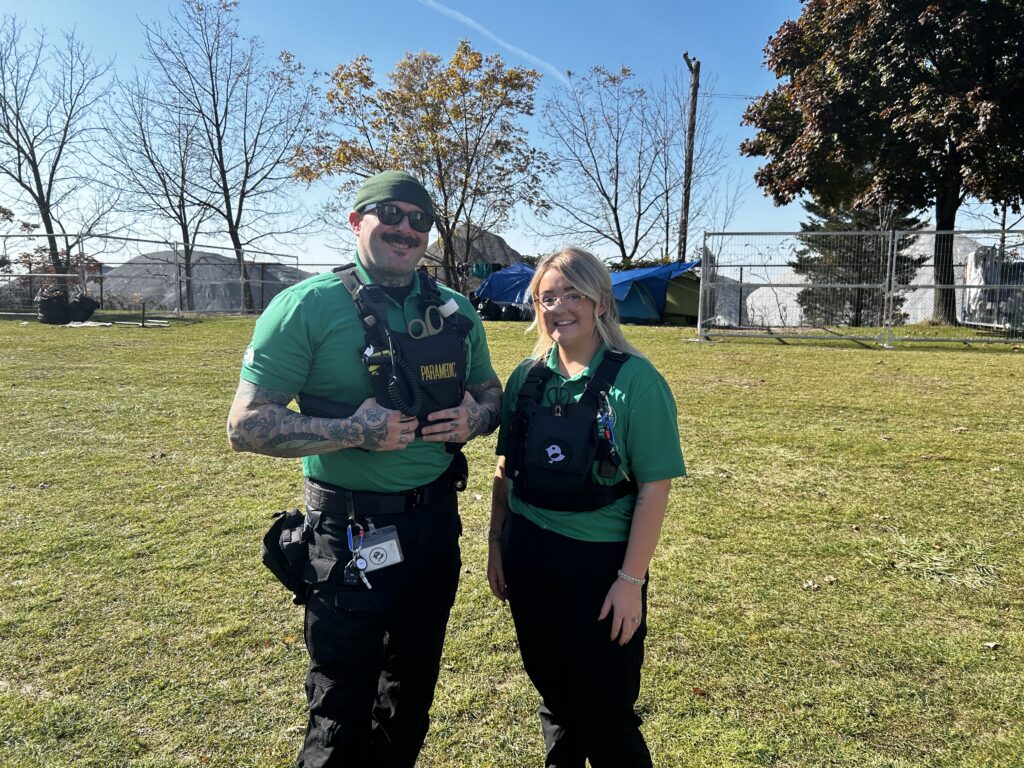
Project Right Response advocates diverting funds to a health-led crisis response unit and building on Lambton County’s pilot project, Community Health Integrated Care (CHIC). We took a closer look at the Toronto Community Crisis Service (TCCS). Known as Toronto’s “fourth emergency service,” the TCCS serves as a model for a non-police-led crisis response service for issues related to mental health, addiction, and homelessness.
Dilya Niezova, the Acting Manager for the Policing Reform Unit, which oversees the TCCS, spoke with the Journal to provide more insight into the successful project which continues to expand.
“I think the service has really demonstrated that it can be an alternative to more traditional emergency responses,” Niezova tells us. “The community has seen the benefits of it. I think the city has seen the benefits of it, and I would say our traditional emergency response partners also see the value in it.”
The TCCS launched in 2022. It was the first priority action coming out of the SafeTO, Toronto’s 10-year Community Safety and Well-Being Plan, which had been unanimously approved and adopted by Toronto City Council under Mayor John Tory in 2021. Current mayor, Olivia Chow has prioritized the expansion of the TCCS.
“The political support was absolutely key to getting it done and getting it funded,” Niezova says. “The political will, that’s a critical piece.”
The Community Safety and Policing Act 2019 mandated that all municipalities in Ontario develop a Community Safety and Well-Being (CWSB) Plan. One of the aims of this provincial legislation was to shift the focus of community safety from reactive emergency response to a culture of proactive prevention, addressing the social and systemic root causes of violence and vulnerability, such as poverty, lack of affordable housing, and inadequate mental health support.
Though Lambton County adopted a CWSB Plan, SafeTO is larger in scope and complexity. The most notable difference is the primary response model they adopted for mental health crises. Lambton County opted to expand a police-led crisis response service, the Mental Health Engagement and Response Team (MHEART), where mental health clinicians ride along with uniformed police officers.
“We also have something called MCIT (Mobile Crisis Intervention Team) here,” says Niezova, “where it is a police officer and a nurse, usually. What we heard from the community is that they wanted to see a community-led response. People who have had really negative experiences in the more traditional response models really wanted to see people that were from the community who represented them, who looked like them, who spoke like them. And so we listened to the community in designing the service the way that we did, which is non-enforcement-led, non-police-led.”
The TCCS is available 24/7. It dispatches teams of two crisis workers in response to calls which come through their main channel 211, or are diverted from 911. These crisis workers are multi-disciplinary staff such as social workers, mental health nurses, and peer specialists who have all received the same foundational 200 hours of training.
“We have experts who deliver the training,” Niezova tells us, which includes “trauma-informed crisis intervention and de-escalation, mental health awareness, suicide prevention, cultural safety, collaborative response protocols.
“There's ongoing training throughout the year. We have joint training with Emergency Services where we discuss effective communication strategies, and we play out different scenarios, which has also been really critical for us in terms of being able to co-respond in certain situations.”
When a call is received, a specially trained central dispatcher confirms that the situation is appropriate for a community-led response, and then sends the call to one of three community anchor partners which are responsible for a specific geographic area of the city. A fourth community anchor partner is Indigenous-led and operates citywide.
The crisis workers arrive on scene in TCCS vehicles. “They don't have sirens on the vehicle,” says Niezova. “Traffic is a problem, but our current response time in the city is under 30 minutes.”
Once on the scene, the crisis workers provide de-escalation, on-the-spot support, and supplies such as food, drink, clothing, blankets, first aid and hygiene kits, harm reduction supplies, transit passes, or small amounts of cash to enable the person in crisis to access these basic needs. The TCCS can also provide transport to a hospital or shelter.
“They may offer referrals on scene,” says Niezova, “and if the person consents to a follow-up, they will follow up within 48 hours and offer additional support services and access to case management.”
“It's not just an in the moment kind of a response,” says Niezova. “How do you support people and stabilize them and get them out of that kind of cycle of crisis they may find themselves in?”
Over 200 people work for the TCCS with a budget in 2025 of $31.7 million. The service is expanding onto Toronto Transit Commission (TTC) subway platforms this year, with a proposed budget of $35.3 million for 2026.
By comparison, the budget for the Toronto Police Service (TPS) is $1.22 billion, the single largest expense in the city's property tax-funded operating budget. The TCCS budget represents approximately 2.3% of that budget, demonstrating a high-impact reform that operates with far fewer resources.
“From March 2022, until now, we've had over 33,000 calls for service that we've responded to,” says Niezova. “In 2024, the year that we have the most complete data, 78% of the 911 calls that we got were resolved without the need for police involvement.”
The introduction of the TCCS has not led to a decrease in the TPS budget, which saw an increase of $46.2 million in 2025. Toronto Police Chief Myron Demkiw said in 2024 that the TCCS is necessary to free up capacity for the police service, but argued that capacity is immediately absorbed by other overwhelming demands, and therefore does not mean the police budget should be reduced.
Advocates, however, continue to point out that social spending to address the root causes of crime will reduce the overall need for policing, and that the TCCS is the proof of that concept.
It has clearly demonstrated a reduction in police workload. Police have attended fewer mental health calls since the inception of TCCS in 2022, reversing a decades-long trend of increasing police involvement. Cost reduction will not just be due to relieving costly police involvement but also associated costs such as hospitalizations, involvement in the criminal justice system, and emergency room visits. In 2024, the TCCS only requested an ambulance in 4% of its calls, for example.
“There has always been an understanding from the other emergency services that there is a need for a crisis response,” says Niezova. “We have very good relationships with the Toronto Police Service and fire and paramedics because we need to work with them. We really complement each other.”
“There is a way to see the benefits of such a service across the political spectrum,” she tells us. “Our Council unanimously supported the expansion of the service. The evaluation showed that it works, so they relied on the evidence.”
Lambton County introduced the Community Health Integrated Care (CHIC) program, a 3-year pilot funded by a $2.5 million provincial grant. It is a small-scale model of a health-led crisis response service. It operates similarly to the TCCS and they have had success in building trust among vulnerable members of the community. However, CHIC differs significantly in scope and scale. It is available only 12 hours a day (10 a.m.-10 p.m.) and engages more in proactive outreach and on referral rather than as a direct crisis responder.
Project Right Response believes the targeted small-scale pilot project of CHIC can be expanded into a dedicated, fully-funded, non-enforcement emergency service on par with the TCCS.
Mon, Oct 5 · 7:00 pm
St Andrew’s Presbyterian Church 261 Christina St N Sarnia, ON
Tue, Oct 6 · 5:30 pm
The Bridge Patisserie Café 12 Michigan Ave Point Edward Point Edward, ON
Tue, Oct 6 · 6:00 pm
Black Gold Brewery 395 Fletcher St Petrolia, ON
A division of Sarnia Media Group Inc.
Locally Owned and Operated
© 2026 The Sarnia Journal