
The Sarnia Police Service is facing questions over the hiring of a crime manager with a history of evidence tampering. While the service cites a formal selection process, internal sources suggest the appointment was a top-down directive.
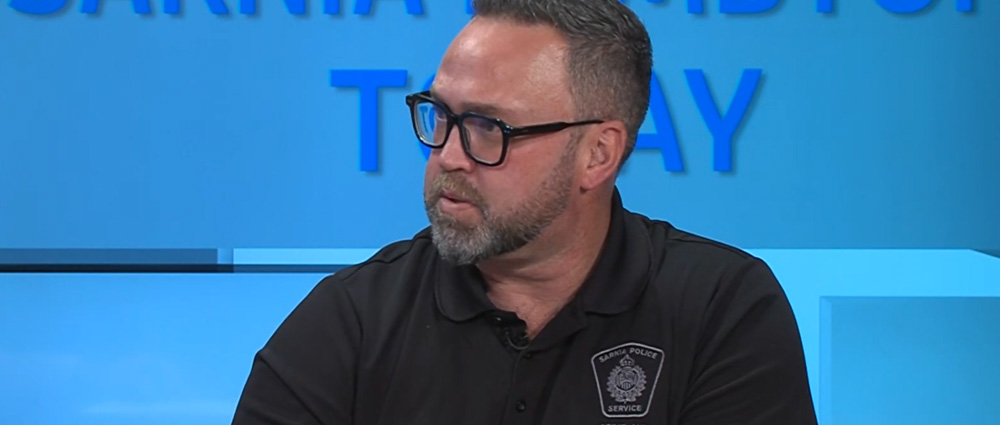
When Sarnia Police Chief Derek Davis took the podium in 2022, he inherited what he called a "crisis of confidence." A community survey revealed that over 52% of Sarnians did not bother reporting crimes because they believed "nothing would result from it." To fix this, the Service launched the Community Crime Unit (CCU) and digital tools like "Is This Yours?" to return stolen property to residents.
But as Sarnians log on to these platforms to reclaim their property, they are interacting with a system supervised by a man whose own history with "property" and "evidence" is a direct challenge to that very confidence. That man is Bradley Murray, the Sarnia Police Service Manager of Crime and Intelligence.
The Halton Files: 44 pills and the fallout
Before arriving in Sarnia, Bradley Murray was a high-ranking officer in the Halton Regional Police Service. By 2014, he was a Detective Sergeant supervising the Drug and Morality Unit — the service’s drug and vice squad — a role that gave him authority over the drug vault. In 2016, a routine audit discovered anomalies in that vault.
An independent investigation by the Toronto Police found that between 2015 and 2016, Murray had committed a criminal breach of trust. In one documented instance, Murray accessed an exhibit bag, removed what he believed to be 44 oxycodone pills, and replaced them with "another product" to hide the theft. He admitted he took the drugs for his own use to feed a severe opioid addiction triggered by workplace injuries.
The damage, however, extended far beyond a single bag of pills. Because Murray tampered with evidence tied to active criminal investigations, over 30 exhibits were compromised. As a direct result, the prosecution was forced to stay multiple drug-related trials. The actions of one officer caused months of investigative work to unravel, allowing individuals charged with serious offences to avoid prosecution.
The legal findings of Justice D.A. Harris were unsparing: the judge found that Murray took advantage of the trust placed in him and brought the integrity of the entire system into question.
The Sarnia Selection
In Sarnia, Murray is a civilian manager, but his role is incredibly sensitive. As Manager of Intelligence, he oversees the data that dictates where police resources go. He also supervises the Community Crime Unit, the very unit designed to restore the public's "shattered trust."
The Sarnia Police Service maintains that Murray was hired through a "formal recruitment and selection process" based on "qualifications and credentials." Yet one can’t help but wonder how many other qualified candidates were actually in the running for this critical intelligence role — and what kind of internal vetting systems would allow a documented history of evidence tampering to slip through. When you look at the pattern of Halton hires under Chief Davis, it’s hard not to wonder whether this was really the best choice for Sarnia — or simply one more example of the Chief’s old network overriding local priorities.
This is not an isolated hire. Since Chief Derek Davis, himself a 25-year Halton Regional Police veteran, took over in 2022, the service has steadily filled top roles with his former Halton colleagues: Deputy Chief Julie Craddock in late 2022, Deputy Chief Ron Hansen in August 2024, and Police Analytics Manager Joseph Ryan Glover (the Chief’s own private business partner in Norigen Management Consulting) at roughly the same $101,000 salary.
At Hansen’s swearing-in, Davis openly joked, "Ron and I do go way back… I think we’re tapped out from the Halton thing." Now Murray, another ex-Halton supervisor, sits in the intelligence chair. When the same small circle keeps showing up in the same sensitive seats, Sarnians are right to ask whose interests are really being protected.
Institutional Gaslighting
Legal counsel for the Sarnia Police Service has argued that because Murray completed a conditional discharge, he has "no criminal record." This is a technical truth, but for the average Sarnian, it feels like institutional gaslighting.
Such quiet rehires after serious misconduct are not uncommon in Ontario policing, where conditional discharges and union protections often let officers move services or civilian roles without full accountability.
If a worker in one of Sarnia’s plants was caught stealing from a secure inventory, would they be hired back as a Safety Manager five years later? If a local bank teller was caught "tampering" with the vault, would they ever be trusted to manage the bank’s security data?
The answer is no. In the private sector, a breach of trust is a career-ender. In the protected world of police management, it appears to be a manageable hurdle.
A Question for the Board
Restorative justice means giving people a second chance. Bradley Murray deserves a chance to rehabilitate his life, and he has documented his hard work in overcoming his addiction. But a "second chance" does not automatically grant a person a leadership role in the very institution they compromised — especially when that role involves the very evidence systems he once broke.
By installing Murray as the manager of crime data, Chief Derek Davis hasn’t just given a man a job; he has sent a clear message about whose trust matters most.
After a formal complaint was filed with the Police Services Board about these concerns, the Service’s lawyer sent a letter denying any wrongdoing and insisting the hiring followed all proper protocols. But Sarnians are left with one unavoidable question: In a city still reeling from the opioid crisis, is a man who pleaded guilty to stealing opioids from a police evidence locker really the best person to oversee our crime intelligence and protect the very evidence system he once compromised?