
After backing by-elections for MPs who change parties earlier this year, Marilyn Gladu has crossed the floor to the Liberals without triggering one. Her move shifts Sarnia-Lambton-Bkejwanong’s representation and raises a direct question: if voters “should have a say,” why aren’t they being asked now?
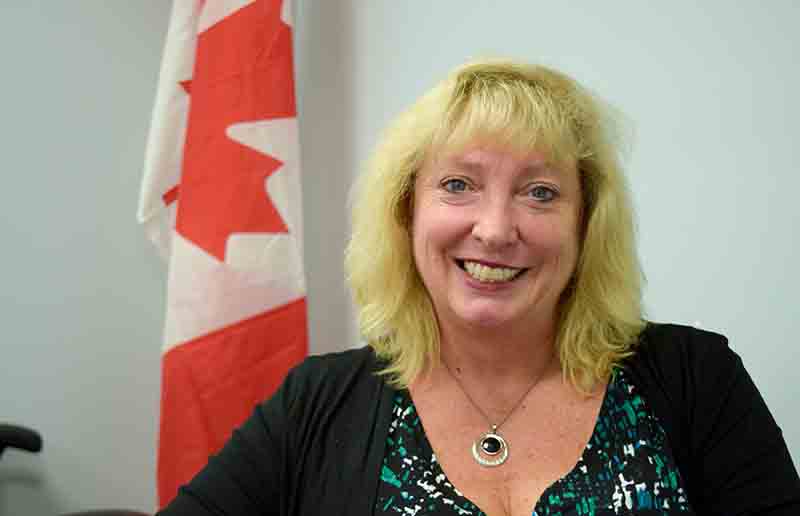
Earlier this year, Marilyn Gladu said MPs who change parties should be required to face voters in a by-election. This week, she changed parties.
In January 2026, Gladu publicly backed calls to require MPs who switch parties to face voters again, supporting a proposal that would trigger automatic by-elections for floor-crossing MPs.
“We elected you under this banner, and if you don’t want to be under that banner, then we deserve a chance to have a redo,” she said at the time.
She has now joined Prime Minister Mark Carney and entered the Liberal caucus, ending more than a decade as a Conservative MP.
She has not indicated she will resign her seat to seek a renewed mandate as a Liberal. Under Canada’s parliamentary system, MPs are not required to trigger a by-election when they change parties. Unless she chooses to do so, voters in Sarnia-Lambton-Bkejwanong will not have an opportunity to weigh in on the change before the next federal election.
In her announcement, Gladu framed the move as a response to what she has been hearing locally. “I’ve heard clearly from constituents that you want serious leadership and a real plan,” she wrote, adding that joining the government was “the best thing for our community’s priorities, and importantly, for our country.”
She positioned the shift as pragmatic alignment with national priorities: building homes, lowering costs, strengthening defence, and diversifying trade. “I’m ready to work with Prime Minister Carney to build a stronger, more independent, and more competitive Canadian economy.”
Absent from that explanation is any acknowledgement of her earlier position that voters should be given a direct say when an MP changes parties.
That omission is not incidental. Gladu did not just express a passing opinion. She endorsed a structural view of representation, one where party affiliation forms part of the mandate voters grant at the ballot box.
Her own electoral history reinforces that point. Gladu was elected four times as a Conservative. Voters in this riding did not elect a Liberal MP in the last federal election. The shift therefore changes not just her role in Parliament, but the party representation of the riding itself.
It also comes after years of sharply critical messaging directed at the same party she is now joining.
In public statements and social media posts, Gladu has repeatedly framed Liberal policy as economically harmful and out of step with Canadians. In one post, she argued Liberal decisions were “driving up the cost of living for families.” In another, she described the government’s direction as “failing Canadians.”
Those statements now sit alongside a letter praising the government’s priorities and committing to help advance them.
Her announcement attempts to place the move within a longer local tradition. “Sarnia Lambton was always a bellwether riding, meaning that whoever our community elected as MP was typically in government,” she wrote, suggesting that alignment with governing power is consistent with the riding’s historical role.
That framing carries an implicit shift in how representation is defined, not as continuity with the platform voters endorsed, but as proximity to government.
Floor-crossing is permitted under Canada’s parliamentary system and does not automatically trigger a by-election. But that framework is increasingly being challenged. Petition e-7025 is currently calling on Parliament to amend the Parliament of Canada Act to require MPs who change parties to vacate their seats and trigger an immediate by-election, reflecting a growing push to give voters a direct say in such decisions.
For voters here, however, the question is more direct. When an elected representative changes parties, who decides whether that change reflects the will of the people?
Earlier this year, Gladu’s answer was clear. “It makes sense that voters should have a say.”
Gladu has not publicly indicated whether she still believes MPs who change parties should face a by-election, or whether she would seek a renewed mandate as a Liberal.