Oct6
Ladies/Men, Come Sing with Us!
Tue, Oct 6 · 7:00 pm
St Michael and the Angels (formerly All Saints) Anglican Church 248 Vidal Street North Sarnia, ON

Cathy Dobson You can avoid being scammed if you’re cautious with your personal information, says John Baragar.
Cathy Dobson
You can avoid being scammed if you’re cautious with your personal information, says John Baragar.
“These schemes are very sophisticated,” the Crime Stoppers board member recently told an audience at the West Lambton Community Health Centre.
“Protect yourself.”
The RCMP in 2014 reported a whopping $548 million in credit card fraud in Canada, said Baragar. Another $16 million in debit card fraud took place.
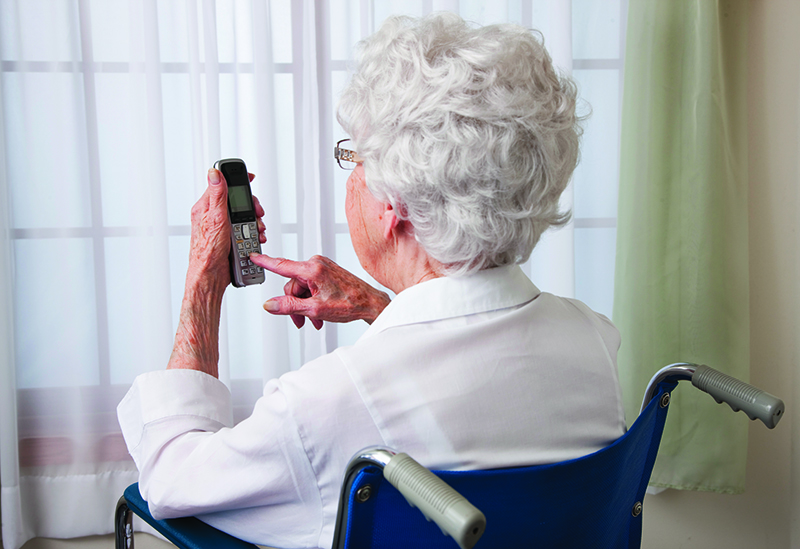
The most common phone scams frequently involve seniors and include:
* Callers who say they represent a computer company and need your computer access in order to make a repair. If they gain access, they can get personal identification, banking info and more. Hang up.
* Callers who say they represent the Canada Revenue Agency and taxes are owed. They say police will arrive if money is not sent. One of 10 people falls for this one. Hang up.
* Callers pretend to be a grandchild in trouble with the law and in need of money. They ask that no one be alerted and cash wired to them. Hang up and call a relative to find out if it’s true.
* Callers who telephone repeatedly, and slowly become familiar. They attempt to form an emotional bond, then ask for money. It’s called the romance scheme and one woman near Peterborough gave away $68,000 before she learned it was fake. Hang up.
* Callers who say you have won a cruise, a lottery or have been left an inheritance but must pay admin fees for more info to be transferred. Ask yourself if you entered a contest. Hang up.
Frequently these calls come from a sophisticated criminal ring that employs people to make the fake calls. Don’t fall for it, warned Baragar.
Scammer also use email to “phish” for personal information such as usernames, passwords and credit card details. Through email, they’ll try to pass themselves off as legitimate institutions like a bank, explained Baragar.
“No bank is ever going to send an email or call for personal information,” he said. “And a credit card company that calls to say they’ll save you money on your payments is not legitimate either.”
He recommends against providing credit card information online.
“It’s better if you don’t, but everyone does. I have too, but with one rule – I only provide credit card information if I have generated the call or the computer page. Then it should be safe.
“Nothing is fool-proof. You can shop online but be cautious.”
And if a company requests the three numbers on the back of a credit card, provide it, Baragar said.
“They are doing you a favour by verifying that your credit card name and number matches that security number.”
Skimming credit card information is also a common practice, particularly in restaurants and service stations. Any place that requests your credit card and takes it away to process the bill could be stealing your number before returning it.
“Then the information is copied and purchases are made on your card,” he said. “Cover your card up when you put in the password so no one can read your PIN (Personal Identification Number).”
January is National Crime Stoppers Month. Baragar is available to provide free presentations and can be reached at [email protected] or 519-908-9262.
HOW TO PROTECT YOURSELF
Shred credit card and bank statements before disposal.
Cover the keyboard when you punch in your PIN.
If you think a card is stolen, alert the bank, credit card company and police.
When an offer to invest or make a purchase seems too good to be true, it likely is.
Never provide personal information by phone, Internet or mail unless you initiate the contact.
Tue, Oct 6 · 7:00 pm
St Michael and the Angels (formerly All Saints) Anglican Church 248 Vidal Street North Sarnia, ON
Tue, Oct 6 · 7:00 pm
Cogeco Your TV Channel 6 – HD Channel 700 [OR] Stream with Epico App Sarnia, ON
Wed, Oct 7 · 11:00 am
The Lawrence House Centre for the Arts 127 Christina St. South Sarnia, ON
Wed, Oct 7 · 12:00 pm
Corunna Legion Br 447 350 Albert/Beckwith Streets Corunna, ON
A division of Sarnia Media Group Inc.
Locally Owned and Operated
© 2026 The Sarnia Journal