Oct5
Scottish Country Dancing
Mon, Oct 5 · 7:00 pm
St Andrew’s Presbyterian Church 261 Christina St N Sarnia, ON

New AMO data shows homelessness continuing to grow province-wide, even as municipalities spend more to manage pressure. Locally, Lambton County continues to face constrained shelter capacity and limited pathways into permanent housing.
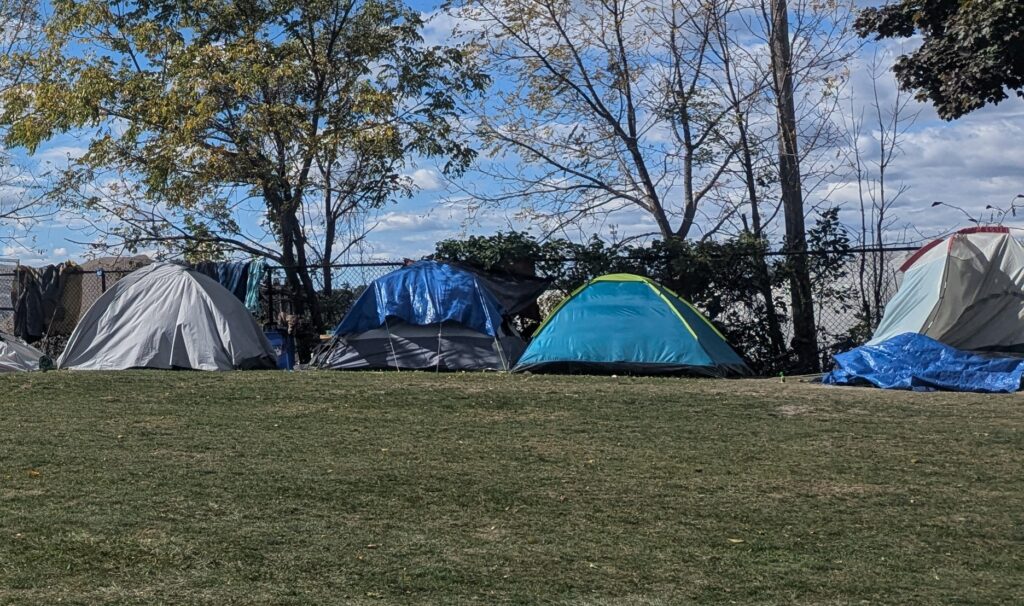
A new province-wide update from the Association of Municipalities of Ontario (AMO) and partners is warning that homelessness in Ontario is continuing to rise year over year, with the system increasingly shaped by long waits for housing and limited “exit” options that keep people stuck in shelters, temporary placements, or unsheltered situations.
The report, Municipalities Under Pressure One Year Later (January 2026), estimates 84,973 people experienced “known homelessness” in Ontario in 2025, a 7.8 per cent increase from 2024. It also estimates 45,111 people were experiencing chronic homelessness, representing about 53 per cent of known homelessness, a sign that more Ontarians are remaining without stable housing for longer periods.
While those figures are provincial, the report’s themes mirror challenges being debated locally in Sarnia-Lambton: how to manage visible street-level pressures while expanding the housing and support capacity needed to help people move out of homelessness permanently.
In Sarnia-Lambton, Lambton County is the municipal service manager responsible for homelessness and housing programming. Local reporting and county updates over the past year have pointed to volatility in the number of people actively experiencing homelessness, with monthly counts rising and falling rather than trending neatly downward.
County reports have warned that winding down an overflow shelter model could significantly increase unsheltered homelessness locally, highlighting how quickly conditions can shift when emergency capacity changes faster than permanent housing supply.
The AMO update argues this is the core structural issue across Ontario: homelessness is rising not only because of demand, but because housing availability and “exit capacity” have not kept pace, which can turn short-term crisis responses into long-term holding patterns.
AMO’s update estimates that service managers across Ontario reported roughly 2,000 site-based encampments in 2025, and notes that enforcement and site-management activity often changes where people sleep (including vehicles or less visible locations), rather than reducing homelessness itself.
In Sarnia, the City previously announced that the last tents at Rainbow Park were vacated on Feb. 20, 2025, noting that individuals were connected to alternate housing or shelter. Elsewhere in the community, police and partner agencies have continued tracking encampment locations and outreach contacts, reflecting ongoing effort to manage unsheltered risks even when large, centralized sites are not present.
AMO reports that combined housing and homelessness funding in Ontario reached just over $4.0 billion in 2025, and that homelessness program spending rose to about $2.27 billion. The largest spending increases were tied to emergency shelters and supportive housing, which the report links to growing complexity and longer periods without stable housing.
The report also estimates Ontario’s rent-geared-to-income waitlist reached 301,340 households in 2025, with an average wait of 65 months, and some households waiting much longer. While waitlist pressure is provincial, it speaks to a practical local reality: when affordable housing is scarce, shelter stays lengthen, the flow through the system slows, and municipal costs rise.
AMO and its partners argue that reversing the trajectory will require more than emergency response. The report points to coordinated action across housing, health care, income supports, mental health and addictions, and justice systems, alongside sustained investment in deeply affordable and supportive housing.
For Sarnia-Lambton, that framing may sharpen the local question already showing up in county meetings and community debate: how the region balances immediate public-space concerns with the slower work of expanding housing supply, supportive housing capacity, and prevention measures that reduce inflow into homelessness in the first place.
To access supports for someone experiencing homelessness, please reach out to the County of Lambton’s Homelessness Prevention Team at 519-344-2062 or [email protected].
Mon, Oct 5 · 7:00 pm
St Andrew’s Presbyterian Church 261 Christina St N Sarnia, ON
Tue, Oct 6 · 5:30 pm
The Bridge Patisserie Café 12 Michigan Ave Point Edward Point Edward, ON
Tue, Oct 6 · 6:00 pm
Black Gold Brewery 395 Fletcher St Petrolia, ON
A division of Sarnia Media Group Inc.
Locally Owned and Operated
© 2026 The Sarnia Journal