Oct5
Scottish Country Dancing
Mon, Oct 5 · 7:00 pm
St Andrew’s Presbyterian Church 261 Christina St N Sarnia, ON

Troy Shantz After a lengthy hiatus the River City Vineyard plans to re-open a shelter for homeless men next month with a new name and new approach.
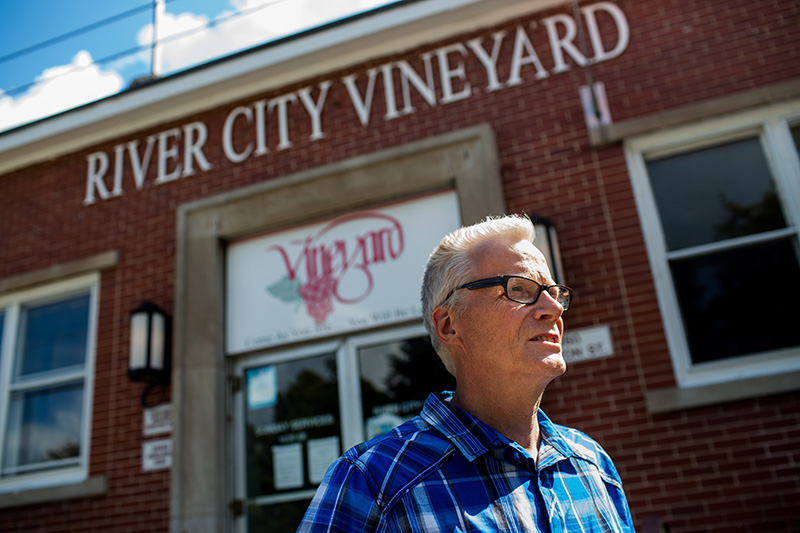
Troy Shantz
After a lengthy hiatus the River City Vineyard plans to re-open a shelter for homeless men next month with a new name and new approach.
Pastor George Esser said steps have been taken to address concerns from City Hall and neighbours of the Mitton Street church, starting by dropping the term homeless shelter.
The facility will be called River City Sanctuary when it reopens Nov. 6.
By renaming the operation, Esser believes it can avoid much of the bureaucracy and negativity associated with a homeless shelter
“What’s a shelter? Baggage. Lots of baggage,” he said. “There’s a lot of misconceptions with it. For example, shelters should be 30 days, shelters can be problematic, shelters just attract a certain kind of people.”
Though room is available at the facility to house 48 men the plan is to limit the number to 12 at a time, Esser said.
In March 2014, the Ontario Superior Court of Justice ordered the church’s homeless shelter closed following a lengthy battle with the City of Sarnia.
Some neighbours had complained about noise and vandalism associated with the operation, prompting the city to argue it didn’t conform with municipal zoning bylaws.
But in July 2015 that decision was overturned by the Ontario Court of Appeal, which said the shelter had never contravened city bylaws.
The court fight cost taxpayers $168,000.
“The biggest thing is that they say we’re not supervised, but a lot of that was really unfounded – they really didn’t know,” Esser said.
“And their level of supervision and our level of supervision is different. We don’t use professional social workers. We use more people that have a lot experience.”
Esser also rejected the claim the old shelter hurt the neighbourhood.
“The police verified that we had a lot less activity here than they did just a mile up the road. There’s a lot of activity that isn’t related to River City. There’s a lot of activity that happens that people think is River City, but it’s not,” he said.
“Our biggest issue has always been fear: What if? What if our property values go down? What if we get mugged? What if, what if, what if?”
The doors of the old shelter have been closed for more than a year. The plan is to reopen in November, but finding money to get it up and running again has been a challenge, he said.
A costly repair to the building’s fire alarm was one setback. The church team raised half the cost but Esser paid the rest out of pocket, he said.
Providing assistance to people in need is the mandate of the church, a point that was made and upheld during the legal fight.
“One of the things we don’t want to be is an institution,” he said. “We just want to help people.”
Mon, Oct 5 · 7:00 pm
St Andrew’s Presbyterian Church 261 Christina St N Sarnia, ON
Tue, Oct 6 · 5:30 pm
The Bridge Patisserie Café 12 Michigan Ave Point Edward Point Edward, ON
Tue, Oct 6 · 6:00 pm
Black Gold Brewery 395 Fletcher St Petrolia, ON
A division of Sarnia Media Group Inc.
Locally Owned and Operated
© 2026 The Sarnia Journal