
Sarnia council has re-approved plans to transition the Sarnia Chris Hadfield Airport to a municipal services corporation, but local aviation advocates say time is tight. Following the decision, COPA Flight 7 members called for quick implementation, less political involvement, and broader public awareness around upcoming board appointments.
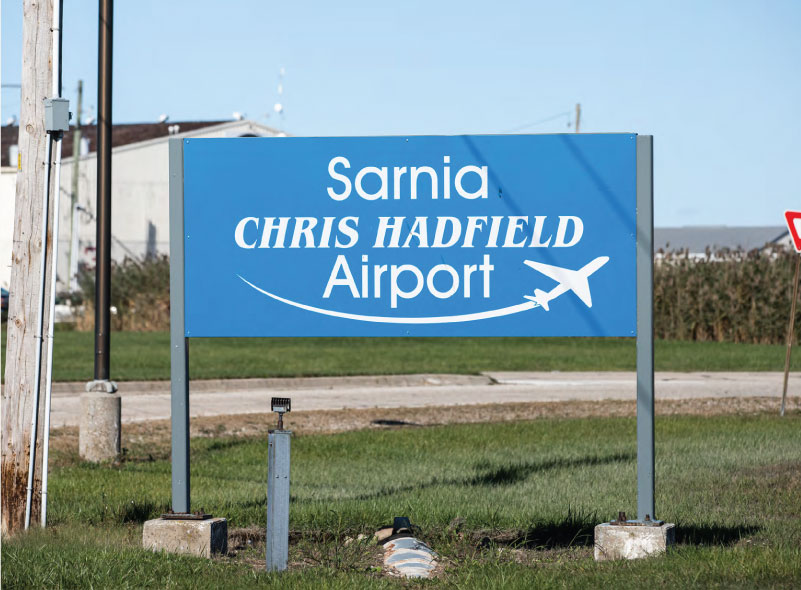
Sarnia has taken another step toward restructuring the future of Sarnia Chris Hadfield Airport, re-approving plans to move operations under a municipal services corporation model.
The decision signals council’s continued support for shifting the airport toward a more independent governance structure, one that has been debated, reversed, and revisited multiple times in recent years.
But while the vote represents forward movement, local aviation advocates say the real challenge now is execution, and time is limited.
At a meeting of COPA Flight 7 held shortly after council’s decision, members described the outcome as a “success,” but a cautious one. Concerns remain that without swift action, the plan could once again stall or be reversed.
There was a strong sense that the window to implement the new structure is narrow. Members emphasized that the transition needs to happen quickly, not just to formalize governance, but to give any incoming management team enough time to understand the airport’s operations, finances, and long-term challenges.
A central theme throughout the discussion was governance independence. Multiple attendees stressed that the airport’s administration should be clearly separated from day-to-day political influence, arguing that long-term stability depends on consistent, aviation-focused decision-making rather than shifting council priorities.
That concern ties directly into the next phase of the plan, the creation of a new board to oversee the corporation.
Members also raised concerns about how visible the upcoming board recruitment process will be. The discussion focused not on influencing who is selected, but on ensuring the process attracts broad public awareness and interest.
There was a clear emphasis on encouraging qualified individuals to apply, particularly those with aviation knowledge or a strong interest in the airport’s future, while maintaining that appointments should remain fair, transparent, and independent.
Participants stressed that a well-informed and engaged applicant pool strengthens the process overall, without predetermining outcomes or attempting to shape the board in any particular direction.
Underlying all of these points is a broader tension that has defined the airport conversation in Sarnia for years, uncertainty.
With commercial passenger service gone since 2020 and the airport reliant on municipal support, the question has not been whether change is needed, but what form it should take, and whether the city can follow through once a direction is chosen.
Council’s latest decision may provide that direction. Whether it results in lasting structural change will depend on how quickly the next steps are taken, and who ultimately steps forward to lead them.


