This article was created with support from advanced editorial tools and reviewed by our team to ensure accuracy and fairness. Learn more.
Sarnia’s Asset Management Plan reveals $20.8M annual infrastructure funding gap
Sarnia city council adopted the 2025 Asset Management Plan at its meeting today, confirming a $20.8 million annual funding gap and outlining options to address it over time.
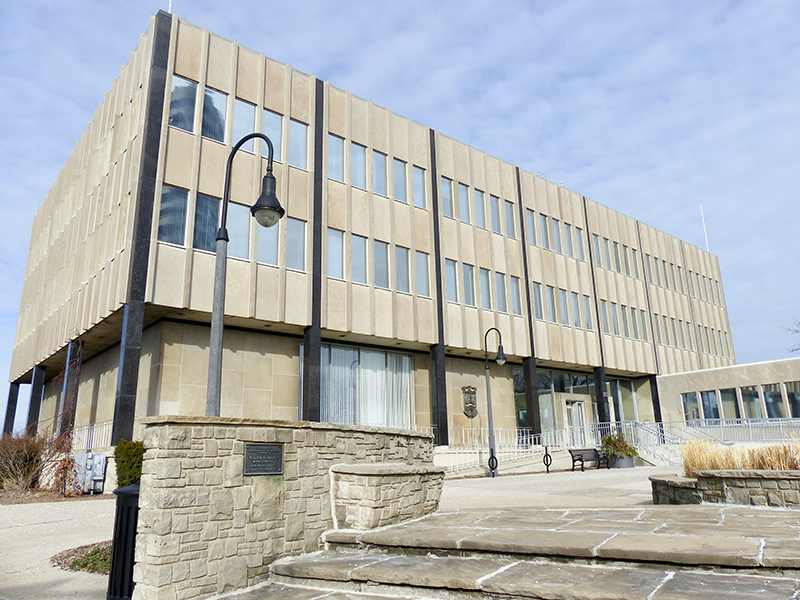
Sarnia City Council has adopted a 2025 Asset Management Plan (AMP) outlining a $4.6 billion portfolio of municipal infrastructure, and a growing funding gap that could exceed $250 million within a decade if left unresolved.
The provincially mandated plan, presented Monday, details the state of city assets ranging from roads and water systems to parks, police facilities, and transit infrastructure. It warns that “taxes and rates were not set appropriately to ensure funds were in place to properly maintain and eventually replace those assets.”
The 2025 AMP includes several updates from the previous year’s version. For the first time, it introduces a full financial strategy with proposed tax and utility rate increases to close the infrastructure funding gap. It also reflects revised asset replacement values across city departments, including a significant increase for police facilities and equipment, and outlines a new data improvement initiative targeting full system integration by 2026.
The city’s asset portfolio is now valued at $4.6 billion, up from $4.3 billion in 2024.
To maintain those assets at a sustainable level, the plan recommends an annual investment of $83.8 million, about 1.8 per cent of total replacement value. Sarnia’s actual 2025 capital investment, including contributions to fleet reserves and the Lambton Area Water Supply System, totals $63 million. That amounts to a 1.4 per cent reinvestment rate, leaving a shortfall of $20.8 million for the year.
If that gap continues unchecked, the cumulative deficit could grow beyond $250 million by 2035, based on a projected 2 per cent annual inflation rate.
The city’s 10-year capital forecast from 2025 to 2034 also identifies $291 million in capital projects that are currently unfunded or beyond existing financial capacity.
The newly adopted plan echoes concerns raised in Sarnia’s 2025 draft budget, which projected a $251.8 million shortfall in the city’s 10-year capital plan. That figure mirrors the cumulative infrastructure gap outlined in the AMP, confirming that the city’s current investment levels are well below what’s needed to maintain and replace its growing portfolio of aging assets.
The plan warns that deferring investment comes at a cost: “Not re-investing at the right time can lead to higher costs in the end.” It also notes that recent capital budgets have relied on reserve funds, which “are now low.”
Asset condition and data challenges
While the city faces a significant funding gap, its core infrastructure, such as paved roads, bridges, and major culverts, is mostly in “Good” condition. For other types of assets, where condition data is available, most fall somewhere between “Poor” and “Good,” with few currently rated as “Critical.”
A more pressing concern is the quality and completeness of the city’s asset data. The 2024 AMP acknowledged that “most of the City’s asset inventories are missing some, or most of this critical information.” The 2025 plan sets a target of 2026 to migrate all departmental inventories into a centralized GIS and Cityworks system, under a broader Data Governance and Improvement Plan.
Police facility among top priorities
The 2025 AMP also updates asset replacement values across departments. The most notable increase appears under Police Services, where the estimated cost jumped from $60 million in 2024 to $118 million. The latest figure includes both facility and equipment costs, whereas last year’s estimate focused primarily on the building.
The current police headquarters is now rated in “Poor” condition and deemed “no longer suitable for police use and must be replaced,” the report states.
To close the $20.8 million annual gap, the plan outlines three possible funding approaches for Council to consider in future budget deliberations:
-
Aggressive: A 1.5 per cent property tax increase and 5 per cent utility rate increase annually, closing the gap in six years
-
Balanced: A 1 per cent property tax increase and 4 per cent utility rate increase, closing the gap in nine years
-
Conservative: A 0.5 per cent tax increase and 3 per cent utility rate increase, closing the gap over 17 years
The AMP also suggests using tools such as debt financing, cost mitigation strategies, and aggressive grant-seeking to support long-term sustainability.
Events
Oct5
Scottish Country Dancing
Mon, Oct 5 · 7:00 pm
St Andrew’s Presbyterian Church 261 Christina St N Sarnia, ON
Oct5
Oct6
Chamber’s Young Professionals – The Bridge Patisserie
Tue, Oct 6 · 5:30 pm
The Bridge Patisserie Café 12 Michigan Ave Point Edward Point Edward, ON
Oct6
Oct6
Meat Raffles @ Black Gold Brewery
Tue, Oct 6 · 6:00 pm
Black Gold Brewery 395 Fletcher St Petrolia, ON