
Proposed zoning changes in Sarnia could quietly make supportive housing much harder to build. New parking requirements far exceed actual demand, forcing most projects into Council approval, where similar developments have repeatedly been delayed, reduced, or rejected. With housing needs rising, the issue may not just be supply, but the rules shaping what gets built.
A proposed change in Sarnia's new zoning bylaw may appear technical, but its impact is straightforward: it makes supportive housing significantly harder to build.
The issue is parking.
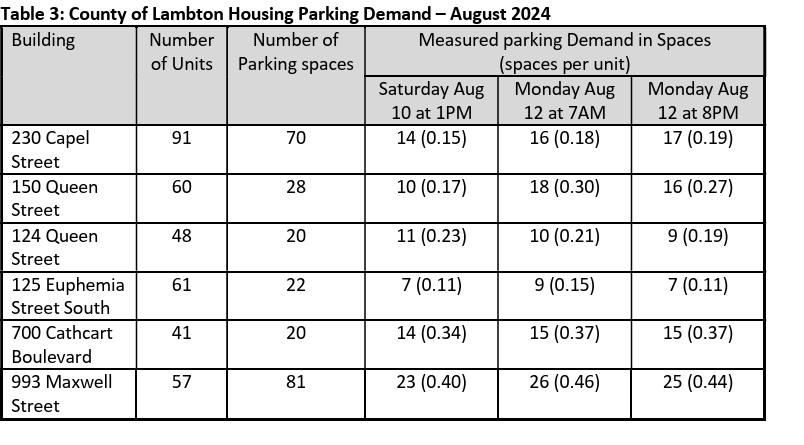
Under the draft bylaw released April 1, 2026, supportive housing developments would be required to provide two parking spaces per unit, plus an additional 0.5 spaces per unit for visitors or care providers. By comparison, affordable housing is set at 0.75 spaces per unit, while local data shows many geared-to-income developments in the city function with less than 0.5 spaces per unit.
That gap is not merely a design problem; it affects what can actually be built. At those levels, it is unlikely that most supportive housing projects can fit the required parking on-site or afford the additional land and construction costs. In practice, they cannot proceed under standard zoning rules.
Instead, they must seek variances or rezoning approvals. When projects are pushed out of as-of-right approval and into the political process, they enter a system that has repeatedly delayed, reduced, or rejected housing proposals. The result is not just longer timelines, but fewer units built.
A clear example is the proposed supportive housing development on George Street. In 2025, a five-storey, 50-unit project led by Indwell was proposed on county-donated land to address homelessness and addiction. Before a formal application was even submitted, City Council held a special meeting to hear public input where the proposal faced immediate opposition.
In response, the project was scaled down to 35 units to qualify for a minor variance rather than a full rezoning process. Even in that reduced form, it was rejected by the Committee of Adjustment in early 2026. Concerns included density, neighbourhood fit, and parking, despite the site being across from two three-storey apartment buildings in Mitton Village.
The project is now in limbo, with an appeal hearing at the Ontario Land Tribunal set for May 6, 2026. This is not an isolated case. Other recent projects follow a similar pattern: proposals move forward, encounter procedural or political barriers, and are delayed, reduced, or eliminated.
A Victoria Street site once identified for supportive housing remains a parking lot after council reversed course following over a year of deliberation. A Kathleen Avenue project required a major variance tied to parking. An Exmouth Street proposal was initially rejected and sent to the tribunal before being scaled back, leaving the city with six fewer affordable townhomes.
An upcoming 94-unit housing project on county land at the former St. Bartholomew church property is supported for affordable housing but faces opposition if it transitions to supportive housing. Parking rules could trigger a variance here as well, leaving final approval uncertain.
Each case is different, but the pattern is consistent. What the proposed zoning bylaw does is make that process unavoidable. By setting parking requirements far above observed demand, the rules effectively ensure that most supportive housing projects cannot proceed as-of-right.
Even the updated affordable housing standard of 0.75 spaces per unit appears disconnected from local data. The result is more projects requiring additional approvals, more delays, more uncertainty, and higher costs. At the same time, the need for housing continues to grow.
Local data shows more than 900 households on the centralized waitlist, with demand for nearly 2,500 additional affordable units. Most applicants are seeking one-bedroom units and face wait times of several years. The county By-Name List reported 390 people experiencing homelessness in early 2026, including 190 experiencing chronic homelessness.
These numbers are often treated as a supply problem. But zoning rules determine what can actually be built. When those rules consistently push projects into lengthy approval processes where they are vulnerable to rejection, the outcome is predictable. Fewer units move forward and costs increase.
The proposed bylaw is scheduled to go before City Council on April 27, 2026. The question is not just how many units Sarnia needs, but whether its rules allow those units to be built without entering a process where the outcome is uncertain every time.
Editors Note: A previous version of this article stated that the apartments that were across the street were four-storey and has been corrected to three-storey


