Oct5
Scottish Country Dancing
Mon, Oct 5 · 7:00 pm
St Andrew’s Presbyterian Church 261 Christina St N Sarnia, ON

How a blinding December storm stranded thousands, tested emergency systems, and revealed the strength of Lambton County.
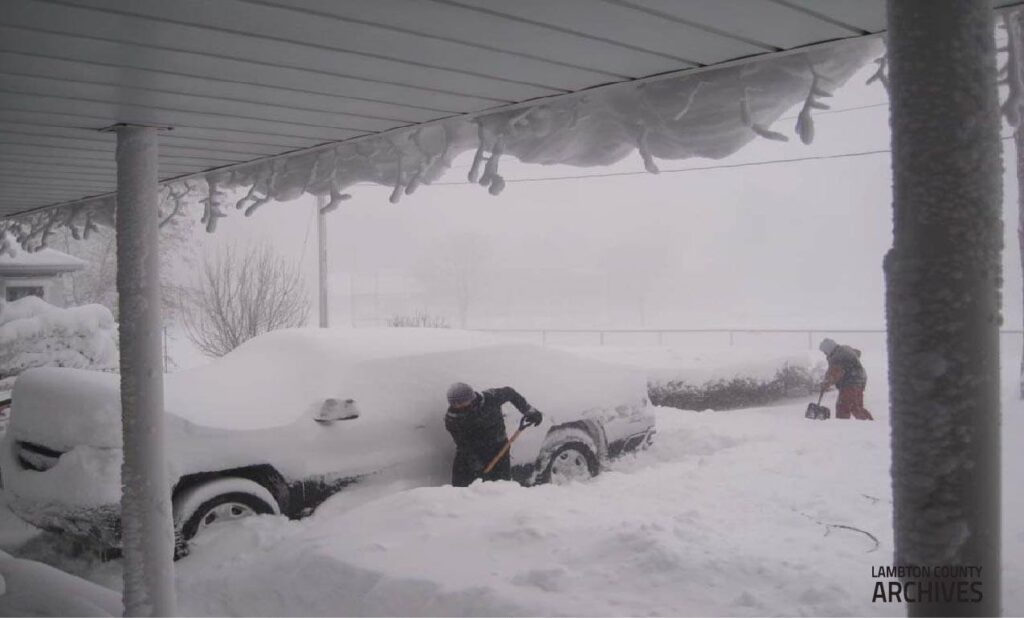
In December 2010, Lambton County experienced a winter storm that reshaped how the region thinks about weather, preparedness, and community. What began as a familiar lake effect snow event quickly escalated into one of the most significant winter emergencies in local memory. Within hours, roads were impassable, thousands were stranded, and an entire region was forced to respond together.
Snowmageddon, as it came to be known, unfolded over December 12 and 13, gripping Lambton County and much of southwestern Ontario with blinding snow, whiteout conditions, and extreme cold.

The most visible impact of Snowmageddon occurred along Highway 402, a vital east west corridor linking Sarnia to London. As winds intensified and snow accumulated faster than plows could clear it, visibility dropped to zero. Tractor trailers jackknifed. Cars slid into ditches. Traffic slowed, then stopped entirely.
By the height of the storm, more than 1,500 motorists were stranded across Highway 402 and surrounding roads. Some would remain trapped for more than 24 hours. Others would spend two nights inside their vehicles as snow drifted up to their windows and temperatures plunged.
Snowplows were eventually pulled off the roads due to safety concerns, leaving drivers isolated in conditions that were rapidly worsening.

As the scale of the crisis became clear, the County of Lambton declared a State of Emergency. Ontario Provincial Police quickly realized that conventional responses were no longer sufficient. With roads closed and ground access limited, Lambton OPP requested assistance from the Canadian Armed Forces.
Military aircraft, including a C-130 Hercules, conducted aerial assessments once conditions allowed. Griffon rescue helicopters were later deployed to evacuate stranded motorists and transport them to warming centres in communities such as Wyoming and Lambton Shores.
Emergency shelters were activated across the region. Fire departments, snowmobile clubs, municipal leaders, and volunteers coordinated efforts to reach people who were cold, low on fuel, or running out of food and medication.

For those stranded, time moved slowly. Radios provided little information at first. Cell service was unreliable. Vehicles ran low on gas. People shared what they had, from snacks and water to blankets and reassurance.
In one tragic case, 41 year old security guard Neeland Rumble died after becoming stranded near Ridgetown on his way to work. Police later confirmed he succumbed to hypothermia after leaving his vehicle in whiteout conditions. His death underscored the seriousness of the storm and the risks faced by those caught in it.
While only one fatality was confirmed, many others faced medical emergencies. Stories emerged of insulin deliveries by snowmobile, frostbite concerns, and motorists rescued just before running out of fuel in sub zero temperatures.

Away from the highway, a quieter response was unfolding. Across Lambton County, residents opened their homes to complete strangers. Families took in truck drivers, commuters, and travellers who had nowhere else to go. Living rooms became makeshift dormitories. Generators and wood fireplaces roared. Coffee pots ran continuously.
One household rescued more than 30 people, feeding them with whatever food was on hand, from Christmas baking to shared meals and endless cups of coffee. Others delivered hot chocolate by ATV or snowmobile, guiding stranded motorists to the glow of porch lights barely visible through the storm.
For many, these moments became the most lasting memory of Snowmageddon. Fear and uncertainty gave way to generosity, humour, and shared humanity.

Emergency responders were working around the clock. OPP officers slept at detachments because they could not get home. Snowmobile clubs became lifelines, checking vehicles one by one. Firefighters prepared food and transported people to safety.
The County Emergency Control Group coordinated responses by zone, tracking stranded vehicles, available equipment, and shelter capacity. Communication with local radio stations helped relay instructions to motorists who had no other way to receive updates.
Farmers used tractors and backhoes to clear roads and pull vehicles from ditches once conditions allowed. Tow trucks worked for days to remove abandoned vehicles and reopen critical routes.

It took several days for roads to fully reopen and for life to return to a sense of normal. Vehicles were dug out. Emergency centres stood down. Families reunited. Many who had been taken in by strangers exchanged contact information and stayed in touch long after the snow melted.
Snowmageddon became a defining reference point in Lambton County. It changed how emergency plans were written, how winter storms were communicated, and how seriously residents took travel warnings.

Today, Snowmageddon is remembered not only for the snow, but for the response it inspired. It revealed vulnerabilities in infrastructure and preparedness, but it also highlighted the strength of community when systems are overwhelmed.
Lambton County Museums continues to collect stories and photographs from those who lived through the storm, preserving them as part of the region’s shared history. These firsthand accounts help emergency planners understand how people experienced the event and how households prepare for extreme weather.
More than 15 years later, Snowmageddon remains a reminder that winter in Lambton County can still surprise, overwhelm, and unite. When the roads closed and help seemed far away, neighbours stepped forward. In the silence of whiteout conditions, a community found its voice through action.
Snowmaggedon 2010 Photo Gallery:


Mon, Oct 5 · 7:00 pm
St Andrew’s Presbyterian Church 261 Christina St N Sarnia, ON
Tue, Oct 6 · 5:30 pm
The Bridge Patisserie Café 12 Michigan Ave Point Edward Point Edward, ON
Tue, Oct 6 · 6:00 pm
Black Gold Brewery 395 Fletcher St Petrolia, ON
A division of Sarnia Media Group Inc.
Locally Owned and Operated
© 2026 The Sarnia Journal