


Oct14
Wesley Lodder’s memoir follows a father’s journey from survival to stability
The London author reflects on addiction recovery, losing his wife to cancer and raising his son, finding a common thread in the daily work of being dependable.
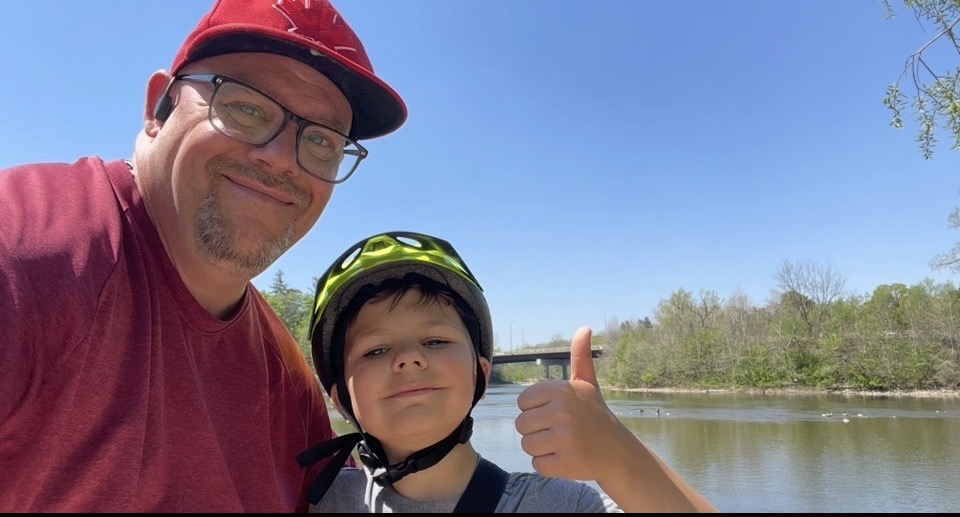
In the first nights after his son Bentley was diagnosed with Type 1 diabetes, Wesley Lodder repeatedly woke to check his glucose levels, afraid he might miss something while the child slept.
He had already cared for his wife Emily through cancer and lost her. Now, as Bentley’s only parent, he was learning another set of responsibilities: monitoring blood sugar, calculating insulin and responding when an alarm sounded.
“One of the clearest moments came when I realized that a low blood sugar could become life-threatening very quickly,” Lodder wrote in responses to The Journal.
The experience became part of a larger story about learning to remain present through fear, grief and uncertainty, which the London, Ont., author explores in his memoir, Learning to Stay: From Instability to Responsibility.
Lodder said he began developing the book in 2024, with writing, revising and publishing continuing through 2026. Preparing to tell the story took longer.
He describes a childhood marked by instability, followed by addiction, homelessness and mistakes he eventually had to confront. Later came marriage, caregiving, loss and the work of rebuilding a home for his son.
“For a long time, these experiences felt like separate chapters of my life,” he wrote. “Writing the book helped me understand the connection between them. Growing up taught me how to survive, but recovery, marriage, caregiving and fatherhood taught me how to stay.”
His motivation was the possibility that an honest account of those experiences might help someone else feel less alone.
That meant revisiting painful memories while accepting responsibility for his choices, rather than allowing his past to determine what came next.
Lodder has also shared aspects of his story publicly through Families for Addiction Recovery, the men’s mental health resource HeadsUpGuys and Healthy Debate. In an August essay for Healthy Debate, he wrote about the loss of routine and purpose that followed Emily’s death in 2020, and the continuing needs of people whose caregiving roles have ended.
In his responses to The Journal, he described fatherhood after her death as a fundamental change in his understanding of responsibility.
Bentley depended on him for safety, stability, emotional support and everyday care. Grief was something he had to live with while continuing to meet those needs.
“Parenting him has taught me that children do not need a perfect parent. They need someone dependable who continues to show up.”
The same principle shapes his understanding of recovery.
“Recovery is not only about stopping destructive behaviour,” he wrote. “It is also about rebuilding trust, creating routines, making responsible choices and becoming someone other people can count on.”
Moving to London gave father and son a place to begin rebuilding after Emily’s death. Lodder established a new home, returned to work and developed routines around raising Bentley on his own.
He said community relationships have been part of that process. Bentley has received diabetes care and attended a specialized diabetes camp, connecting with people who understand the condition and its daily demands.
Those connections have reminded Lodder that rebuilding a life does not happen entirely alone.
Managing Bentley’s diabetes brought another layer of responsibility. In the early days, Lodder said, fear had to be accompanied by learning and action.
“I learned that courage does not mean feeling unafraid. It means remaining present, becoming informed and taking action even when you are scared.”
Writing the memoir has had to fit around those responsibilities.
Lodder works full time, manages the household, organizes school and childcare, attends appointments and monitors Bentley’s diabetes. Writing and promoting the book often take place late at night, early in the morning or in brief periods of quiet.
Revisiting addiction, cancer and bereavement while continuing to work and parent has also been emotionally difficult, he said.
The reward is seeing something meaningful emerge from those experiences, and knowing his son can see that work taking shape.
For readers navigating addiction, grief or fatherhood, Lodder hopes the book offers encouragement to seek help and continue making changes, even when progress is gradual.
“I especially want other fathers to understand that strength is not pretending that nothing hurts,” he wrote. “Strength can mean admitting you need help, facing your mistakes, taking responsibility and remaining present for the people who depend on you.”
He sees healing as a series of decisions rather than a single turning point.
“My message is simple: keep showing up. Take the next responsible step, and then take another one tomorrow.”
Learning to Stay: From Instability to Responsibility is available through Amazon.
More to read
Events
Oct14
Oct15
EarlyON-Nature Park Program
Thu, Oct 15 · 9:30 am
Bridgeview Park 4241-4299 Petrolia Line Petrolia, ON
Oct15
Sarnia Artists’ Workshop Awards/ Peg Kivi Solo Exhibition
Thu, Oct 15 · 11:00 am
The Lawrence House Centre for the Arts 127 Christina St. South Sarnia, ON
Oct15