6 Poker Tips And Training Methods To Effectively Improve Your Skills
For poker players, skills are as important as luck when they’re playing. There are many things that a poker player should master, and for some, it can be challenging to improve and get better.
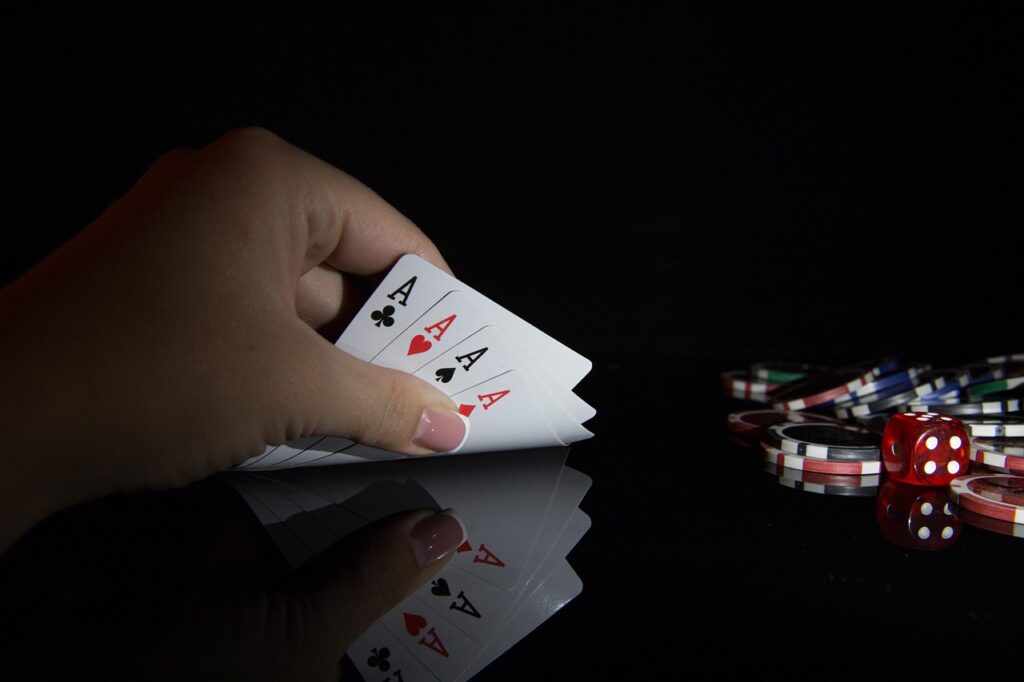
For poker players, skills are as important as luck when they’re playing. There are many things that a poker player should master, and for some, it can be challenging to improve and get better. So, what can you do to improve your skills effectively? There are a few known training methods and tips you must know, and here are some of them.
Take Advantage of Free Games
Beginners may feel intimidated to practice poker during real games. For players who are yet to feel familiar or comfortable in making choices while playing, taking advantage of online free games can be a great practice.
Many online casinos, like Bitcasino, allow players to practice poker through a fun-mode game. You won’t have to bet using real money, and you won’t get money from these free games. However, it’s still an excellent way to test out strategies and get more familiar with the rules with zero risk.
Poker is generally a strategy-based game, so one poker player likely has several strategies they want to test. These free games can be a way to ensure they can comfortably practice their strategies without gambling away their winnings.
Mastering The Basics
To level up, it’s always better for a poker player to first have a strong foundation. Understanding the starting hands and how they can be relevant in different positions is crucial. When a poker player fully understands hand rankings, they’ll know how and when to play them. It’ll be easier to make informed decisions, which can lead to a higher winning potential.
Once you have a full understanding of the timing, you can identify the strength of your hand, including high-card combinations, suited connectors, and pocket pairs. These hands have a great winning potential, giving you a solid foundation that you can build well as you play. The starting hand will determine how you can make a decision throughout the game.
Learn from Experts
Another way to build your poker skills is through learning from advanced players. You can see how they make decisions during live tournaments and study their strategies and techniques.
By doing so, you can learn the betting patterns of the professionals. Pay close attention to how they adjust their bet size and how it affects their strategy. As timing would be highly crucial in poker, see how professionals take advantage of favourable situations. You can also take a point or two on how they apply pressure on their opponents and what’s the right timing to do so.
The ability to read your opponent is another essential skill. Professionals are usually highly skilled in observing and interpreting their opponents’ moves and behaviours. Observe how they gather information and what they usually note. It can be the opponent’s betting patterns, previous moves, or physical cues. Then, you can apply these points to your play.
Watching professionals can also give you more knowledge about advanced strategies. These may include hand ranges, bluffing, and post-flop play. Take note of how advanced players make decisions and the reason behind their moves. Noting how they change strategies to adapt to each situation can also give you more insight.
Hand Evaluation Drill
As mentioned above, a poker player’s understanding of their starting hands builds the whole gameplay. That’s why a hand evaluation drill is one of the best practices you can get to strengthen your decision-making ability.
When doing a hand evaluation drill, you start by reviewing the two cards you’ve dealt with at the start. Then, consider their strength based on the current table dynamics, potential combinations, and position. You can also categorize your hand based on which you’d fold, raise, or call (after you evaluate its strength). Keep a note of your decisions and use them to build a hand ranking standard across several rounds.
This practice aims to train the player to make decisions based on their hands more easily. Over time, it’ll help the player make quicker and more accurate decisions, such as when to fold, raise, or call based on their starting hands’ value.
Bluff Timing Visualization
Bluffing is an essential skill that a poker player should master. However, it’s an advanced skill because it takes a while for a poker player to learn the right timing to bluff. One of the ways to practice your bluffing skill is through visualization.
You must focus on finding bluffing opportunities by analyzing scare cards and board texture. With a consistent review, you’ll sharpen your instincts and build better bluffing skills over time.
To do the visualization, you can start by listing common bluffing scenarios. Then, deal the cards and visualize bluffing opportunities based on the card combinations and the board texture. Imagine how your opponent might see your hand based on your bluff. Like the other practice methods, write down your visualization results to find the best bluffing timing and the reason why it has the potential to work.
Once you get the hang of it, you might feel your intuition aligning with successful results. You can raise the complexity by mixing strategies or semi-bluffing to refine your bluff further and vary your approach.
Bet Size Experiment
Knowing how to adjust your bet is a part of a strategy, regardless of the game you play. For poker, bet adjustment is even more crucial as it’ll help you set the right bet size for the right hand value. In addition, players can use their bet changes to pressure their opponents.
The goal of a bet size experiment is to develop a better instinct to know when to go big or small. It’ll also help you gain more control of the game’s flow.
This experiment can only be done with other players, so if you have a friend who also wants to practice, you can ask them to train together. While playing with your friends, try to change your bet sizes and see the effects on different board types. Take notes on how your bet size changes influence the outcome, especially for your win rate and opponents’ fold frequency.