



Oct18
GUEST COLUMN: Troubling insecticide is a real buzz-kill
Mary Jean O’Donnell I truly enjoy visiting farmer’s markets at this time of year. The incredible array of fruits and vegetables produced in Sarnia-Lambton always amazes me.
Mary Jean O’Donnell
I truly enjoy visiting farmer’s markets at this time of year. The incredible array of fruits and vegetables produced in Sarnia-Lambton always amazes me.

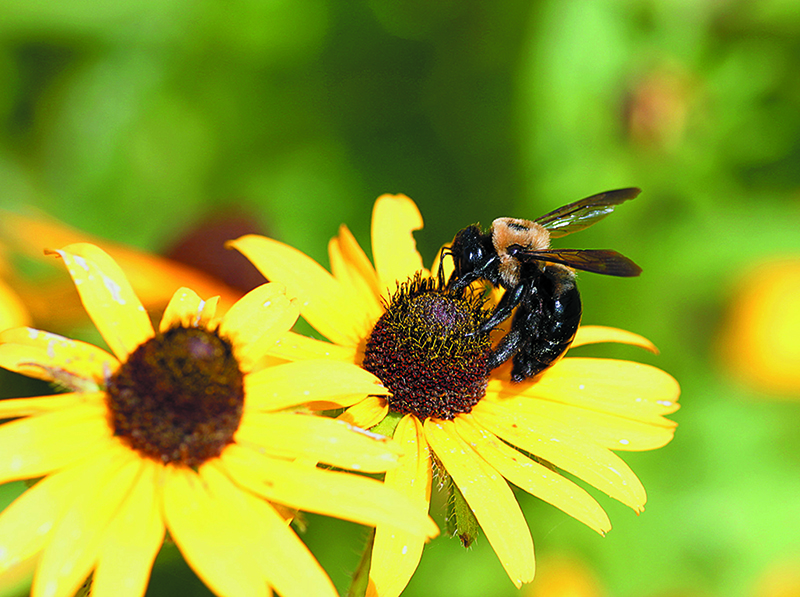
What you may find surprising is that almost all of those fruits and veggies would not be possible without pollination. In fact, about 30% of the food we eat would not be possible without pollination from bees, butterflies and bats.
Pollinators play a key role in providing us with our daily sustenance. Pollinators transfer pollen and seeds from one flower to another, fertilizing plants so they can grow and produce food.
Cross-pollination helps at least 30% of the world’s crops and about 90% of wild plants to thrive.
Pollinators like honey bees play a vital role in agricultural success and are worth about $2 billion to the Canadian agricultural industry.
Thus, I find it disconcerting that industrial agriculture may be harming the very thing that helps it to succeed.
Over the past decade, a group of insecticides, collectively known as “neonicotinoids,” have been introduced to reduce insect infestation in certain crops (e.g. corn, canola and sugar beets).
Many studies done on the impacts of neonicotinoids were inconclusive, or sided with the chemical industry that funded the study. In contrast, several independent studies identified serious consequences from the use of neonicotinoids as a “preventative” pesticide.
You see, neonicotinoids are a neurotoxin, so they not only kill they also affect bee behaviour. Studies have shown that bees are “forgetting” to do their jobs and are failing to communicate with each other.
These failures have resulted in significant losses in bee colonies. Some beekeepers in Sarnia-Lambton reported losses of 40-to-50% of their hives last winter (2015).
I think this calls for the Precautionary Principle, which states that even if we are not 100% certain that something is harmful, we should err on the side of caution. This is precisely what the European Union did two years ago when it banned the use of neonicotinoids.
Canadian and U.S. policy-makers should consider banning or extremely limiting the use of neonicotinoids, until additional (non-partisan) studies can be conducted on a wider variety of pollinators.
If you want to learn more, or have a different point of view, visit Green Drinks Sarnia’s 3rd anniversary celebration: Bee Extravaganza, on Wednesday, Sept. 14, at 100 North Christina. Doors open doors at 6:30 p.m., discussion at 7:00 p.m.
It’s free and everyone is welcome. Participants should be respectful, friendly and open-minded.
Mary Jean O’Donnell is the president of MJ Waste Solutions and co-founder of Green Drinks Sarnia.
More to read
Events
Oct18
Oct18
Oct19
Oct19