
Oct19
GUEST COLUMN: Why I am still opposed to assisted suicide
Ken A. Bryson I wrote a guest editorial for the Cape Breton Post last summer titled ‘10 arguments against assisted suicide’ that continues to resonate true today; see http://www.capebretonpost.

Ken A. Bryson
I wrote a guest editorial for the Cape Breton Post last summer titled ‘10 arguments against assisted suicide’ that continues to resonate true today; see http://www.capebretonpost.com/opinion/bryson
The strongest case for the gift of existence is found in reason number 10: “I argued in the journal of Philosophy and Theology (Vol 27, No. 2, 2015) that the definition of death moves beyond consciousness to include the object of consciousness or the gift of existence.
Consciousness is always of something. The forced elimination of consciousness through assisted suicide is also the forced elimination of the object of consciousness. Has technology made us smart or arrogant?” (Cape Breton Post. May 21, 2016). The following points provide additional detail on this view;
1 – One of the most beautiful sights imaginable, in my view, is the rising of the sun on a Sarnia morning. How elegant is this morning sky, the busy clouds of blue, pink, grey, and red; the bird flying past my balcony looking more like a dove than a seagull; I stand in the presence of the great gift of life for which I did nothing to earn, deserve or produce.
I am in relationship with a banquet of colors, smells, and sounds; of a holy presence freely given to my waking consciousness. I do not control, create, or produce this gift that must come from a great power—the Holy Other.
2 – The existence of this gift is indemonstrable although it commands my attention. Philosophy teaches me that I cannot prove the existence of sunrises outside of consciousness other than as an extension of consciousness or sensation. But the experience of the gift of life is on the side of origin while consciousness and sensation arise after the fact as a reproduction of the gift in me.
Assisted suicide is wrong because it throws the baby out with the bathwater. It moves beyond brain death and the irreversible cessation of consciousness to include something that is not ours to control, namely nature’s gift of itself. My willful death is not simply the end of consciousness but it also includes the removal of the possibility of the gift of consciousness from the Holy Other.
This gives Shakespeare’s soliloquy ‘to be or not to be’ a whole new meaning. I do not know why I stand in the presence of the sacred, why something exists rather than nothing, but give thanks for being included in the mystery of human existence, and promise to do my best to celebrate the poverty of consciousness.
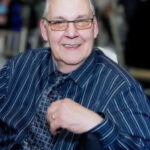
Ken A. Bryson, Ph.D., lives in Sarnia with his wife Rosalie and is Professor Emeritus at Cape Breton University.
More to read
Events
Oct19
Oct19
Oct19
Scottish Country Dancing
Mon, Oct 19 · 7:00 pm
St Andrew’s Presbyterian Church 261 Christina St N Sarnia, ON
Oct19
cineSARNIA presents Tuner
Mon, Oct 19 · 7:00 pm
Sarnia Public Library Theatre 124 Christina St. S. Sarnia, ON