Oct5
Scottish Country Dancing
Mon, Oct 5 · 7:00 pm
St Andrew’s Presbyterian Church 261 Christina St N Sarnia, ON

Sarnia City Council has voted against designating the former Central United Church as a heritage property after the owner warned the move would kill a pending sale and lead to the building’s ruin.
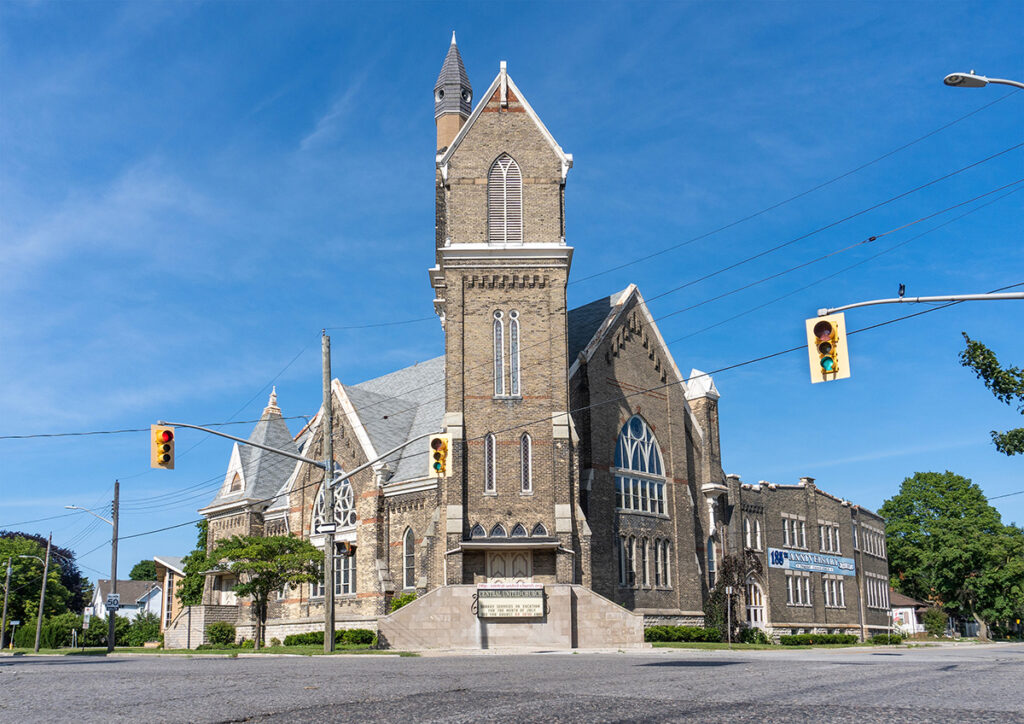
At its January 19 meeting, Council voted unanimously to "receive and file" the Heritage Committee's recommendation to designate the property under the Ontario Heritage Act . This decision effectively ends the current bid to protect the 144-year-old structure and clears the way for its sale to the Heikal Group, a developer planning to adapt the site for residential and daycare use .
The vote followed a dramatic appeal from the building's current owner, Anthony Mota of Xoana Corporation. He told Council that the financial burden of maintaining the massive structure without a buyer would be catastrophic.
"I will not be able to maintain it… this building will fall down," Mota said, describing the potential designation as a threat to his financial survival . "If they walk, if any reason is given to them to walk away… unfortunately, this building will fall down."
Jay McGuffin, a planner representing the prospective buyer, confirmed the deal hinged on the Council's decision.
"The conversation that I had with my client today… is that they will walk away from the sale," McGuffin said, noting the property is scheduled to change hands in March .
The Sarnia Heritage Committee had argued strongly for designation, citing the building’s unique architectural features. Committee Chair Evan Abma described the former church as a "rare Queen Anne and High Victorian Gothic eclectic church" with a distinctive saddleback tower composition found nowhere else in Ontario .
However, the practical reality of the building's condition and the cost of restoration weighed heavily on the decision. Mota estimated that restoring the sanctuary alone to heritage standards could cost upwards of $30 million, a figure he said would scare off any investor .
Councillor Brian White acknowledged the difficulty of the situation but conceded that the financial reality made designation untenable.
"It's very difficult to believe that there is any one individual or private ownership group that would be willing to come to Sarnia and put that level of investment in one particular site," White said . "I sadly concede the fact that I think it's beyond the ability for any one particular person to carry that load."
The decision comes amid broader pressure from provincial legislation. Under Bill 23, municipalities must designate properties on their heritage register by January 1, 2027, or remove them, preventing re-listing for five years.
While the designation was rejected, the prospective buyers have indicated plans to retain the original church building as part of their redevelopment project .
Mon, Oct 5 · 7:00 pm
St Andrew’s Presbyterian Church 261 Christina St N Sarnia, ON
Tue, Oct 6 · 5:30 pm
The Bridge Patisserie Café 12 Michigan Ave Point Edward Point Edward, ON
Tue, Oct 6 · 6:00 pm
Black Gold Brewery 395 Fletcher St Petrolia, ON
A division of Sarnia Media Group Inc.
Locally Owned and Operated
© 2026 The Sarnia Journal