Oct6
Chamber’s Young Professionals – The Bridge Patisserie
Tue, Oct 6 · 5:30 pm
The Bridge Patisserie Café 12 Michigan Ave Point Edward Point Edward, ON

Here we are again. That all-too-familiar point where something once solid begins to splinter. A partnership that once made sense—built on trust, on history, on shared interests—suddenly feels off. One […]
Here we are again. That all-too-familiar point where something once solid begins to splinter. A partnership that once made sense—built on trust, on history, on shared interests—suddenly feels off. One side drifts—the other watches. You stay, maybe longer than you should, because of comfort, stagnation, or fear. Until finally, something snaps. And when it does, it’s jarring—but also clarifying. Turns out, it was the best thing that could’ve happened.
Not a story about people, a story about countries. It’s about us—Canada—and the slow, painful realization that the United States isn’t the partner we thought it was. Maybe never was.
For decades, we told ourselves we were more than just trade partners. We shared values, culture, and security interests. We were, in our minds, the loyal sibling in the family—dependable, polite, always showing up. But the America we once knew, however flawed, still played the part of a global grown-up. That version is gone. In its place: an unpredictable, impulsive, and increasingly self-interested United States that operates on ego more than strategy.
The shift didn’t happen overnight. It started slow. Disregard for norms. Open contempt for institutions. A sneering, “Or what?” attitude that moved from fringe to mainstream. And while President Donald Trump was the lightning rod, the rot has gone deeper than any one man. Cruelty became a strategy. Chaos became currency.
We watched the endless legal scandals unfold—not with shock anymore, but with a kind of tired familiarity. The Epstein ties that still linger in backrooms and headlines. The performative stunts that replaced policy. Some called it “awful and weird,” like that somehow softened the danger. It didn’t. And up here, we’ve been feeling the aftershocks.
We feel it in tangible ways: in steel, in autos, in agriculture. In the quiet dread that comes with every tariff letter or late-night post from a president who sees trade as a weapon. Our economy—still sending up to 80% of our exports south—trembles every time the ground shifts in Washington. One tweet and suddenly, your plant’s future is on the line.
Just this week, the full force of this unpredictability returned. On Wednesday, July 10, in a letter to Prime Minister Mark Carney, Trump announced a staggering 35% tariff on Canadian goods entering the U.S., effective August 1. He cited Canada’s alleged failure to curb fentanyl flows and prior retaliatory actions as justification. Then, on Friday, July 12, he extended the chaos, declaring 30% tariffs on imports from the European Union and Mexico, also effective August 1.
These announcements—delivered largely via social media—are part of a broader “letter-writing blitz” designed to, in Trump’s words, “reset the balance.” Instead, they’ve triggered a global alarm. European leaders, including Ursula von der Leyen and the prime ministers of Italy and the Netherlands, condemned the move and warned of severe transatlantic supply chain disruptions. Countermeasures are already being prepared. Economists now expect trade relationships shattering and a resulting escalation of economic conflict.
The message is loud and unmistakable: this America doesn’t honour partnership, it exploits leverage. And that lesson extends far beyond Canada.
Even during the so-called “global tariff pause,” the warning signs were there. Nothing was permanent—not stability, not predictability, not the partnership we once counted on. We waited for the grown-ups to return to the table. What we got instead was a transactional America, where loyalty is outbid by leverage.
Beyond trade, the signals got louder. A wobbly commitment to Ukraine. Cozy dinners with autocrats. Domestic policies wrapped in branding and bluster, but hollow at the core. The failure to end taxes on Social Security. The slow collapse of abortion rights and public health protections. The impacts on American families were painful to watch. And the world noticed.
Still, we stayed hopeful. Because we had to. Canada’s economy, supply chains, and even energy grids are deeply tied to the U.S. The idea of breaking that bond felt unthinkable. So we waited. We told ourselves it was a phase. That America would steady itself.
But it didn’t. What came instead was a slow unraveling—not one betrayal, but a thousand. Until the truth was impossible to ignore: the partner we thought we had isn’t coming back. And strangely, that realization was freeing.
And once we accepted that, we could finally move.
Under Carney, Canada is doing just that. His message is direct: America is not Canada. And it never will be. That’s not an insult—it’s an affirmation. Of sovereignty. Of direction. Of values. In response to the latest tariffs, Carney vowed to “steadfastly defend our workers and businesses,” reaffirming Canada's dual efforts to tackle the fentanyl crisis and build a stronger, more diversified national economy.
Industry Minister Mélanie Joly echoed that sentiment: “We are not in normal times. But while the U.S. is becoming weaker, we will become stronger—and we will diversify.” Her statement wasn’t just about trade—it was about identity. About Canada refusing to be defined by someone else's instability.
The very public fracturing of trade with the EU and Mexico reinforces the wisdom of this shift. Canada’s decision to chart its resilient economic future was not just prudent—it was prophetic.
Carney’s government is finally pursuing what should’ve been obvious all along: resilience. That means diversifying our trade beyond the U.S.—deepening ties with Europe, Asia, and emerging markets. It means investing in what we can control: green energy, critical minerals, Indigenous-led development, and domestic innovation. It’s about independence, not isolation.
Canada is being noticed again—not for grandstanding, but for simply showing up. At NATO. At the climate table. On the global stage. As one NATO official recently said: “At least Canada shows up—and knows what the hell it’s doing.”
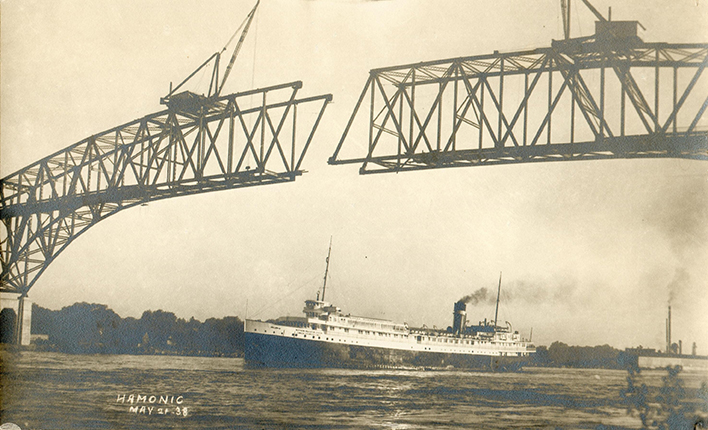
Here in Sarnia, we feel that contrast every day. Two countries. One bridge. Two mindsets. One clings to a fading myth of greatness. The other rolls up its sleeves and gets to work. That difference matters more now than ever.
This goodbye isn’t clean. We’re not moving out. We’re not slamming the door. But we’re no longer pretending. The partnership is what it is—beneficial, necessary, but no longer defining. And we’re not the dependent spouse anymore.
We’re standing on our own now. And we may finally see just how tall we are.
Tue, Oct 6 · 5:30 pm
The Bridge Patisserie Café 12 Michigan Ave Point Edward Point Edward, ON
Tue, Oct 6 · 6:00 pm
Black Gold Brewery 395 Fletcher St Petrolia, ON
Tue, Oct 6 · 7:00 pm
St Michael and the Angels (formerly All Saints) Anglican Church 248 Vidal Street North Sarnia, ON
Tue, Oct 6 · 7:00 pm
Cogeco Your TV Channel 6 – HD Channel 700 [OR] Stream with Epico App Sarnia, ON
A division of Sarnia Media Group Inc.
Locally Owned and Operated
© 2026 The Sarnia Journal