Oct6
Chamber’s Young Professionals – The Bridge Patisserie
Tue, Oct 6 · 5:30 pm
The Bridge Patisserie Café 12 Michigan Ave Point Edward Point Edward, ON

On the afternoon of Thursday, March 27, 2025, Suncor was responsible for a spill of 500-700 litres of crude oil from the company’s cooling water system into the St. Clair […]
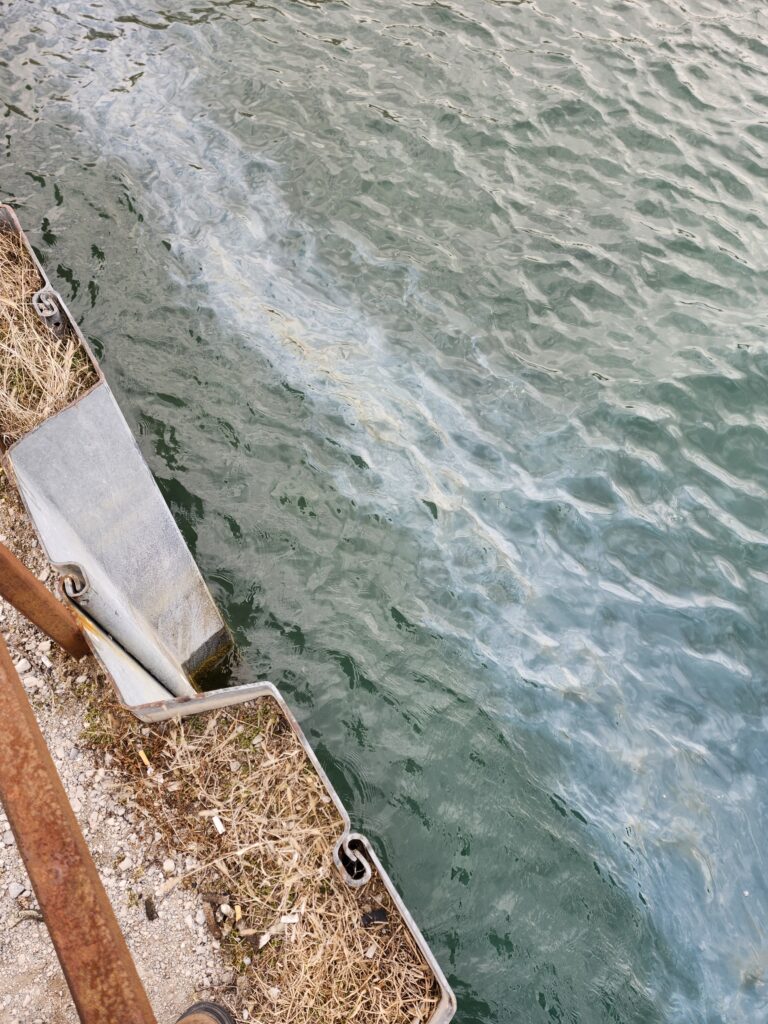
On the afternoon of Thursday, March 27, 2025, Suncor was responsible for a spill of 500-700 litres of crude oil from the company’s cooling water system into the St. Clair River in Sarnia, near the Aamjiwnaang First Nation. Aamjiwnaang community members received a text message with the CAER (Community Awareness and Emergency Response) notification from Suncor, briefly communicating that they had a spill at 2:30pm for a release of hydrocarbons that happened over an hour earlier at 1pm. This was followed by another notification hours later stating the spill was crude oil. The notification generally warned community members to “stay out of the water and to not go out on the water in a boat for no exposure to skin.” This incident occurred during a funeral held at Maawn Doosh Gumig, and the St. Clair River was active with fishermen during the sunny day.
All along the river of Aamjiwnaang, the oil sheen could be seen floating on the water at the fishing dock, and community members could smell it as far as the daycare. While taking photos to record the incident, we noticed the algae on the rocks had turned black, and birds were still sitting and fishing in the sheen downstream from Suncor and Shell. Watching the birds swim in the oil spill was a traumatic sight to see, and we felt immediate grief for the health of those birds and our environment.
The clean-up of the spill lasted 8 days. There is still no explanation from Suncor on the reason for this incident. Aamjiwnaang received a notification saying, “DO NOT USE water from the St. Clair River and avoid taking and leisure crafts out onto the river to avoid skin contact.” Nothing in this unclear notification mentioned the risks of breathing in the crude oil releases, including elevated cancer rates.
The impact of this tragedy was felt much more severely in the downstream communities that rely on the water from the river, including Walpole First Nation, where many endangered native plant species thrive. Notifications coming from Sarnia, where the Suncor spill occurred, assured the public that this spill would not impact the drinking water; however, this broad statement lacks responsibility for communities downstream from the site of the spill and accountability for the lack of timely information from Suncor. Schools on Walpole Island were also forced to shut down for days. The St. Clair Township was told not to use the river water under any circumstances, including avoiding skin contact. In contrast, Walpole was given instructions suggesting that only consuming the water posed danger. People should not be expected to shower in water impacted by Suncor’s spill.
The Anishinaabeg way of life is deeply connected to the health of the river and still, to this day, practices their sovereign right to fish, swim, boat, and practice ceremonies. In the nation’s own natural law and teachings, water is life and water is sacred. The threat to this way of life is a major part of the toxic relationship between the companies and the government that First Nations continue to face, including the ongoing drinking water crises, including 31 long-term and 36 short-term boil water advisories across the country. The Anishinaabeg Nation including the Potawatomi, Ojibway and Odawa have been caretakers of these waterways for generations, not just for the people but also for the waters’ right to a healthy ecosystem to support the life of the fish, aquatic animals, and plants. Our future cannot sustain industry’s sloppy mistreatment of our non-renewable resources. It is crucial to recognize the sacred laws of the traditional territory impacted by this spill.
Tue, Oct 6 · 5:30 pm
The Bridge Patisserie Café 12 Michigan Ave Point Edward Point Edward, ON
Tue, Oct 6 · 6:00 pm
Black Gold Brewery 395 Fletcher St Petrolia, ON
Tue, Oct 6 · 7:00 pm
St Michael and the Angels (formerly All Saints) Anglican Church 248 Vidal Street North Sarnia, ON
Tue, Oct 6 · 7:00 pm
Cogeco Your TV Channel 6 – HD Channel 700 [OR] Stream with Epico App Sarnia, ON
A division of Sarnia Media Group Inc.
Locally Owned and Operated
© 2026 The Sarnia Journal